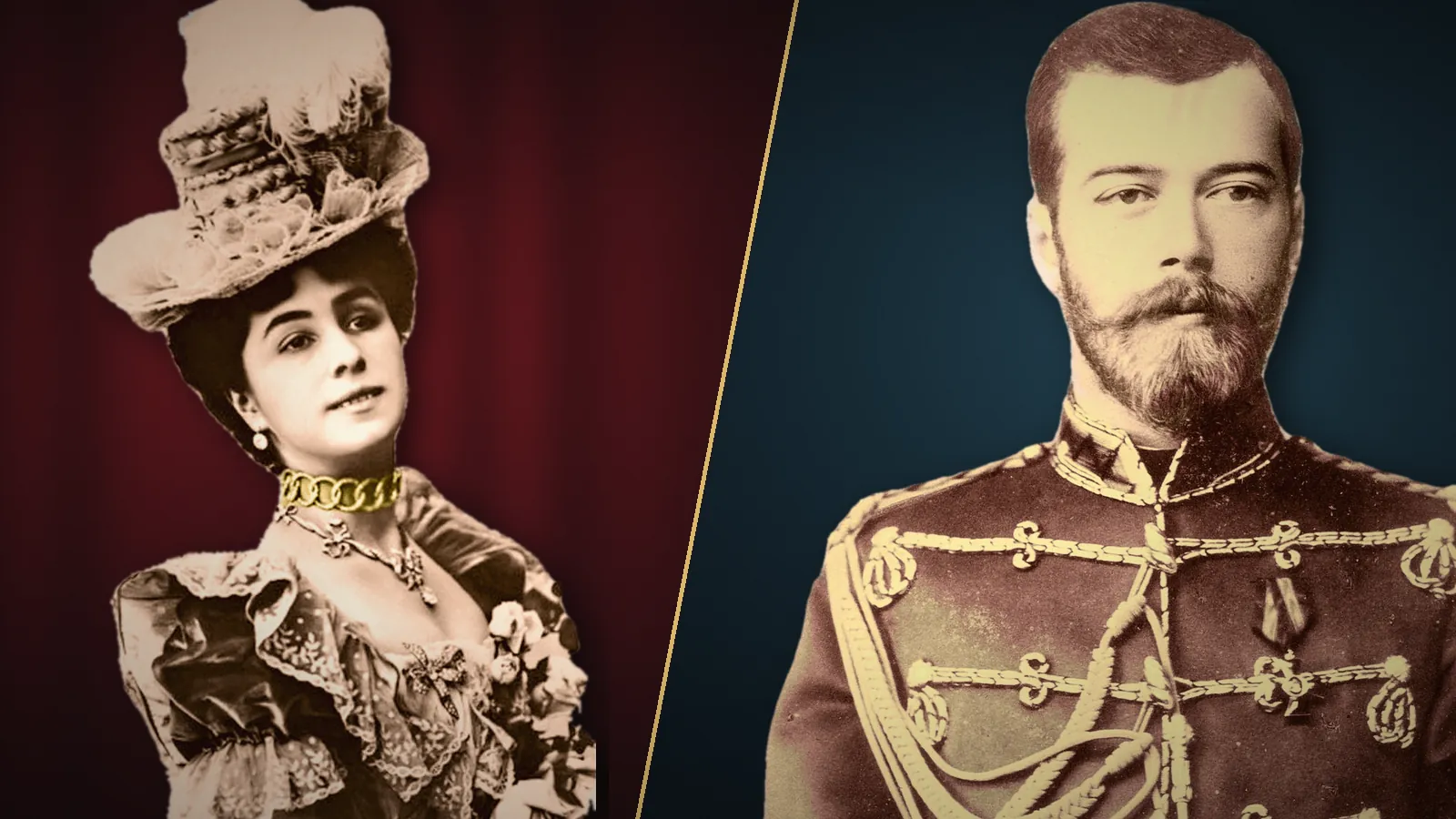
Was she the Emperor’s lover Kschessinska — or a real prima?
At seventeen she sat between the Emperor and the future Emperor. People said that was the only reason she became the prima of the Imperial ballet.
Prima only because of the Emperor?
People called her the lover of Nicholas the Second, the last Emperor of Russia. And they said it was the only reason she became the prima of the Imperial ballet. Was it true? Or did she earn it herself?
In this story: what Lenin was doing on a ballerina’s balcony, why two men from her living room were killed almost on the same day, and which world-famous ballerina came to her for lessons.
And the main question. How did she get everything from the empire? And what happened to her when that empire was gone?
This story won’t leave anyone cold, even if you’re not a big ballet fan. It’s full of secrets and conspiracy theories.
And it all begins at a school graduation show in St Petersburg, where a seventeen-year-old girl is about to meet the future Emperor.
The White Mug
St Petersburg · 23 March 1890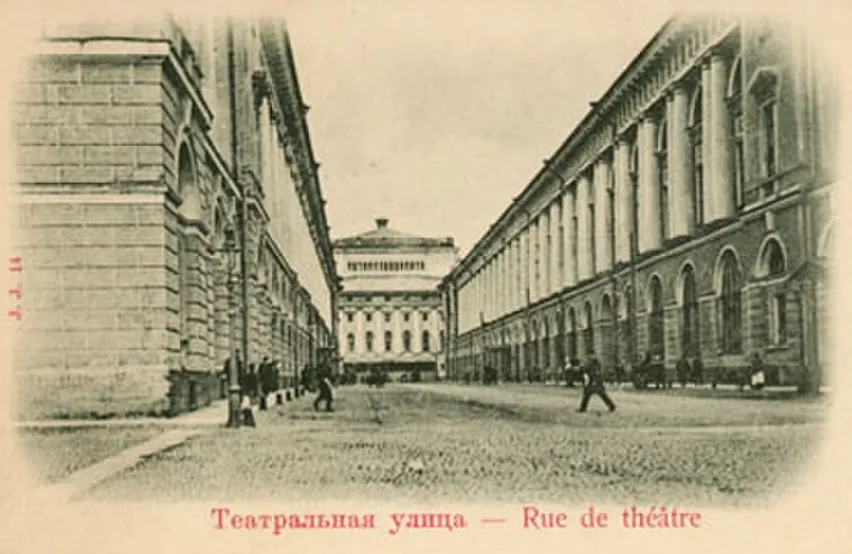
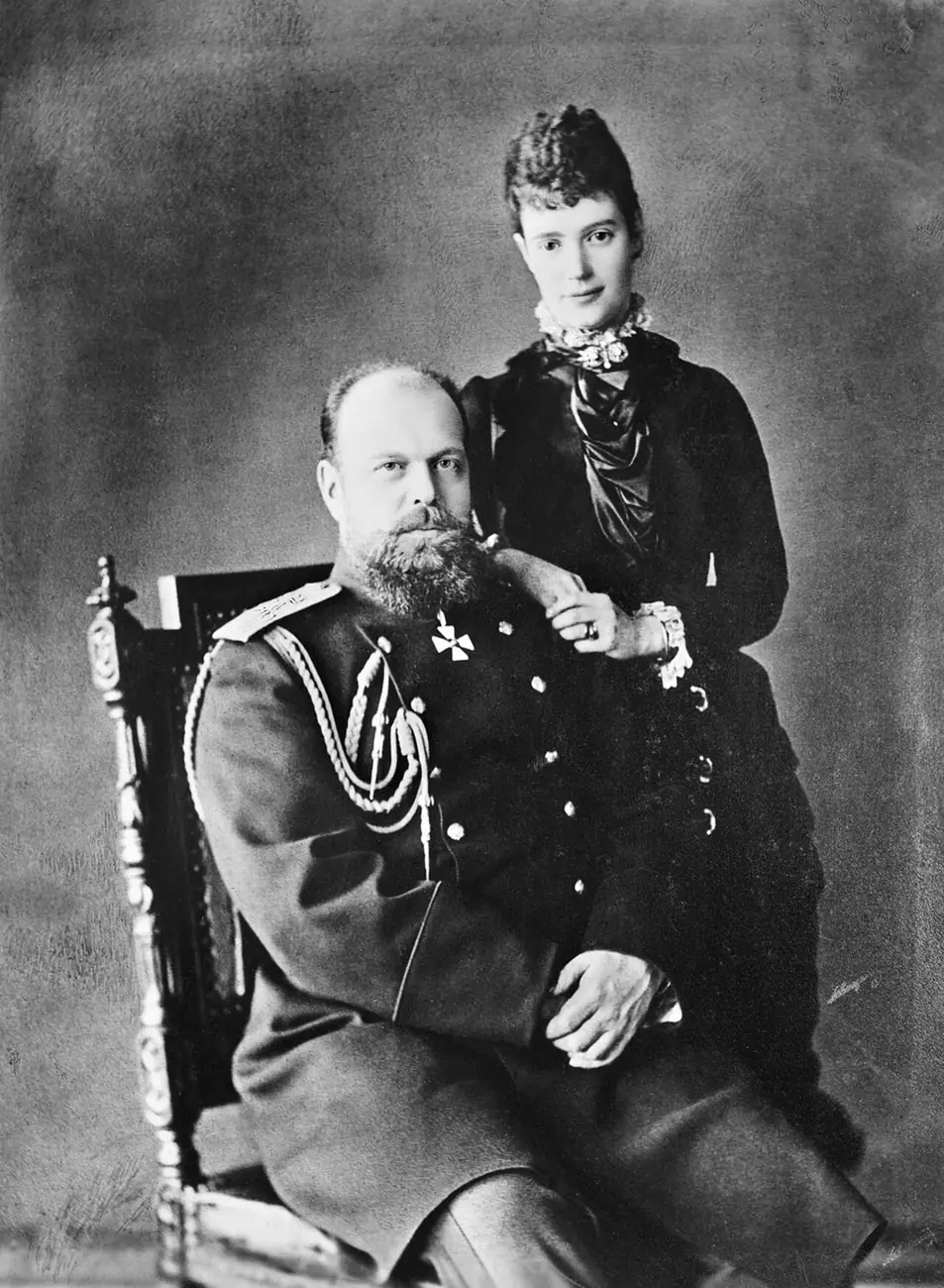
St Petersburg, the 23rd of March 1890. It is the graduation show of the Imperial Theatre School. In the hall sits Emperor Alexander the Third with the whole royal family, and with them his son and heir, twenty-one-year-old Nicholas.
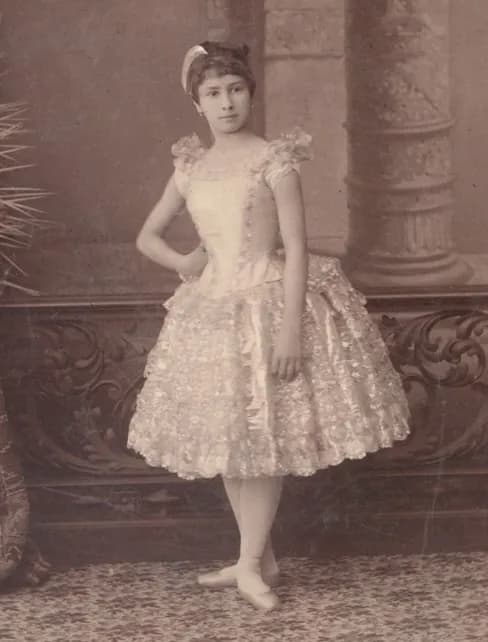
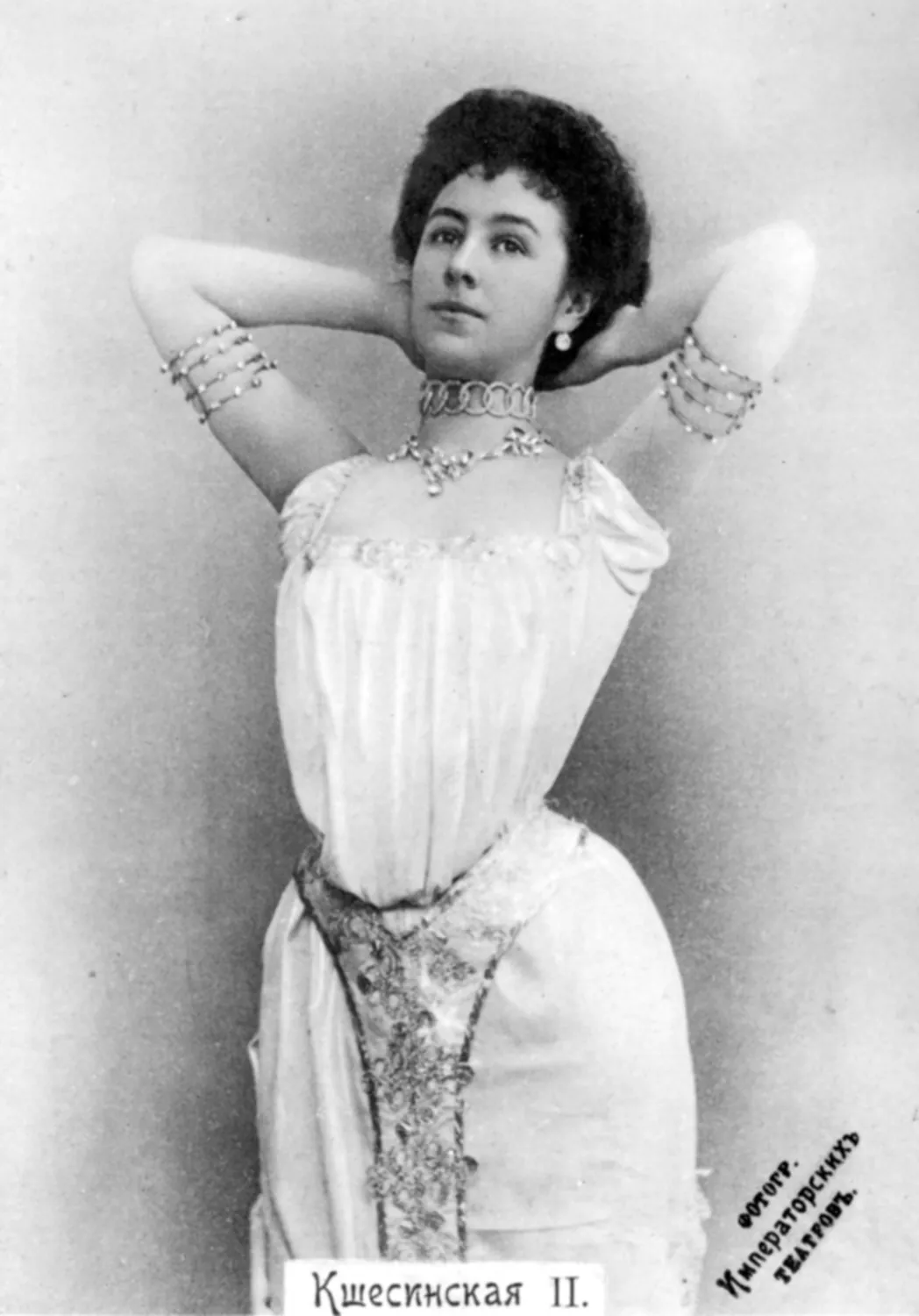
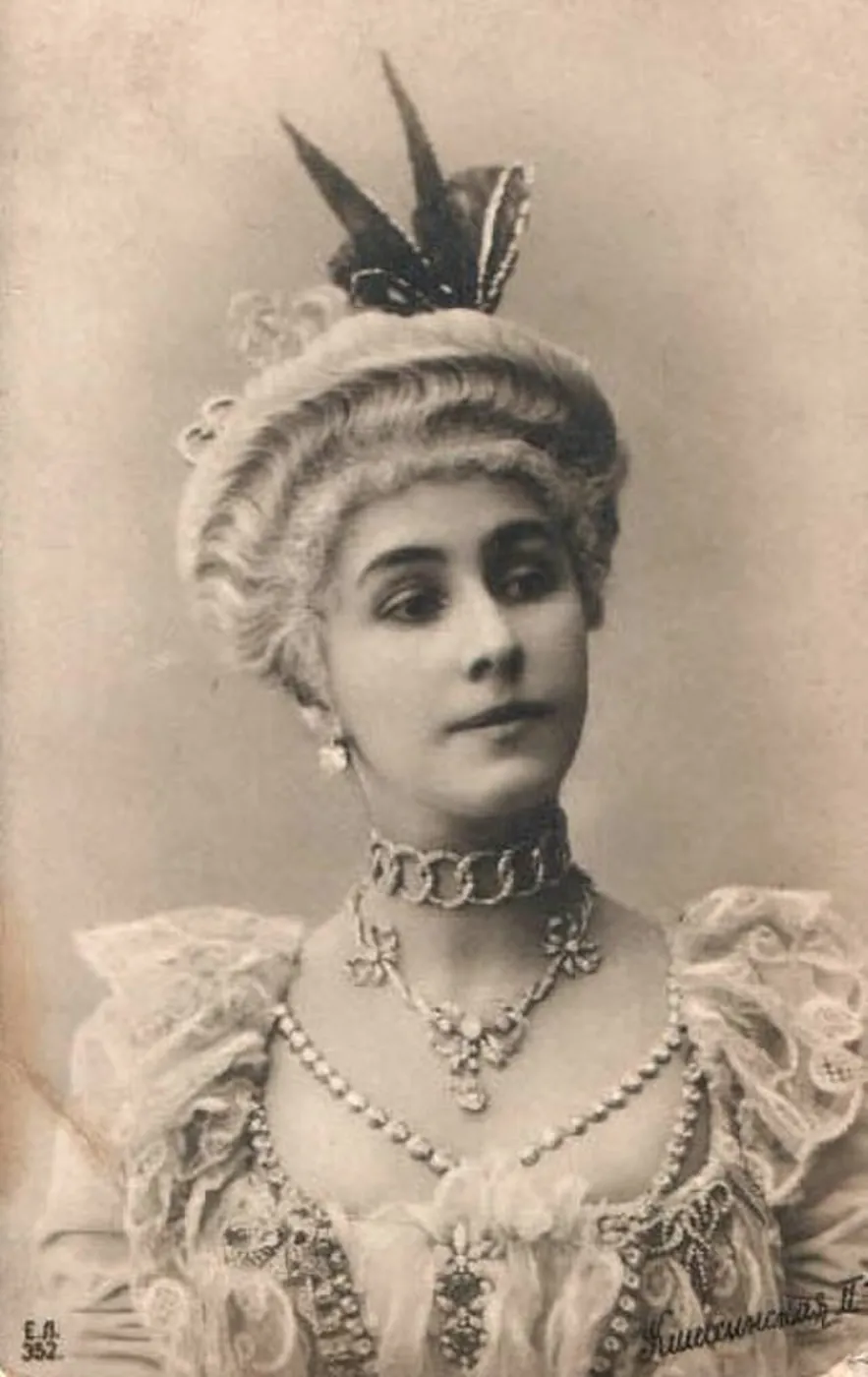
On stage is a seventeen-year-old girl in her last school show: Mathilde Kschessinska. Ballet runs in her family. Her father is a famous dancer, and her older sister is already at the theatre. So on the posters, Mathilde is simply Kschessinska the Second.
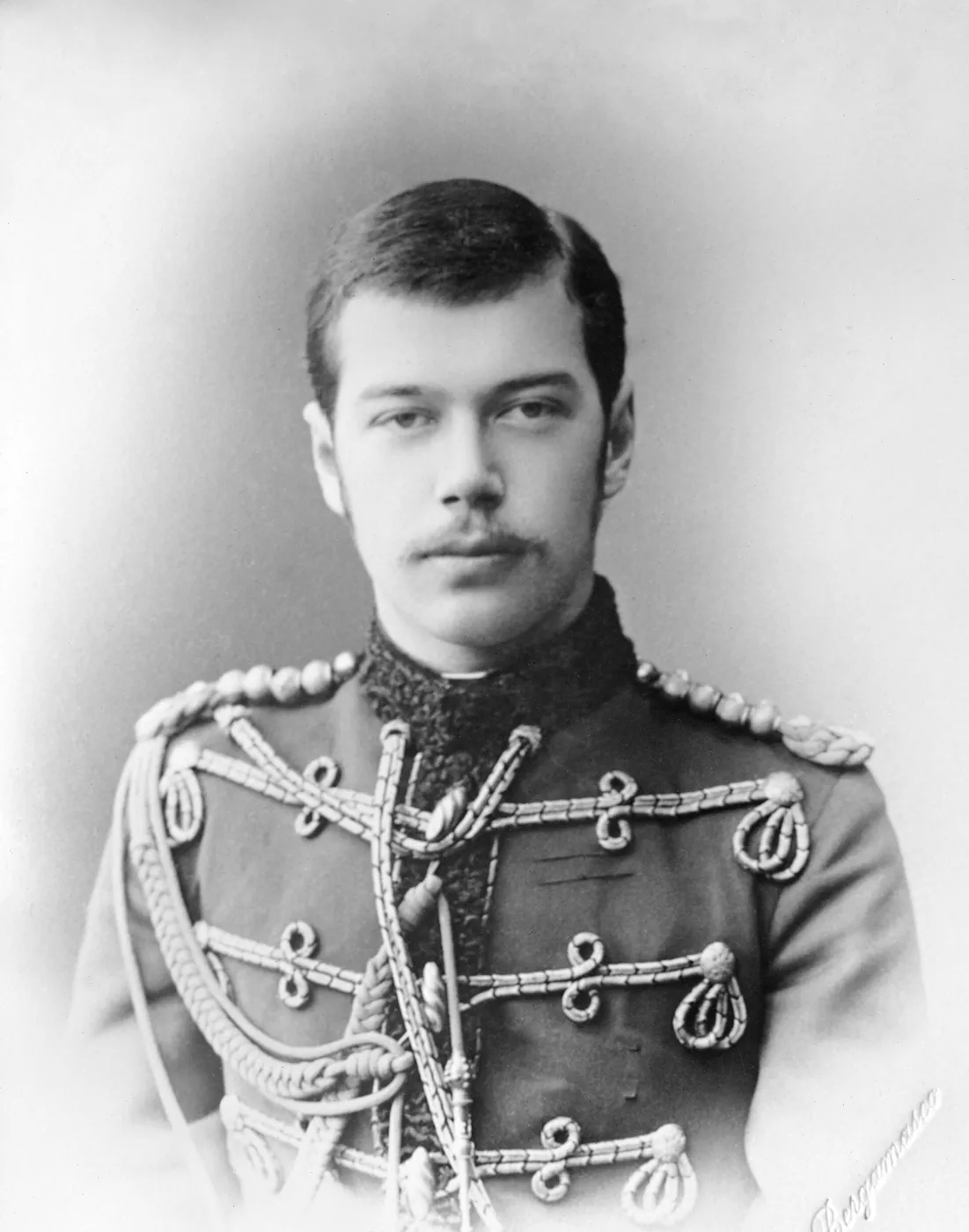
After the show, the pupils gather to be presented to the royal family. By custom, the boarders go first and the day pupils after them. Mathilde is a day pupil, so she waits off to the side.
But the Emperor walks in and asks for her by name. He holds out his hand to her and says:
“Be the jewel and the glory of our ballet.”
Remember these words. We’ll need them at the very end.
Then comes supper, and again the Emperor singles her out. He seats her next to himself, puts his son on her other side, and jokes that the two of them shouldn’t flirt too much.
Seventeen years old, between the Emperor and the future Emperor.
In front of every place stands a plain white school mug. The heir looks at it and asks her:
“I suppose you don’t drink from mugs like these at home?”
Nicholas, as Kschessinska remembered it · translated
Just small talk. But she carried it for the rest of her life.
“I fell in love with the Heir at once.”
That night, Nicholas writes in his diary too. A play, a ballet, supper with the pupils. That’s all.
Not a word about her.
Her side of this evening we know only from her own memoirs. When she finally wrote them, you will find out at the very end.
- The Emperor’s words
- A seat at the royal table
- Her school training
How long will that last a girl with no patrons and no roles?
I know that building very well. I studied there too, long after her. Today it’s the Vaganova Academy.
The graduation show is the scariest day of your school life. Eight years of class, and it all comes down to one evening. Your hands are wet. Your legs are shaking. And you still have to smile.
She remembers every word. His diary doesn’t even mention her.
A few months later, her name shows up in his diary. And this time she gets a full sentence.
The Fake Hussar
Krasnoye Selo · Summer 1890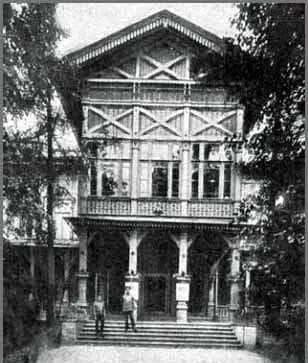
Summer 1890, Krasnoye Selo, outside St Petersburg. This is where the Imperial Guard has its summer camp, and the camp has a wooden theatre for the officers. The heir serves in a Hussar regiment, and he goes to every show. By an old custom, in the interval the royal family goes up on stage to talk to the performers.
Kschessinska has just joined the company of the Imperial Theatres. On the 17th of July, Nicholas writes in his diary about her. This time the marker finds her name.
That autumn he leaves on a journey to the East, for almost a whole year.
- Her parents’ homeuntil 1893
- The house behind the fenceEnglish Prospect, 1893
- The mansion1906–1917
- A room for lessonsParis, 1929
Winter 1892. Mathilde still lives with her parents. One evening she is home alone. Her eye hurts, and she has a bandage over it. The maid announces a visitor: Hussar Volkov, the heir’s friend from the regiment. Mathilde tells her to show the guest into the living room.
The door opens. And in walks the heir himself.
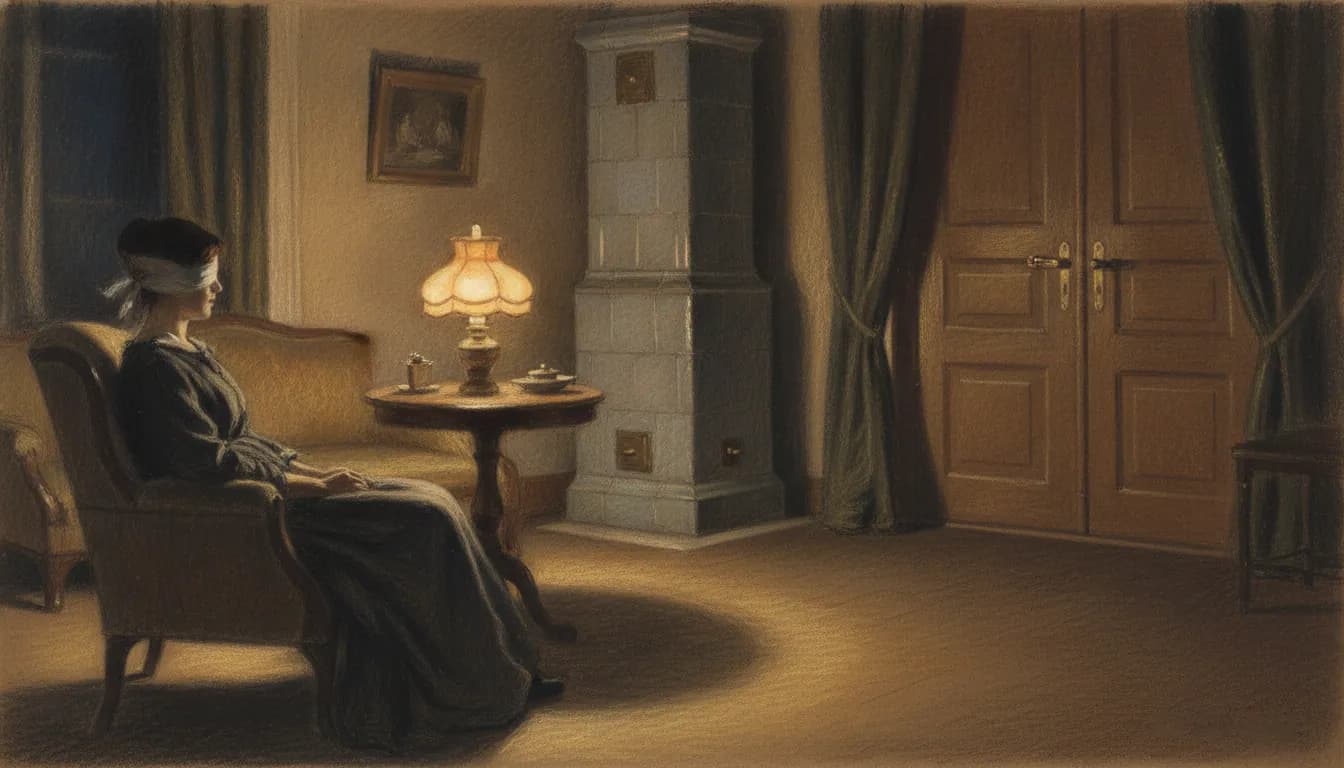
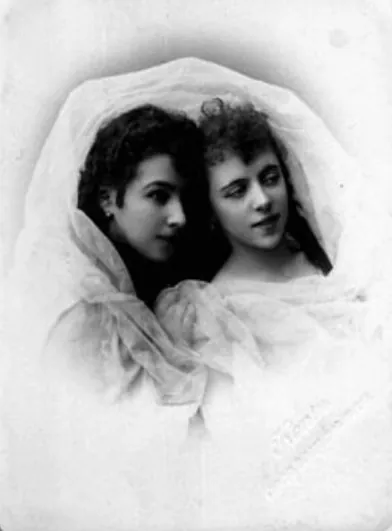
Today, stars check into hotels under fake names so that nobody recognises them. It’s the same trick. This scene, too, we know only from her. After that, she says, he comes often.
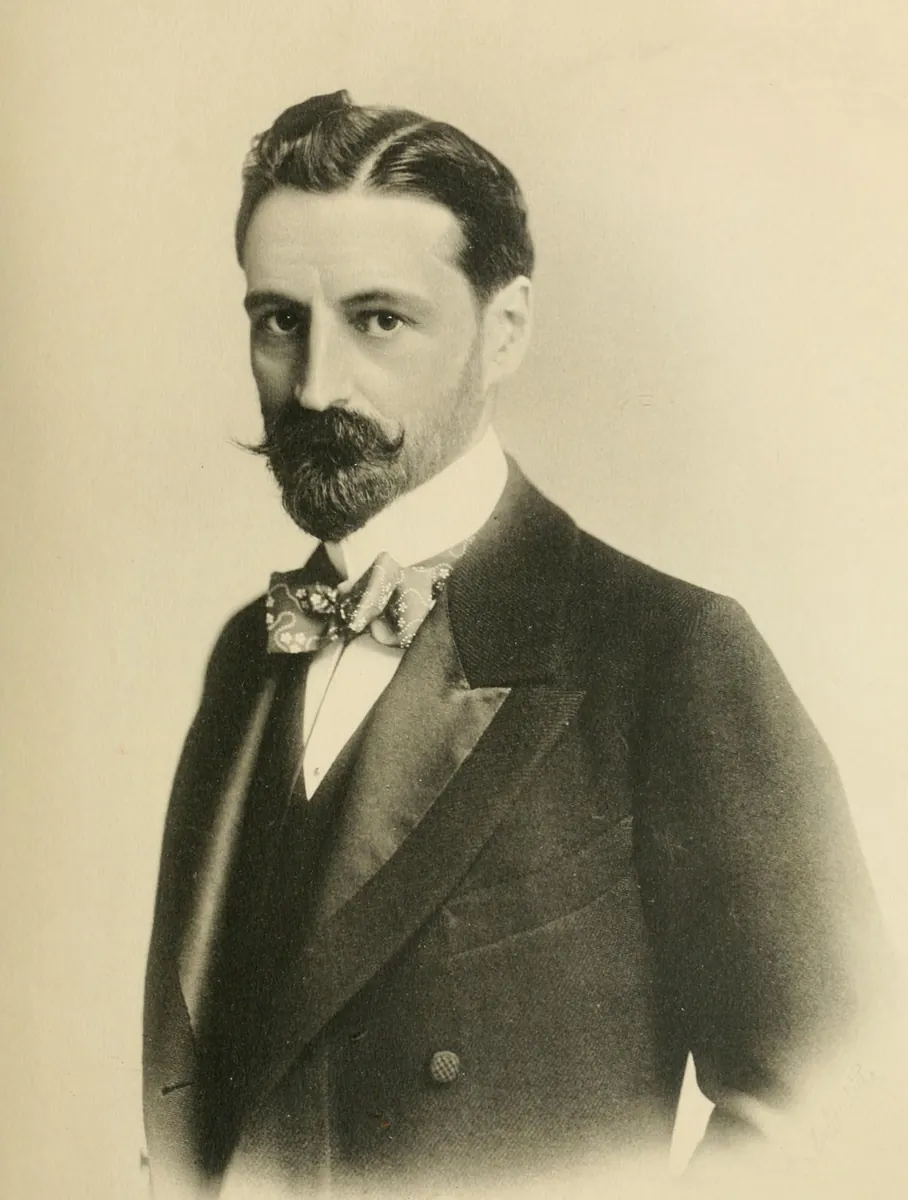
Sometimes the young Grand Dukes come with him, the Mikhailovich brothers. Remember one of them, Sergei. He will come back into this story.
“Remember Taras Bulba, and what Andriy did when he fell in love with a Polish girl.”
In Gogol’s story, Andriy betrays his father and his homeland for that love. And the Kschessinskys are a Polish family.
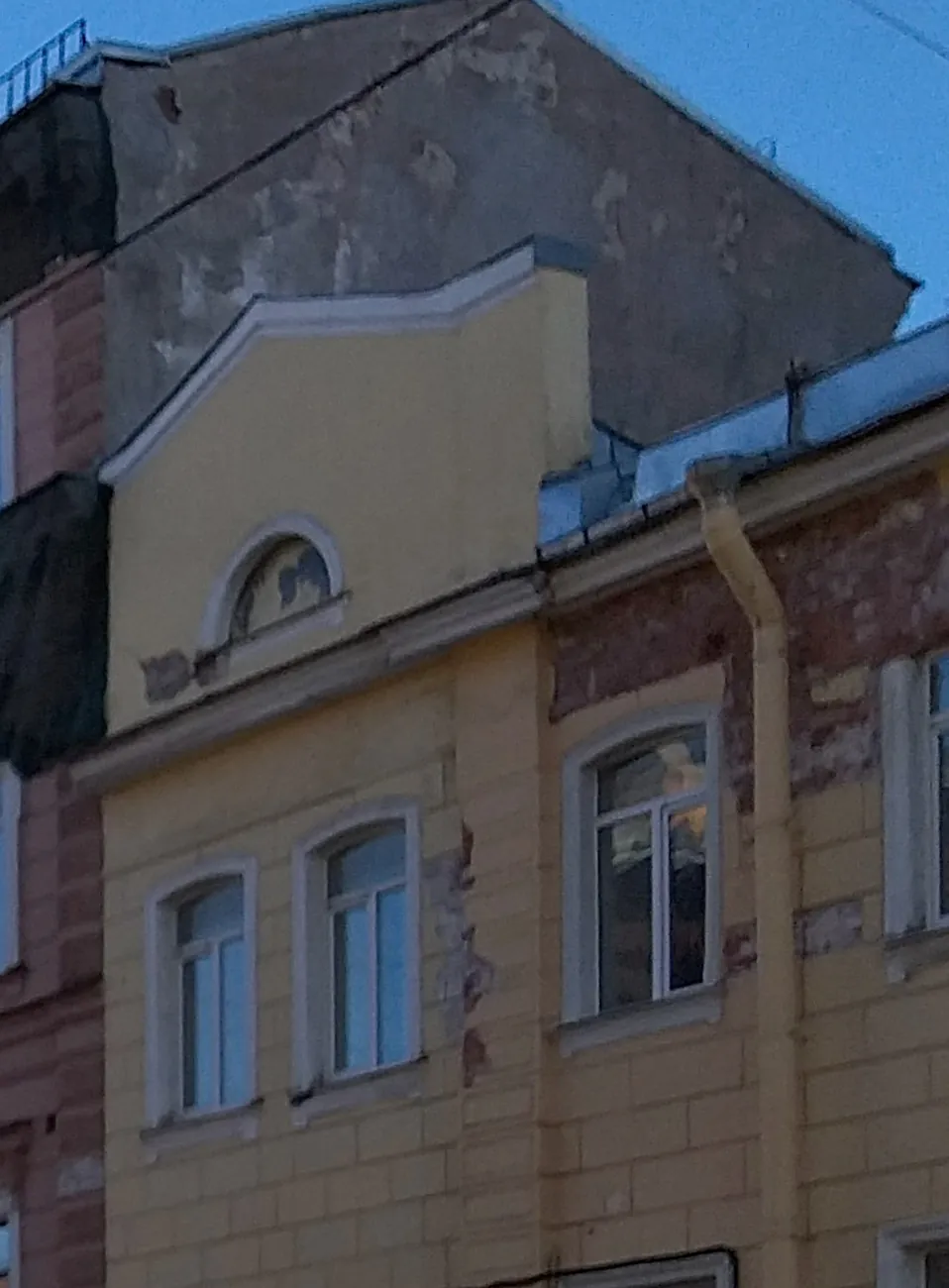
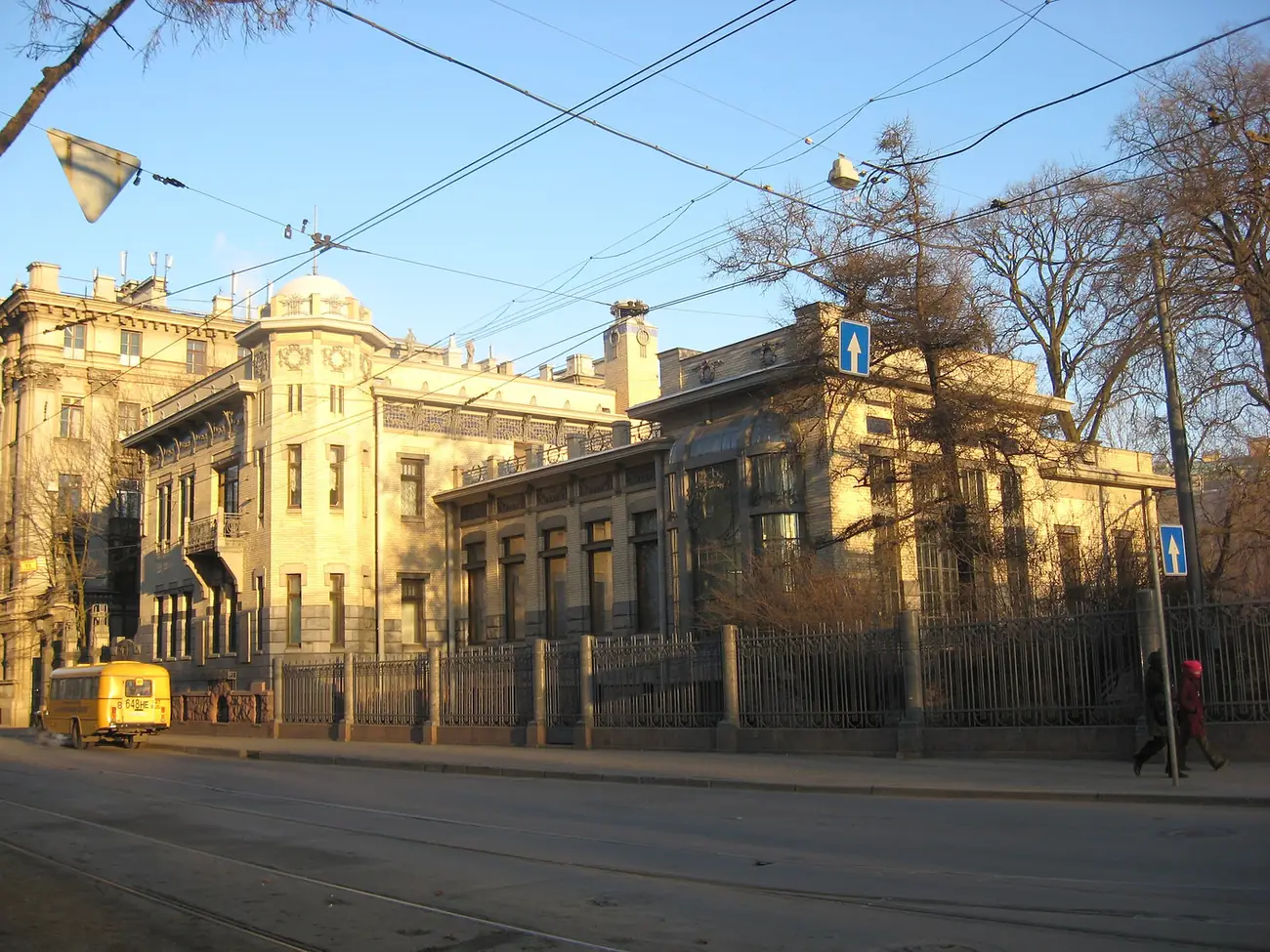
For their meetings they need a place of their own. In early 1893 Mathilde moves out of her parents’ home. Her second home is a small two-storey house on the English Prospect, with a garden behind a high fence. According to different sources, the heir bought this house for her.
- Her parents’ homeuntil 1893
- The house behind the fenceEnglish Prospect, 1893
- The mansion1906–1917
- A room for lessonsParis, 1929
On the 25th of January 1893, he writes in his diary again.
It seems this could go on for a long time. But that same year he tells her what she has long expected, and feared. His family is going to marry him off. The bride is Princess Alix of Hesse.
In the heir’s diary, the letters M. K. appear less and less often. By 1894, they are gone.
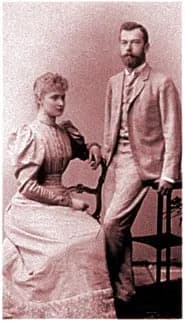
April 1894, Coburg, Germany. Alix of Hesse says yes, and the engagement is announced. Mathilde and Nicholas see each other one last time, outside the city, by a hay barn on the Volkhonskoye road. He rides there from the summer camp.
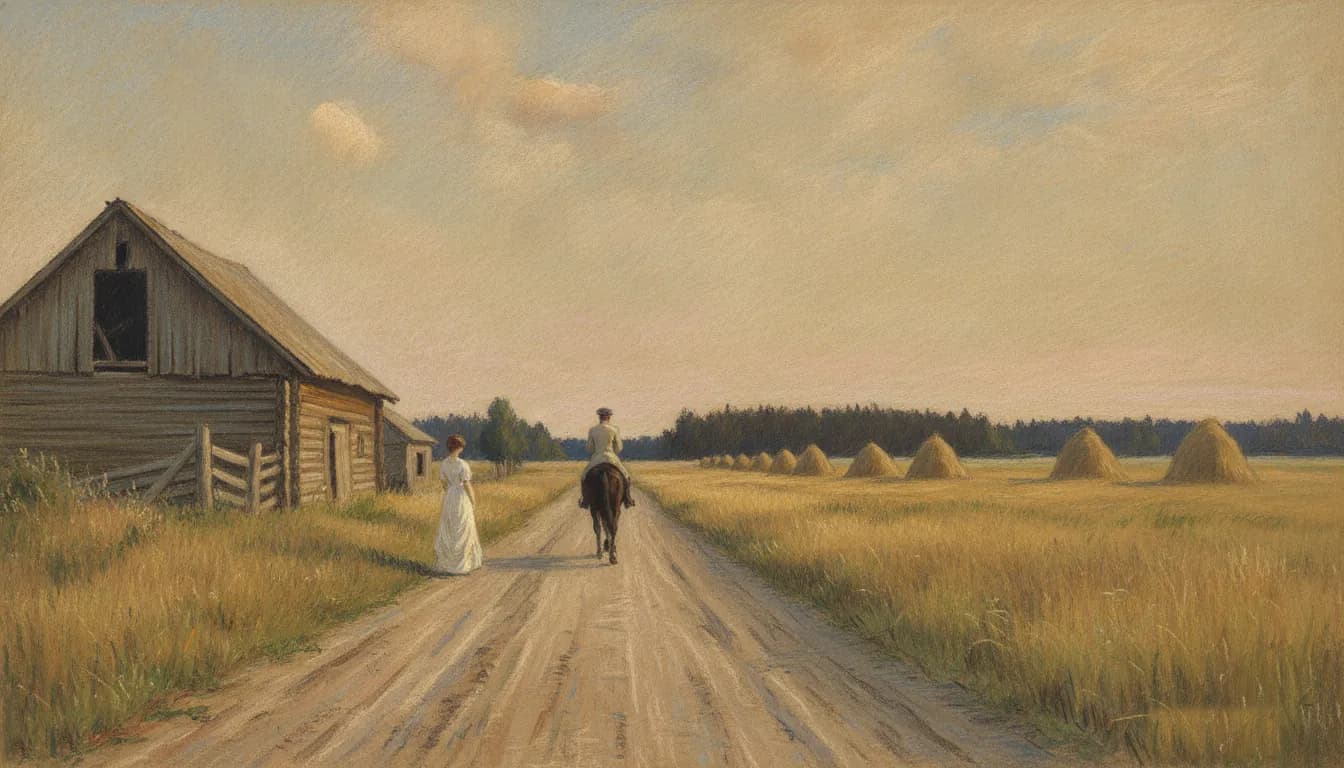
What they talked about, we know only from her. When he rode back to the camp, she stayed by the barn and watched him go, until he disappeared in the distance.
She is twenty-one. Today, that’s the age when people finish university.
The house behind the fence on the English Prospect stays hers. According to her, in a farewell letter he said she could turn to him with any request. Historian Alexei Kulegin tells it the same way.
In the autumn of 1894 Alexander the Third dies. Nicholas is twenty-six, and he becomes Emperor. Less than a month later he marries Alix. Now she is Empress Alexandra Feodorovna.
How close was their romance?
Historians still argue.
That is what all of St Petersburg said about her. The diary gives no direct answer, and the memoirs tell only her side. One thing we know for sure: once he married, Nicholas was faithful to his wife.
- The house behind the fence
- A place in the company
- The heir in her living room
Kschessinska stays in his theatre. Now she has to decide who she will be there. Will patronage alone be enough?
From day one, she knew he could never marry a dancer. But she was barely twenty. At that age, you think about tonight.
Her theatre belonged to the court. The director answered to the minister, and the minister answered to the Emperor. So the man in her living room was, in a way, her boss too.
If the story stopped here, nobody would remember her today. St Petersburg had lots of pretty dancers.
The fouetté
- 1 You stand on one leg, on pointe, and spin.
- 2 The other leg whips out and back in. It pushes you on, again and again.
- 3 Your eyes pick one point in the hall, and catch it each time.
- 20 After about twenty, your standing leg starts to burn. Your head wants to stop.
Now do thirty-two in a row. On one spot. At the end of a whole ballet.
In the early 1890s, Russian audiences hadn’t seen that before. And then an Italian ballerina arrived.
Thirty-Two
The Mariinsky Theatre · 1893–1902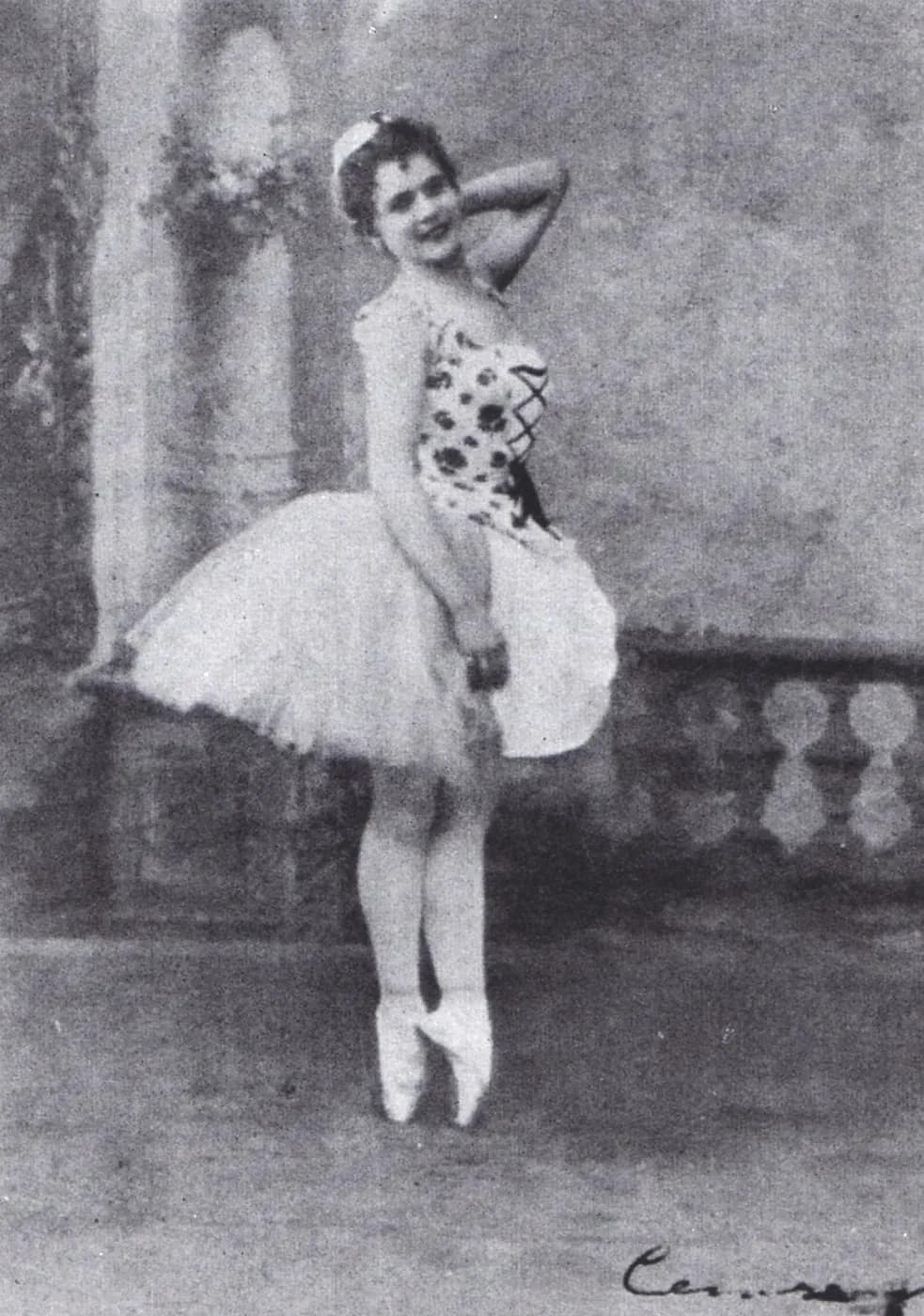
We already know how Kschessinska got into the theatre. Now the question is how to stay on that stage. To answer it, let’s go back a little, to December 1893. The Mariinsky Theatre premieres the ballet Cinderella. In the finale, the Italian ballerina Pierina Legnani does thirty-two fouettés in a row.
The audience has never seen anything like it. Today it would be a bit like a figure skater landing a triple axel. In those years, Italian ballerinas are the biggest stars on the St Petersburg stage. They have a brilliant technique that the Russian school doesn’t have yet.
Kschessinska wants the same. She learns the Italian technique from the teacher Enrico Cecchetti. She had been going to him since the early 1890s.
According to her memoirs, her old teacher, Christian Johansson, took offence. In front of everyone, he told her:
“If you don’t like my teaching, I can stop teaching you altogether.”
By her account, she also worked on the Italian technique on her own. Ballet historians name other people who helped her too. And sources disagree on when, and in which ballet, she first did the thirty-two fouettés.
But Kschessinska is considered the first Russian ballerina to dance them.
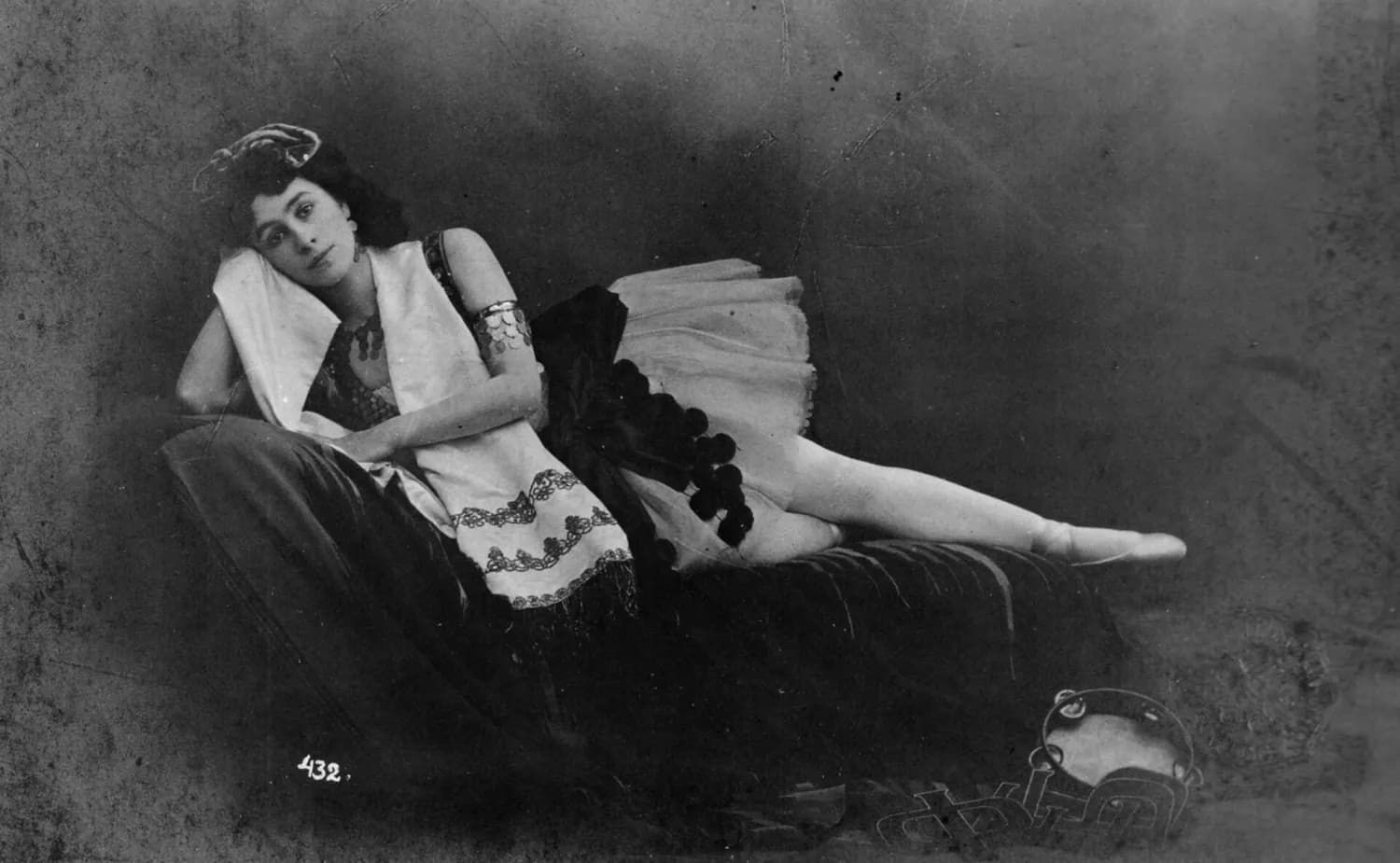
In the mid-1890s she gets the title of ballerina, the highest rank in the company. By then the romance with the heir is over. But the heir is now the Emperor, and the theatre is Imperial. Ahead are her signature roles, and among them, Esmeralda.
- The house behind the fenceFrom the heir, by different accounts
- The title of ballerinaFrom the theatre
- Thirty-two turns on one spotShe did them herself, in front of the whole audience
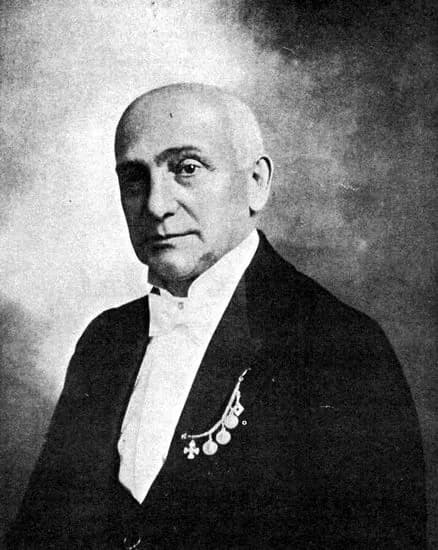
But a few years later, the director of the Imperial Theatres himself picks a fight with her. It is Prince Sergei Volkonsky.
In the ballet Camargo, Kschessinska dances in an eighteenth-century costume. A costume like that comes with panniers: a frame that makes the skirt wide at the sides. Kschessinska goes on stage without the panniers. The director fines her.
- To
- Ballerina M. Kschessinska
- For
- Dancing Camargo without the panniers
- Signed
- Prince S. Volkonsky, director
The fine is small. But, by her account, she takes it as an insult. Soon the fine is cancelled by an order from above. In 1901, Volkonsky resigns.
So the director of the Imperial Theatres lost a fight with a ballerina.
Over a skirt.
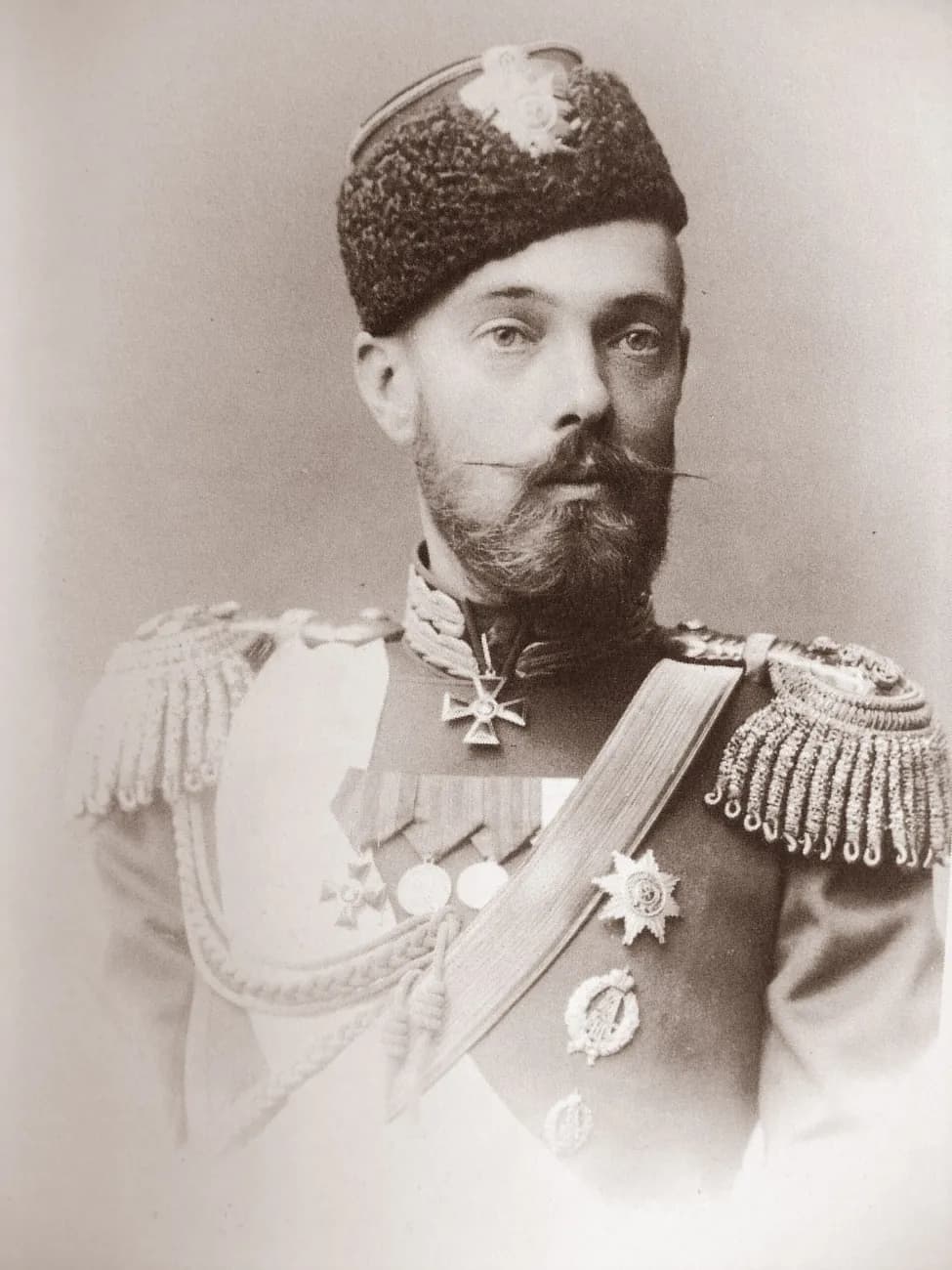
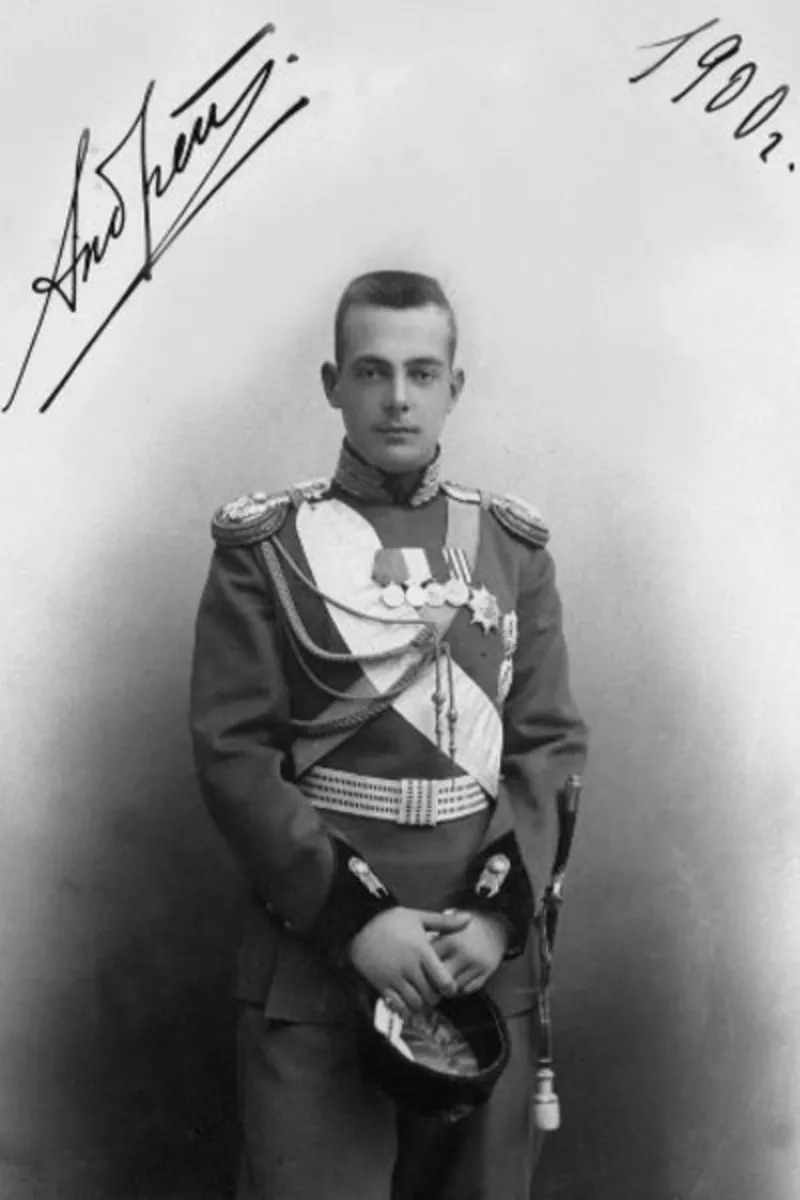
Everyone in St Petersburg knows who stands behind her. It is Grand Duke Sergei Mikhailovich, the same Sergei from the Mikhailovich brothers. Then another Grand Duke appears, young Andrei Vladimirovich. He is the Emperor’s cousin.
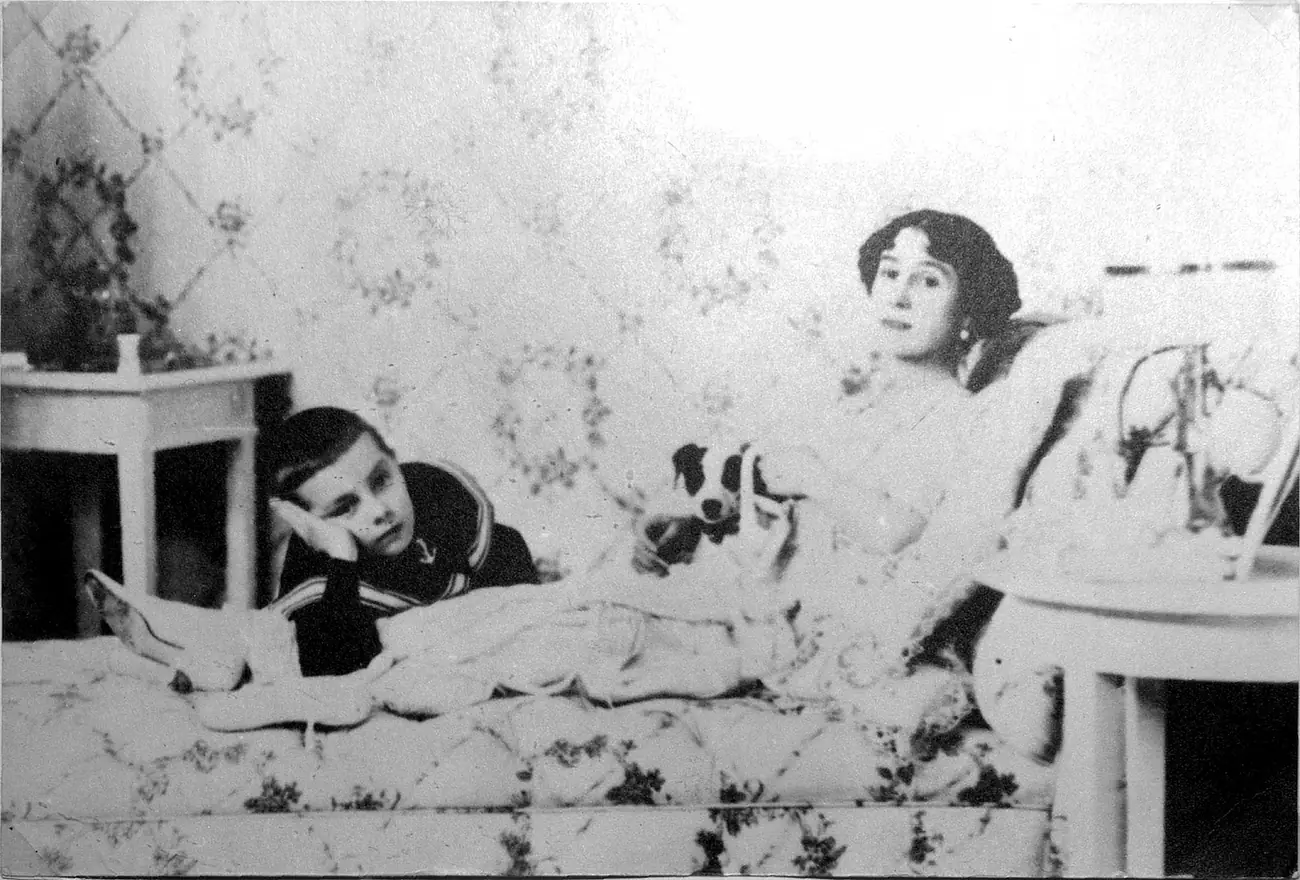
In 1902 Kschessinska gives birth to a son, Vladimir. The boy is given the surname Krasinsky. Sometimes you read that he was Nicholas’s son. But the boy was born eight years after that goodbye by the barn. So was his father Sergei, or Andrei? People still argue about it.
The ballet stage is a very honest place. The audience sees everything. You can’t fake a fouetté. So I respect her for this part. She worked for it, every day, in class.
But every theatre has a second life, backstage. Who gets the role. Who gets the premiere. Who gets the best costume.
An Emperor can open a door for you. But the fouettés, you still do yourself.
And the boy’s father: Sergei or Andrei? Then the main question comes back. How did she get everything from the empire, and what happened to her when that empire was gone? First, let’s see how much she had to lose.
Lenin’s Balcony
St Petersburg · 1904–1917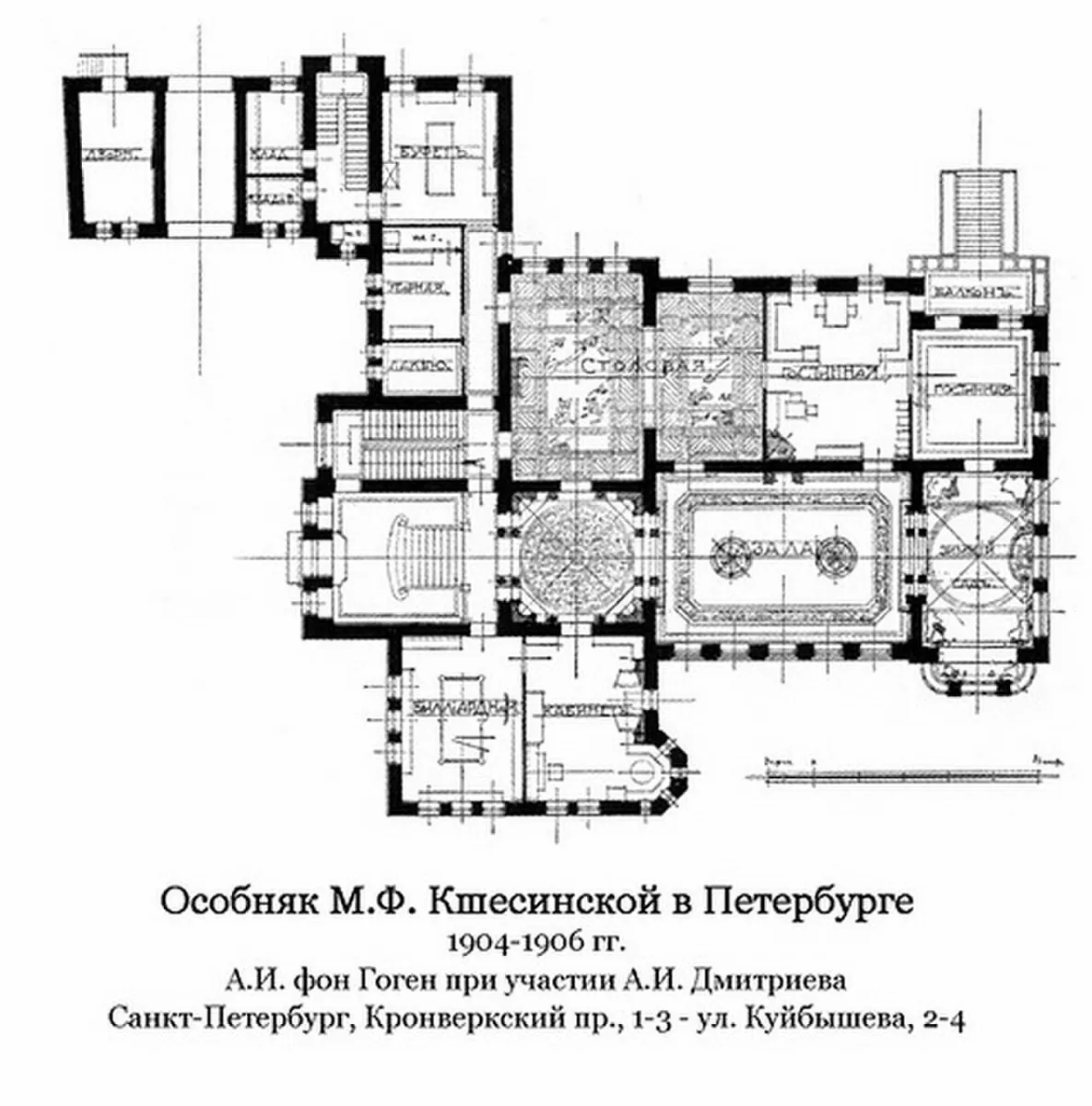
In 1904 Kschessinska buys a plot of land on the Petersburg Side, near the Peter and Paul Fortress. The architect Alexander von Gauguin builds her a mansion in the fashionable Art Nouveau style. Inside there is a big hall and a winter garden. And on the second floor, a balcony.
In today’s terms, it’s a house by the most fashionable architect in town, the kind people stop in the street to look at. In 1906 the mansion is finished. This is her third home. The little house behind the fence on the English Prospect is sold.
- Her parents’ homeuntil 1893
- The house behind the fenceEnglish Prospect, 1893
- The mansion1906–1917
- A room for lessonsParis, 1929
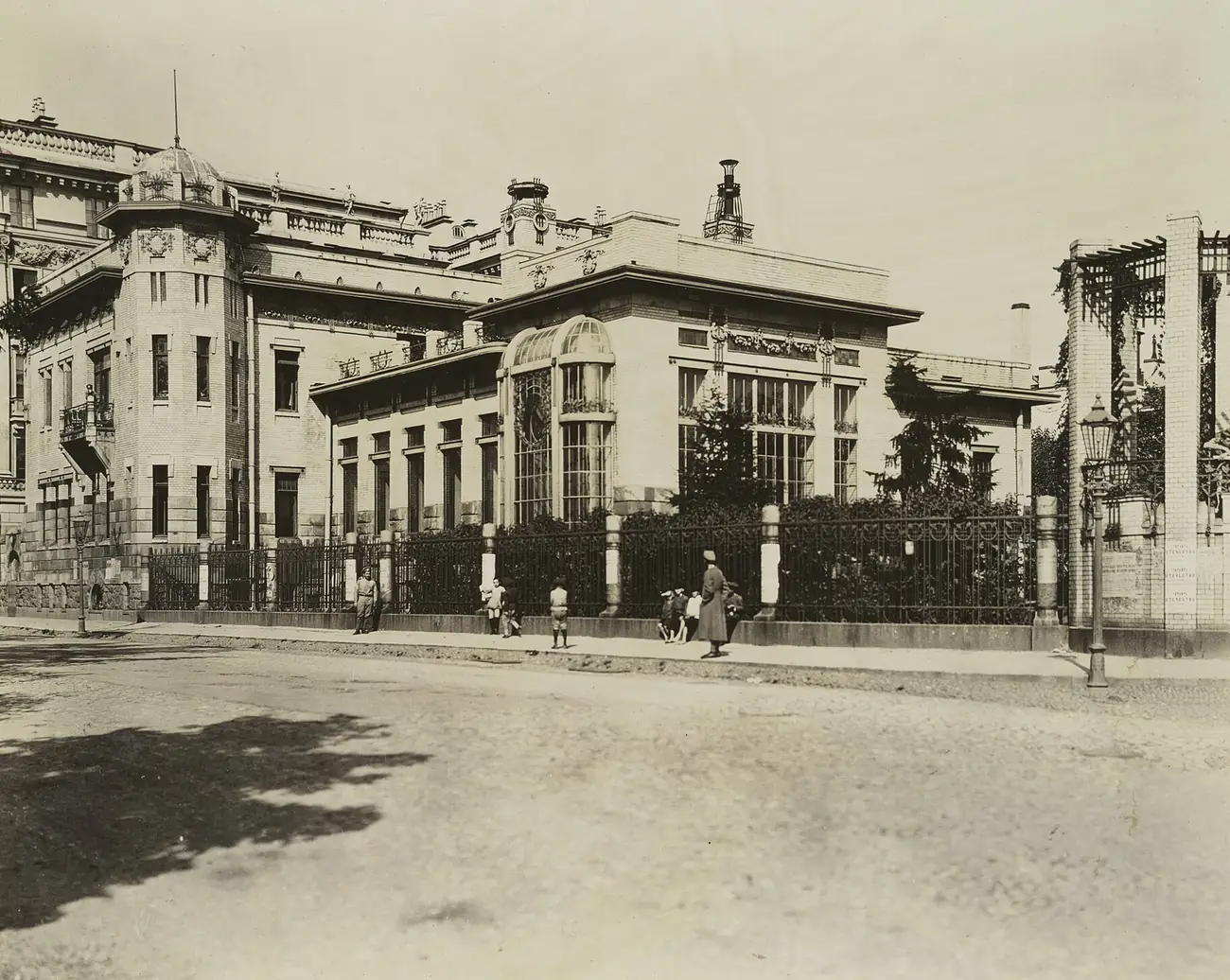
Whose money paid for it is also disputed. Some write it was a gift. The staff of the Theatre Museum believe Kschessinska built it with her own money.
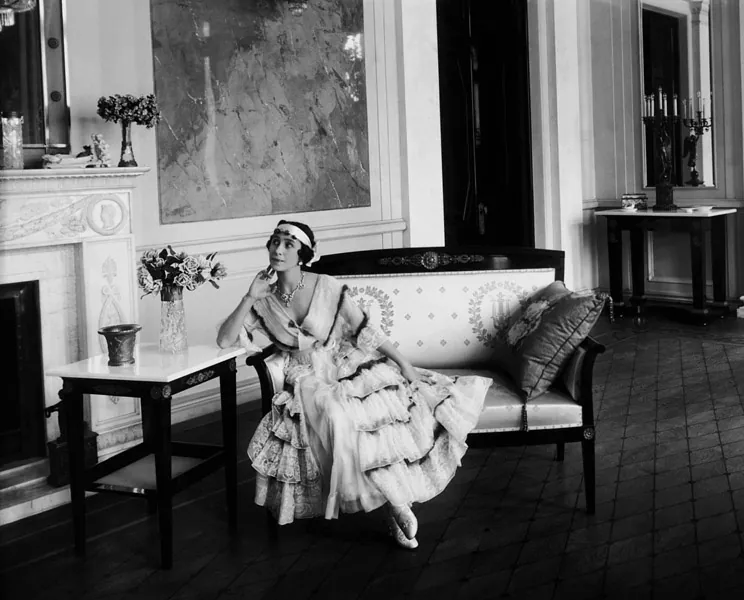
- A mansion with a balcony
- A son
- Two Grand Dukes
- Her signature roles
It seems she now has everything an empire can give.
Eleven years pass.
And one day in February, she has to leave this house with one small bag.
The 27th of February 1917. There is a revolution in Petrograd. People are shooting in the streets. According to her memoirs, she packs her jewels into a small bag, takes her son and leaves the house. In the rush, she almost forgets her fox terrier, Djibi.
A few days later, soldiers from a reserve armoured unit walk into the empty mansion. After them come the Bolsheviks. Now Bolshevik committees and their military organisation hold meetings in her rooms. Imagine strangers moving into your home, and all you can do is write complaints. On the 31st of March, Kschessinska asks the prosecutor to give her house back.
Late at night on the 3rd of April, an armoured car pulls up to her house. Vladimir Lenin has just come back from exile. He comes here straight from the Finland Station.
- He walks up to the second floor.
- He steps out onto the balcony.
- And he speaks to the crowd below.
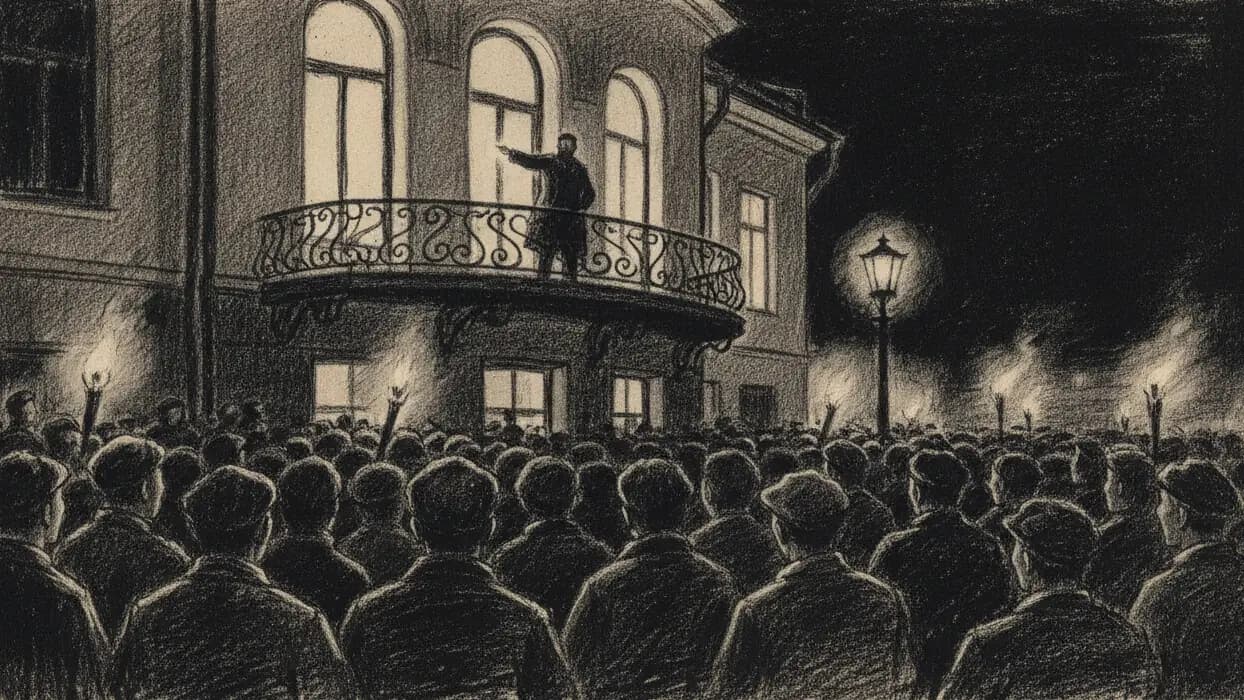
From that night until July, Lenin is in the mansion almost every day. The ballerina’s balcony becomes his platform.
On the 5th of May 1917, the case goes to court. Among the defendants are Bolshevik organisations, and Lenin himself. Justice of the peace Chistoserdov rules that the house must be vacated within twenty days.
Kschessinska wins. But nobody leaves.
And the claim against Lenin himself? The court doesn’t even consider it. It couldn’t establish where he lives. So the man who steps out on her balcony almost every day, as far as the court knows, lives nowhere.
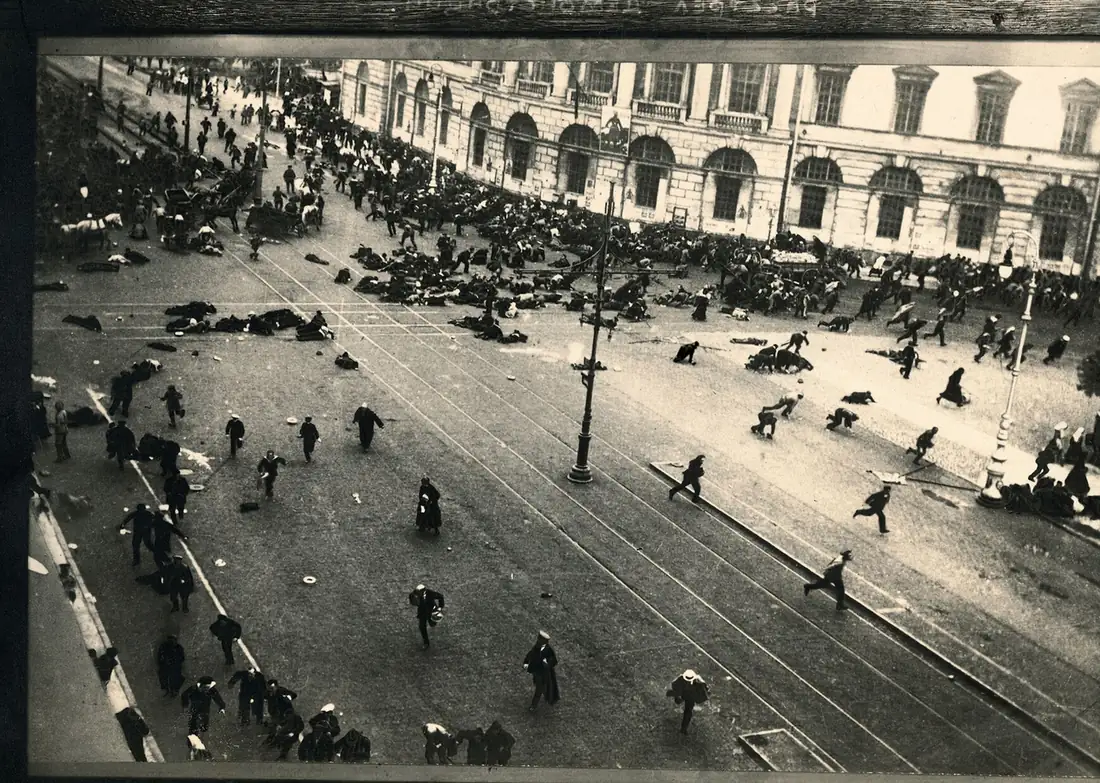
On the 4th of July, during armed demonstrations, Lenin steps out on this balcony to the crowd one more time. Two days later, government troops take the mansion, and the Bolsheviks are thrown out. It would seem the house can now be given back. But that doesn’t help its owner anymore. In July she leaves Petrograd for Kislovodsk. She will never see her third home again.
- A small bag of jewels
- Her son
- The fox terrier
A year later, in July 1918, two men from her living room are killed, almost on the same day. In the early hours of the 17th of July, in Yekaterinburg, Nicholas is shot with his family. The next day, near Alapayevsk, Grand Duke Sergei Mikhailovich is killed.
She took Lenin to court, in the middle of a revolution. And she won.
But as a dancer, I notice another thing. Look at what she saved. Jewels, her son and her dog. The rest stayed behind. Costumes, photos, letters, presents from the audience. For an artist, that’s your whole career in things.
If you had five minutes to leave home, what would you grab first?
The empire gave her almost everything, and now it’s gone. No Emperor. No Imperial Theatre. No house. So what happens to her now? The answer is waiting in a small room in Paris.
The Fourth Home
Paris · 1929For two and a half years Kschessinska lives in Kislovodsk, while the Civil War goes on around her. Then the road takes her out of Russia.
On the 30th of January 1921, in the Russian church in Cannes, she marries Andrei Vladimirovich. She is forty-eight. There is less and less money. In 1929, they move to Paris.
- KislovodskTwo and a half years, while the Civil War goes on around her. Grand Duke Andrei is there too.
- Novorossiysk · early 1920With her son and Andrei, she boards an Italian steamer, the Semiramis.
- Constantinople
- FranceHer villa on the Riviera, at Cap-d’Ail.
Kschessinska gives the first lesson in her own studio.
She is fifty-six.
Today, at that age, many people are thinking about retirement. She opens her fourth home: a room for lessons. Soon she has more than a hundred students.
- Her parents’ homeuntil 1893
- The house behind the fenceEnglish Prospect, 1893
- The mansion1906–1917
- A room for lessonsParis, 1929
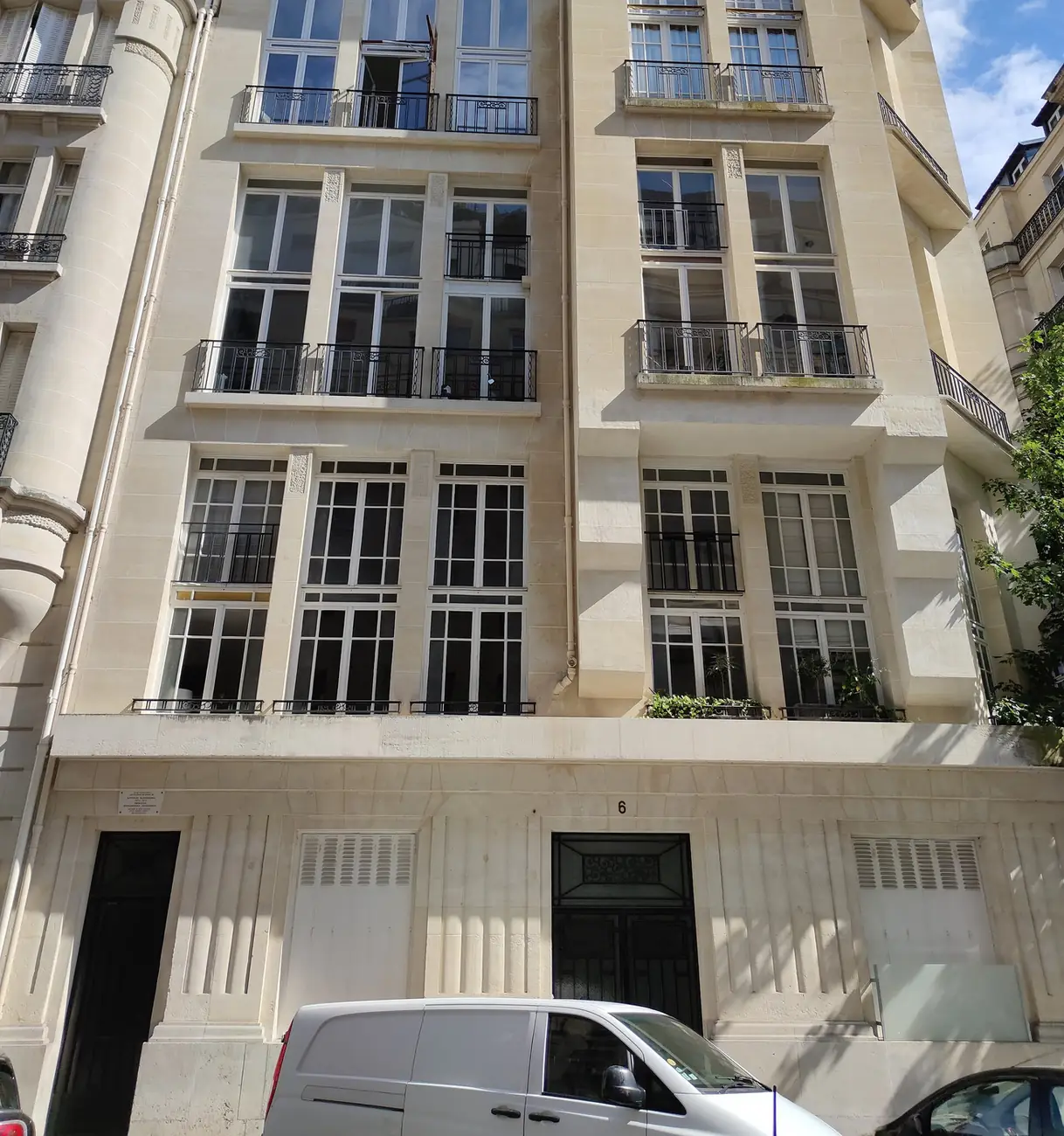
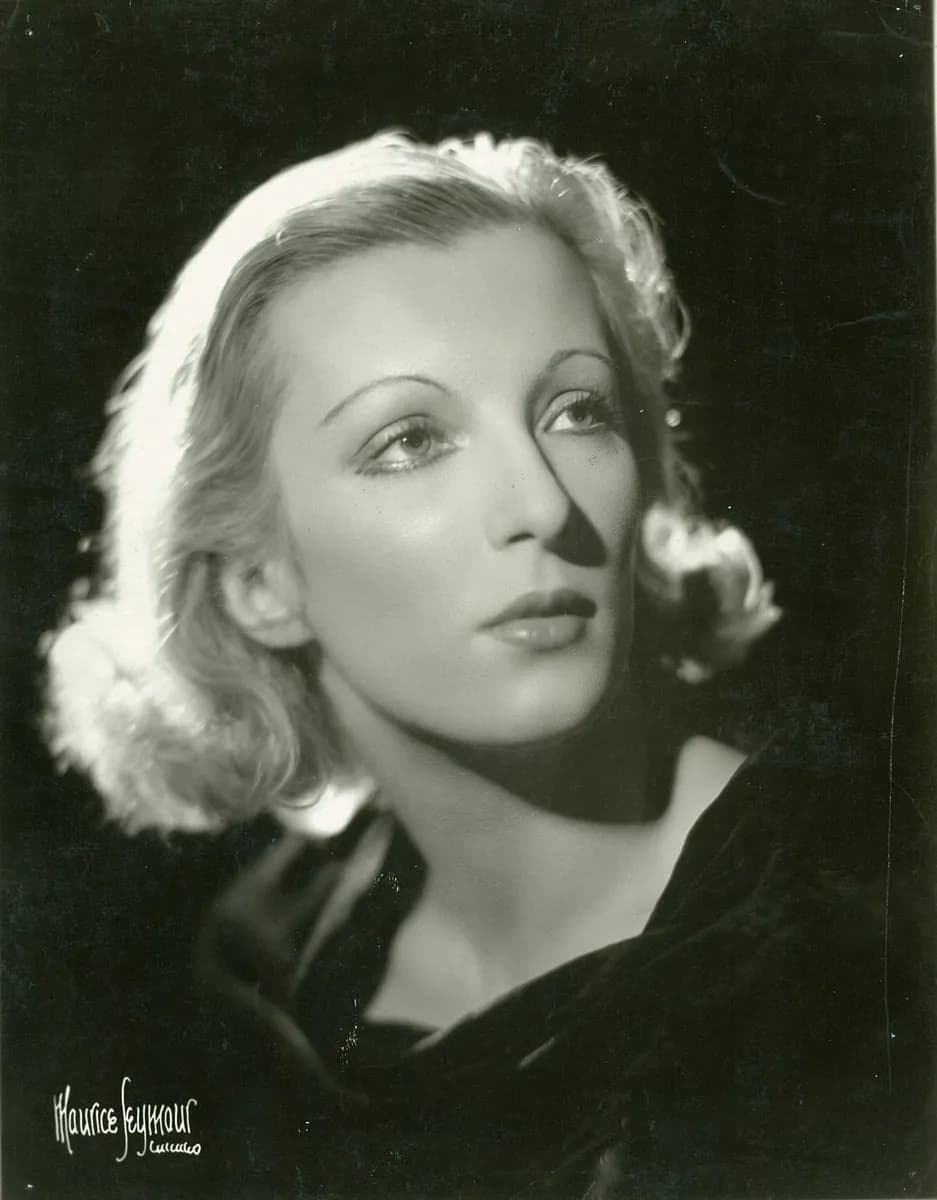
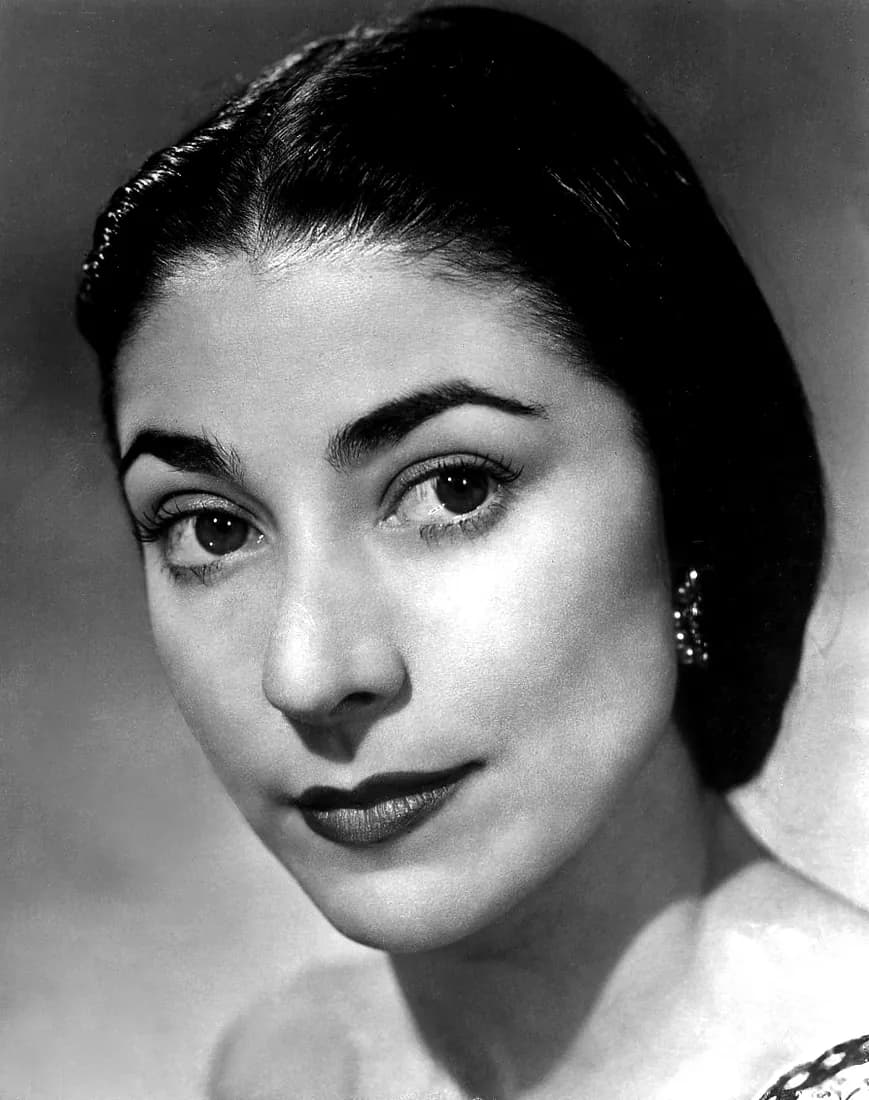
Among those who studied with her were Tatiana Riabouchinska and a young English girl, Margot Fonteyn, who would one day become Britain’s leading ballerina.
In those years, other former stars of the Mariinsky teach in Paris too. From 1923, Olga Preobrajenska, her friend from that photo of 1892, has her own classes. So does Lubov Egorova. The St Petersburg school moves into small Paris studios.
- A room for lessons
- Her students
- What she can do herself
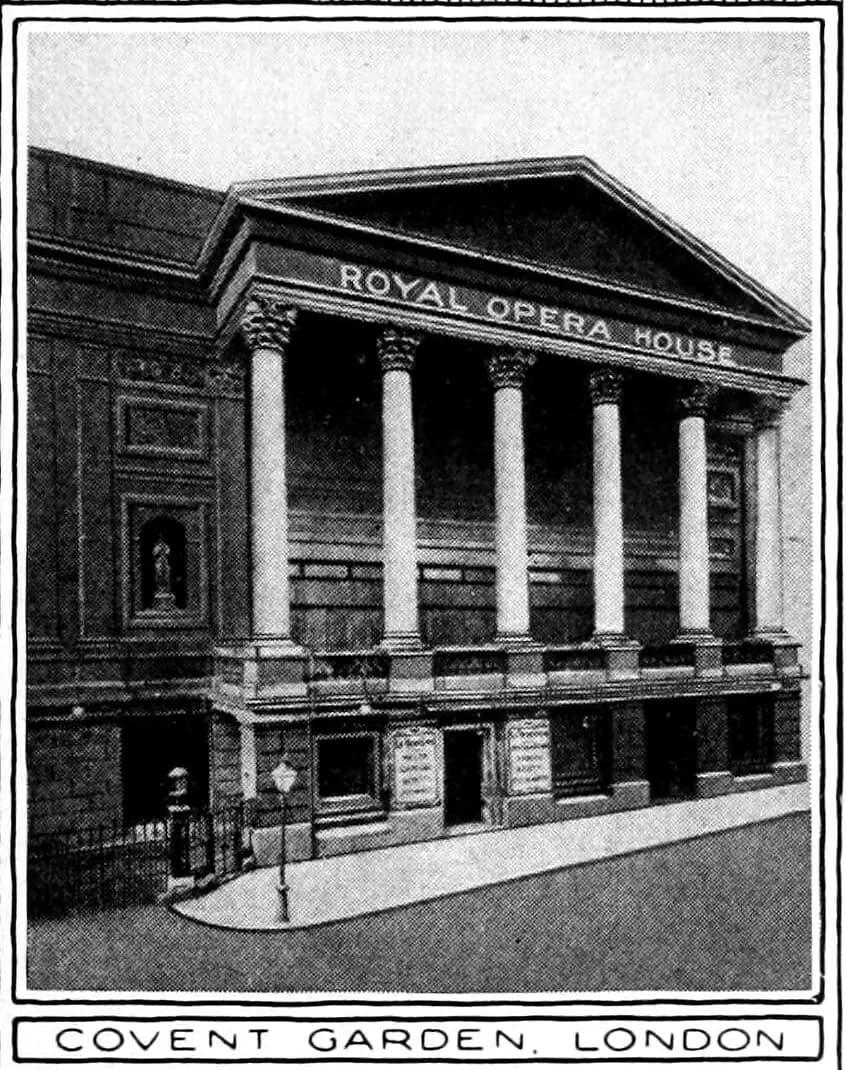
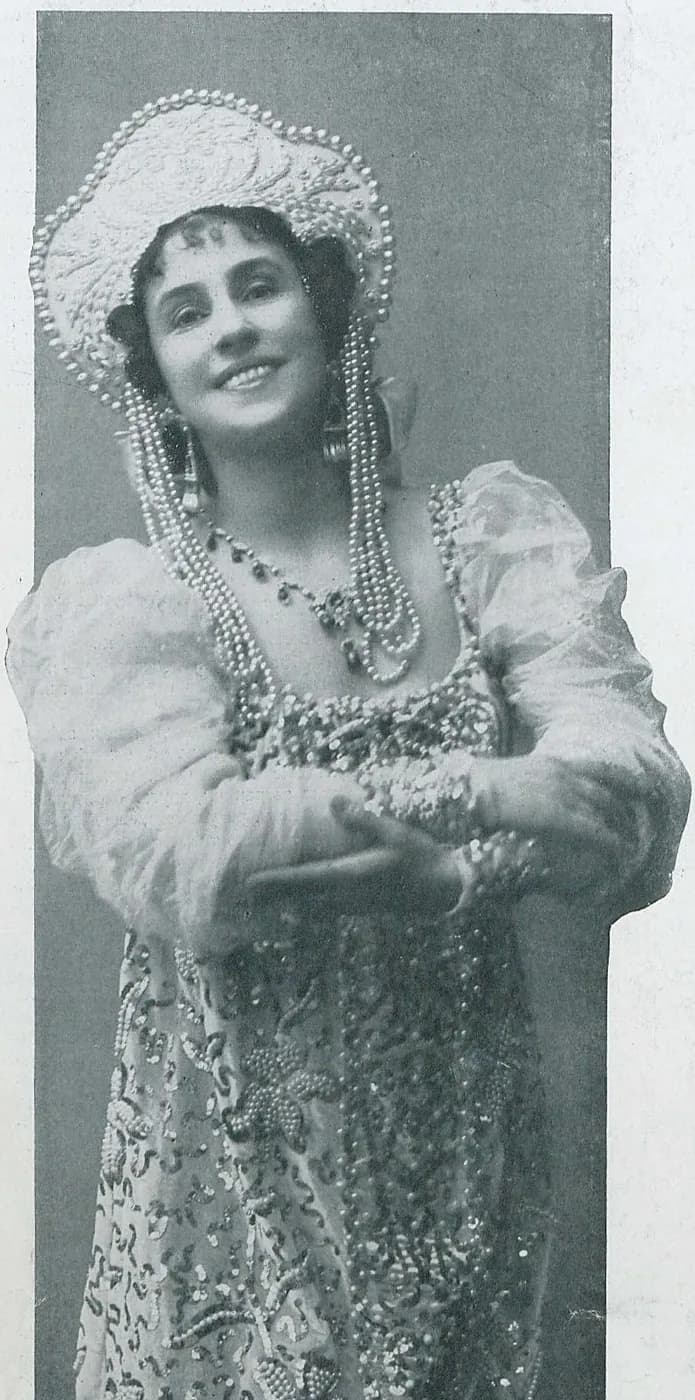
The 14th of July 1936. London, Covent Garden. Kschessinska steps onto the stage for the last time. She is almost sixty-four. She dances her favourite Russian Dance, in a sarafan and a kokoshnik.
By then, the Emperor has been dead for eighteen years.
In 1956 Andrei dies. They had started writing her memoirs together. The book comes out in Paris in 1960. These are the memoirs that told us about the white mug, and Hussar Volkov.
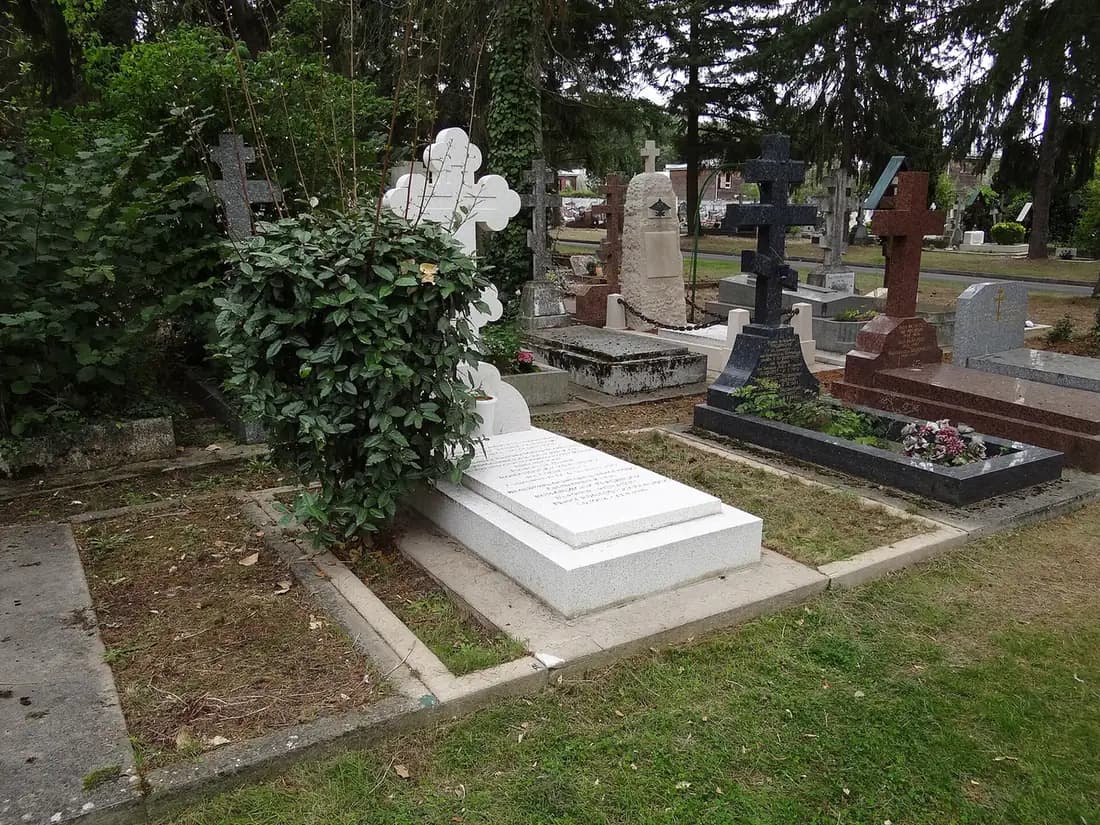
On the 6th of December 1971, Mathilde Kschessinska dies in Paris. She is ninety-nine. She is buried at the Russian cemetery of Sainte-Geneviève-des-Bois, next to her husband.
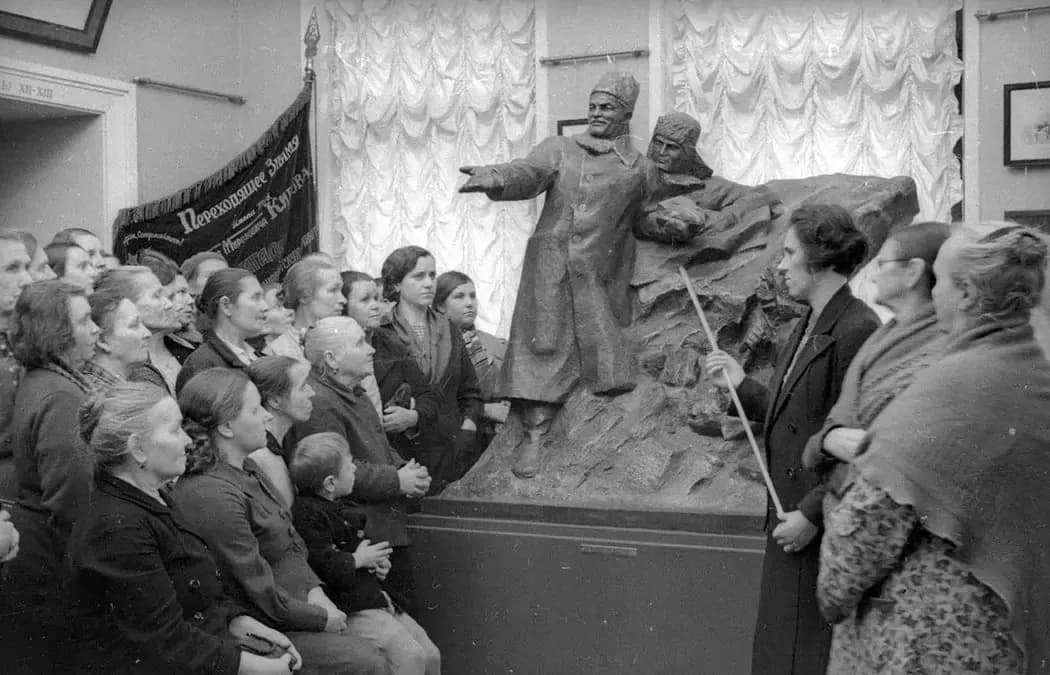
A museum opened in her St Petersburg mansion back in the late 1930s. The museum there today has been open since 1957. Guides show visitors the balcony Lenin spoke from. Only a few of her own things have survived in the house. Among them, her dress.
Prima only because of the Emperor? No. Not only.
The Emperor and the Grand Dukes opened a lot of doors for her. That’s true. But remember London, 1936. No crown stood behind her anymore. She was almost sixty-four, and the audience still called her back, again and again.
Nobody claps like that for a crown that’s gone.
She got it through the Emperor and the Grand Dukes, and through her own work in class. When the empire fell, it took nearly all of it away.
- Those thirty-two turns
- And the school that made them
“Be the jewel and the glory of our ballet.”
Some forty years later, there was no Emperor. And she was teaching that ballet in a small room in Paris. That’s why young Margot Fonteyn went to her.
For me, this part is personal, because I’m a teacher too. I teach the same method she learned as a girl. Today it carries the name of Agrippina Vaganova. When I stand in front of my students, teachers like her are with me. They carried it out of Russia and kept it alive.
People still visit her house to see that balcony. But I think her real home was that little studio.
- 17She sat between the Emperor and the future Emperor.
- 44She took Lenin to court, and won.
- 64At almost sixty-four, a London audience called her back eighteen times.
- 99And she lived to ninety-nine.
What made Kschessinska who she was? The Grand Dukes, or the 32 fouettés?
Tell me in the comments under the film.
Answer on YouTubeShe gave her first lesson in Paris at fifty-six. Your first class can start at any age.
If this story moved you, try ballet yourself: at any age, at any level, from home.
Not sure where to start? Take a free class first
Sources
- Mathilde Kschessinska, memoirs (published in Paris, 1960)
- The diary of Nicholas II, 1890–1894
- Historian Alexei Kulegin, on the farewell letter
- Staff of the Theatre Museum, on the mansion
- The ruling of the magistrate’s court, Petrograd, 5 May 1917
Photographs and drawings
- Cover: Mathilde Kschessinska, 1900, photo E. Mrozovskaya; Nicholas II, 1894, photo A. Pasetti. Public domain, tinted
- Theatre Street and the Imperial Theatre School, 1900s: postcard, public domain
- Alexander III and Maria Feodorovna, around 1890: S. Levitsky, public domain
- Tsesarevich Nicholas, 1889: C. Bergamasco, public domain
- Kschessinska as a pupil, 1880s; with Olga Preobrajenska, 1892: public domain
- The theatre at Krasnoye Selo, 1910s: Bulla, public domain
- The house on the English Prospect today: Kaganer, CC BY-SA 4.0, cropped
- Nicholas and Alix, Coburg, 1894: E. Uhlenhuth, public domain
- Pierina Legnani, 1893; Enrico Cecchetti, around 1900: public domain
- Kschessinska as Esmeralda, 1899; around 1899; as Camargo, around 1902: public domain
- Prince Sergei Volkonsky: Yearbook of the Imperial Theatres, 1901–1902, Internet Archive, public domain
- Grand Dukes Sergei Mikhailovich and Andrei Vladimirovich: public domain
- Kschessinska with her son, 1910–1911: public domain
- Plan of the mansion, 1904: Alexander von Gauguin, public domain
- The mansion, 1917: Orrin Sage Wightman, Library of Congress, public domain
- In the drawing room, 1916: Ya. Steinberg, public domain
- Nevsky Prospect, July 1917: Viktor Bulla, public domain
- Tatiana Riabouchinska, 1938: State Library of New South Wales, no known restrictions
- Margot Fonteyn, 1960s: Hurok Concerts, public domain
- 6 avenue Vion-Whitcomb, Paris: CVB, CC BY-SA 4.0
- Covent Garden: The Victrola Book of the Opera, 1917, public domain
- Kschessinska in Russian costume: Solntse Rossii album, around 1913, public domain
- The grave at Sainte-Geneviève-des-Bois, 2023: Antoine Rex, CC0
- The museum in the mansion, 1938: public domain
- The mansion, 2008: Sbarichev, public domain
Images marked Reconstruction (the living room, the hay barn, the balcony) are illustrations from the film, made with AI, of moments no camera recorded. There is no photograph of Lenin on this balcony. Most photographs come from Wikimedia Commons.