The Rite of Spring · 1913
Huge Scandal: The Premiere That Shocked Paris
Paris, 29 May 1913. The hall laughs, whistles and shouts, and Nijinsky stands on a chair in the wings, calling out the counts. How did a ballet that failed at its premiere become the most revolutionary ballet of the century?
- Shouting
- Arguing
- Fighting
A ballet that ends in a fight?
What do you think a ballet looks like, if thirty seconds after it starts people are shouting, arguing and fighting, and then the police come?
In this story: what happened to Nijinsky after that night, what exactly started the scandal, and how many versions of this ballet there are now. Spoiler: about two hundred.
And the main question. How did a ballet that failed at its premiere become the most famous and most revolutionary ballet of the twentieth century?
For dancers this ballet is a legend, because it’s the night when ballet broke its own rules.
Our story starts with a strange picture in a composer’s head: a girl who dances until she dies.
The Great Sacrifice
The Rite of Spring · Chapter oneSt Petersburg · Talashkino · 1910 to 1912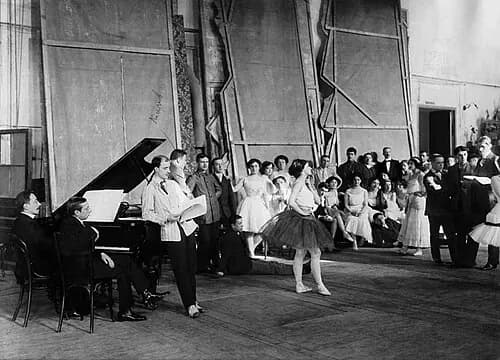
It’s 1910, and a young Russian composer, Igor Stravinsky, is writing his first ballet for Sergei Diaghilev: The Firebird. Years later he remembered how one day a picture suddenly flashed through his mind.
“I saw in my imagination a solemn pagan rite: sage elders, seated in a circle, watching a young girl dance herself to death.”
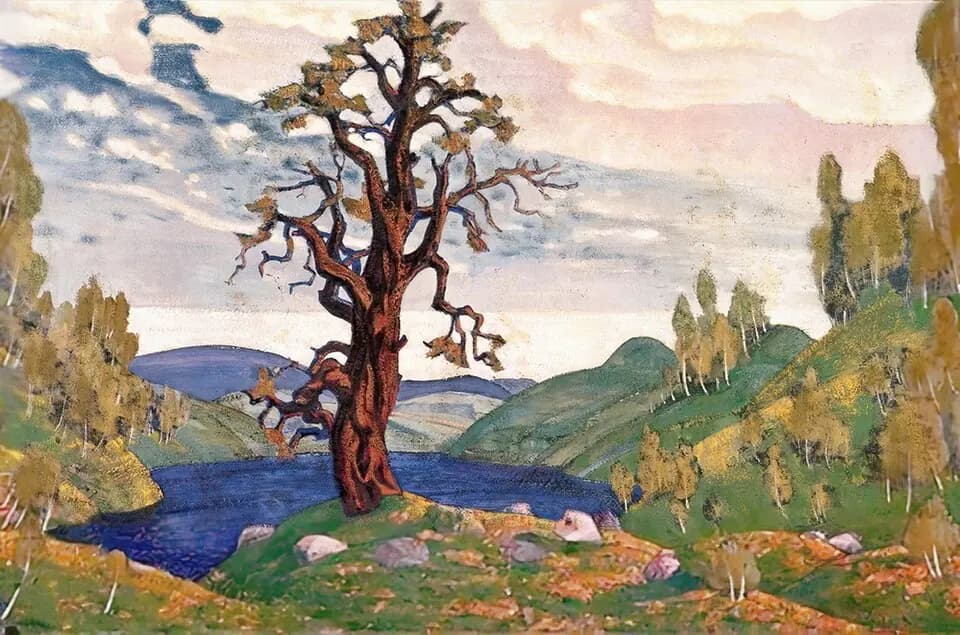
They were sacrificing her to the god of spring. With this idea Stravinsky goes to Nicholas Roerich, a painter who knew more about ancient Russian rituals than anyone, and they quickly agree on a working title: The Great Sacrifice.
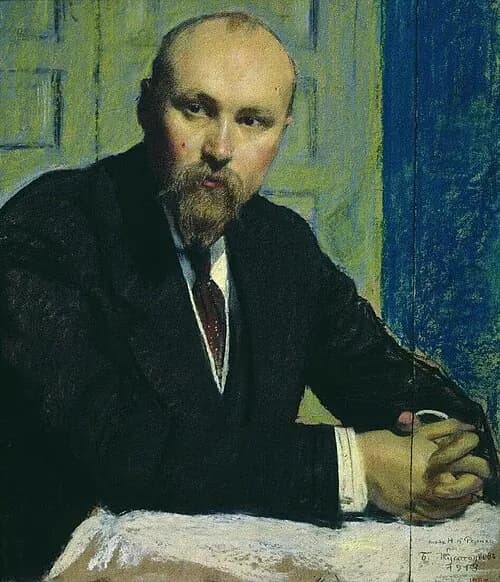
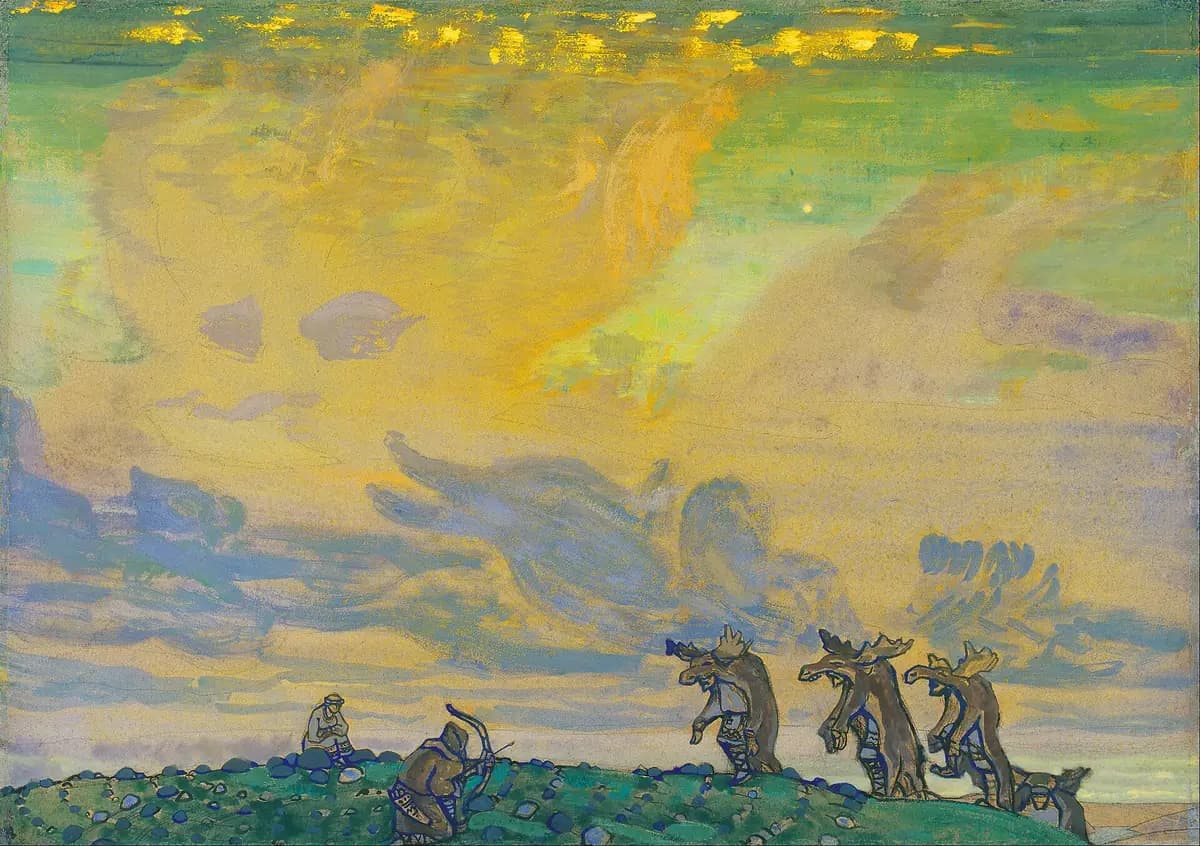
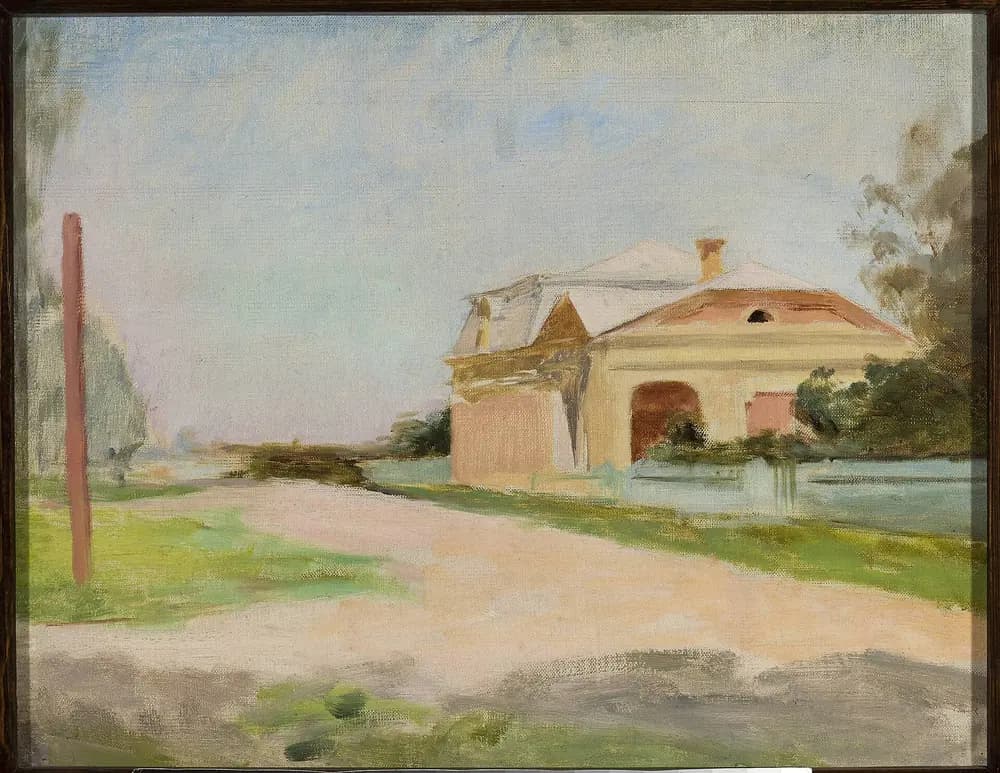
In the summer of 1911, at Princess Tenisheva’s estate of Talashkino near Smolensk, the two of them put the whole ballet together. There is almost no plot, only spring rituals, and at the end a girl is chosen who must dance until she dies.
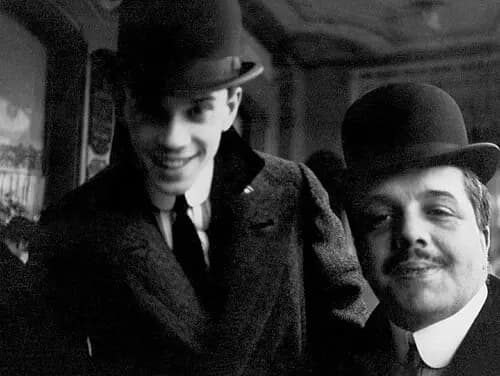
Now someone has to stage it. Diaghilev gives the job to the star of his company, Vaslav Nijinsky, who is also his lover. Diaghilev pays for everything Nijinsky needs, but between them there is no paper at all: no contract and no salary.
Keep that in mind, because it will come back.
- Between
- S. Diaghilev and V. Nijinsky
- Salary
- Signed
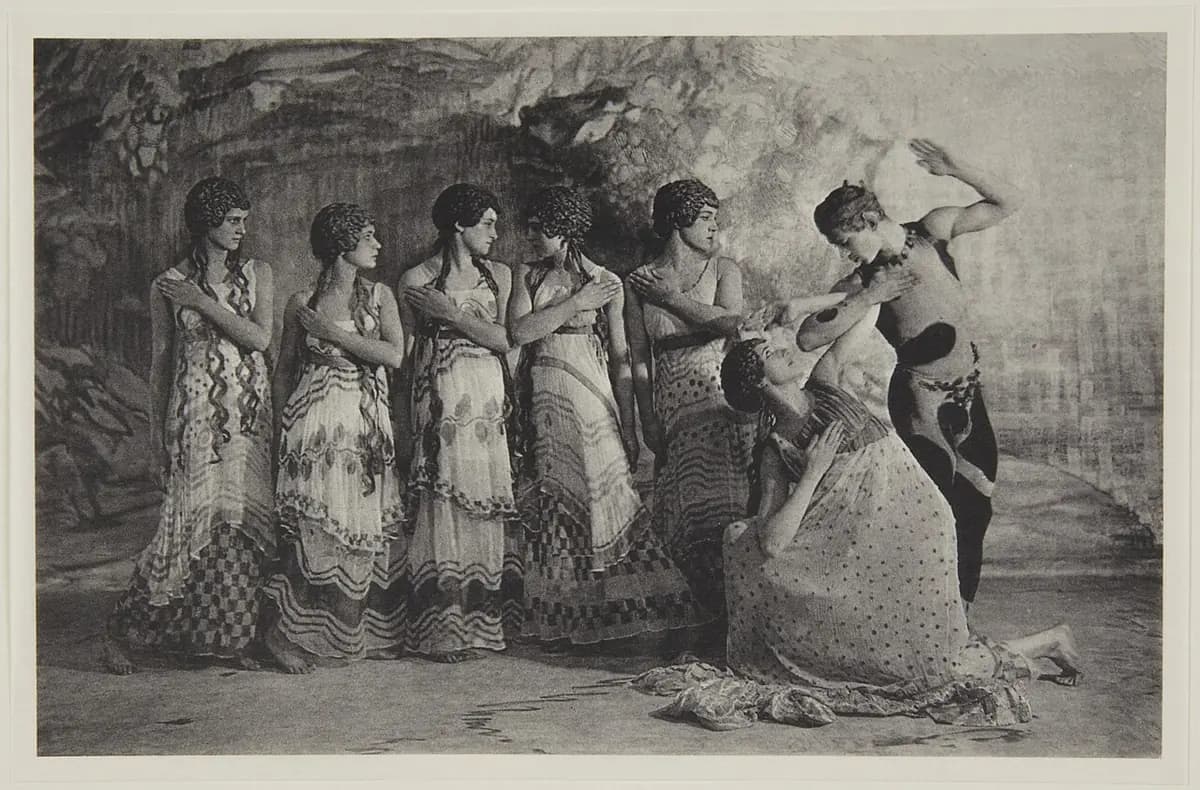
As a choreographer Nijinsky has made only one ballet so far, The Afternoon of a Faun, and in 1912 Paris met it with a scandal. Stravinsky later wrote that the poor boy knew nothing about music, while Nijinsky’s sister said that her brother played several instruments.
And the music is like nothing ballet has ever heard before. A ballet score usually gives dancers a tune to follow and a beat they can trust, but Stravinsky takes away both.
In one dance he puts two chords from two different keys on top of each other. The orchestra hits them again and again, and the strong beat keeps landing where nobody expects it.
A whole company now has to dance to this together, on every accent. But first someone has to learn how to count it.
A waltz, and then The Rite
One, two, three. One, two, three. Your body knows where the next one is.
The strong beat comes after nine, then two, six, three, four, five and three.
Your body expects the strong beat in one place, and it lands somewhere else. Now imagine a whole company stamping on those accents together, without a single mistake.
Toes In
The Rite of Spring · Chapter twoRehearsals · Winter 1912 to May 1913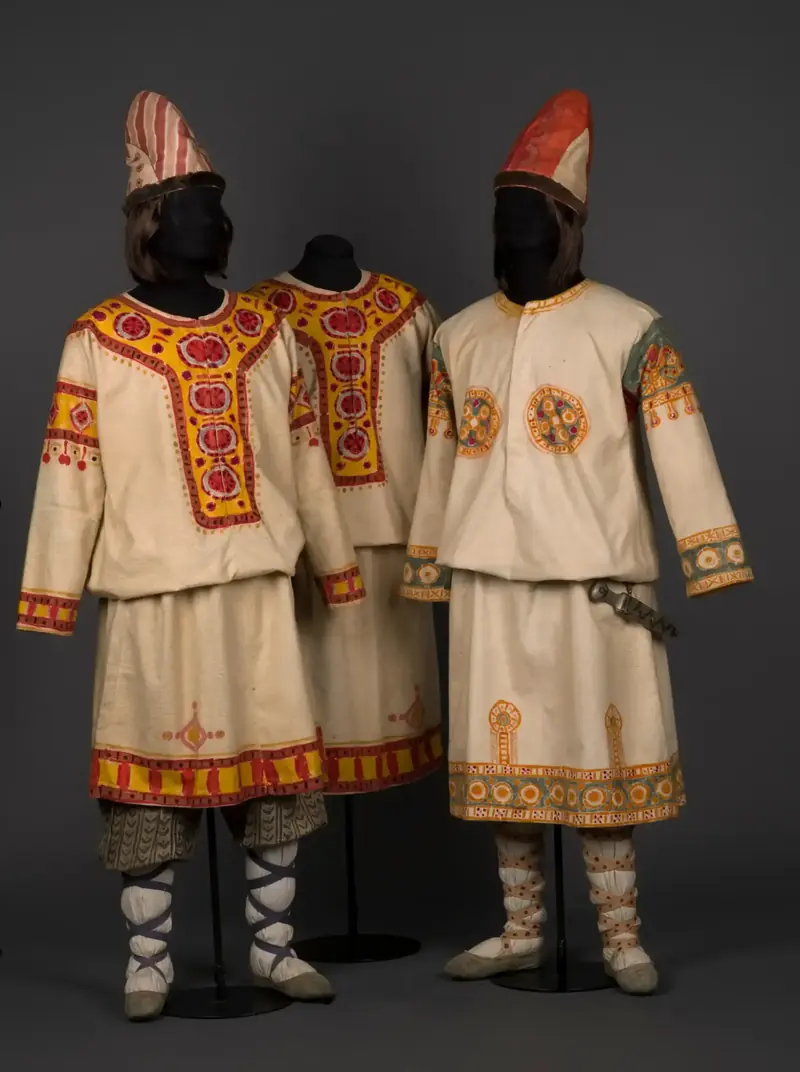
Rehearsals begin in the winter of 1912, and the dancers can’t understand what is wanted from them. There is no tune to move to and the rhythm keeps breaking, so they count the bars out loud.
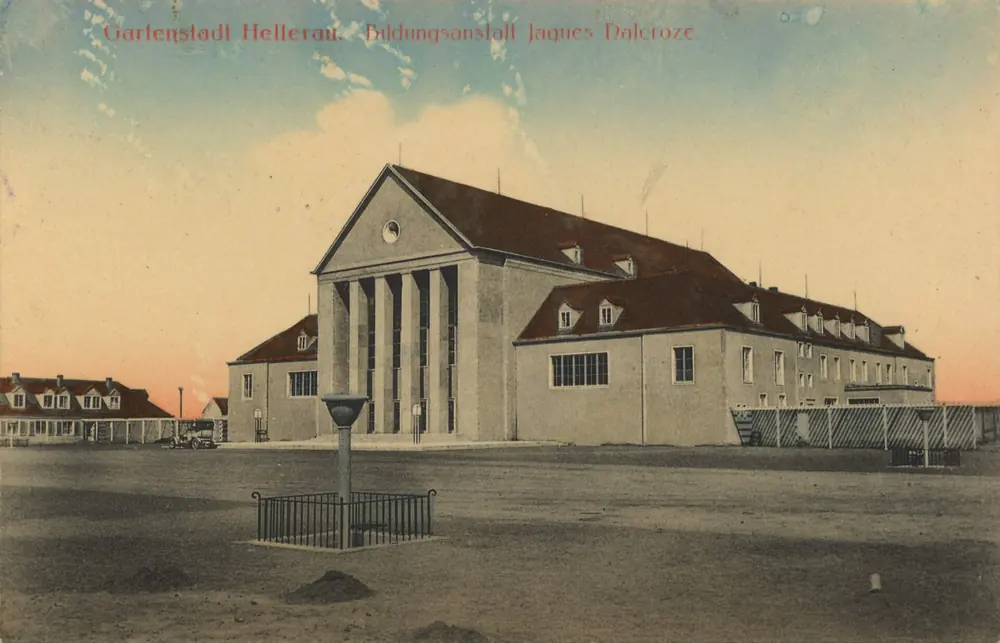
Diaghilev brings in help. Marie Rambert is twenty-five. She studied with Émile Jaques-Dalcroze, who taught people to feel rhythm with their whole body, and for the company she becomes a kind of living metronome.
Remember her name, because she’ll be back.
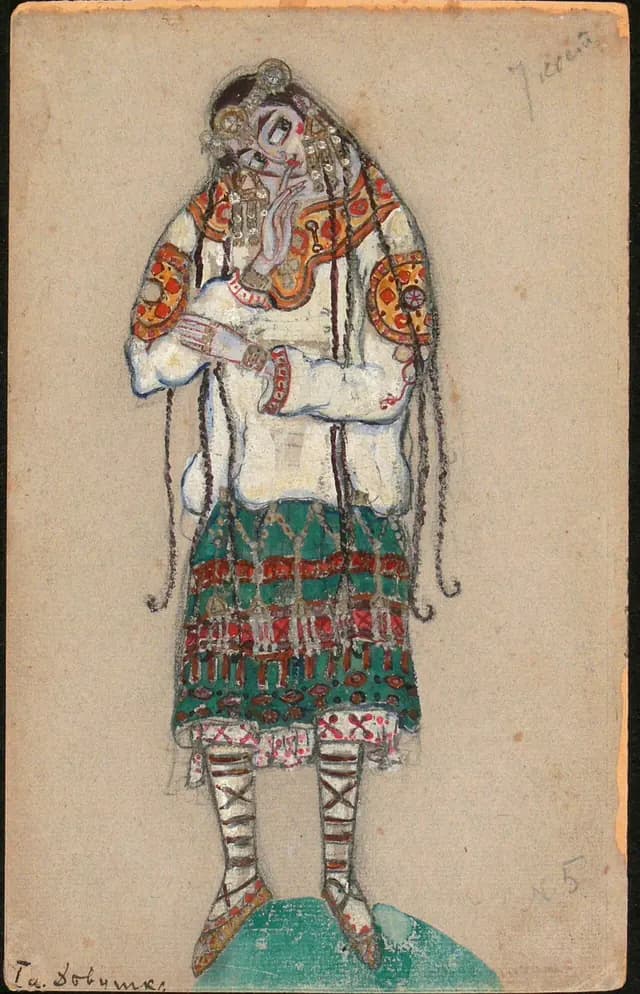
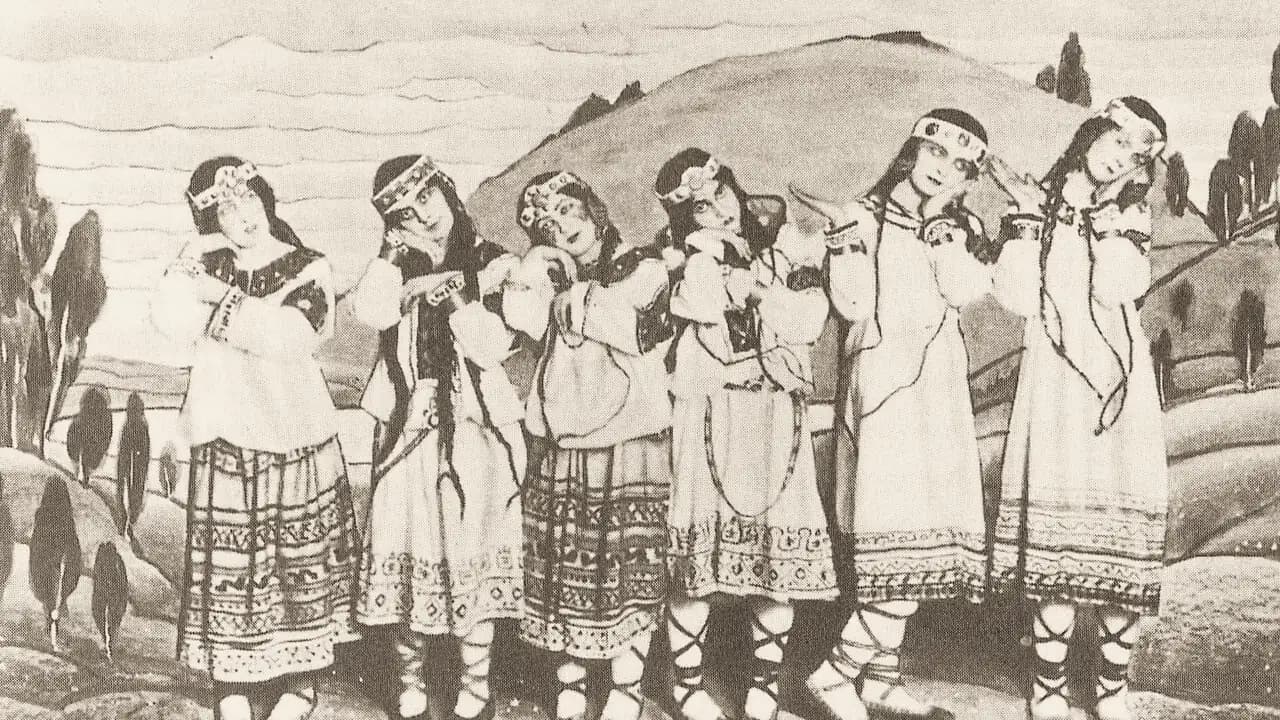
Nijinsky works slowly and asks for the impossible. Roerich covers the costumes in painted patterns and the dancers’ faces are heavily made up, and Nijinsky builds the movement right out of Roerich’s sketches: hunched backs, toes turned in and feet stamping into the floor.
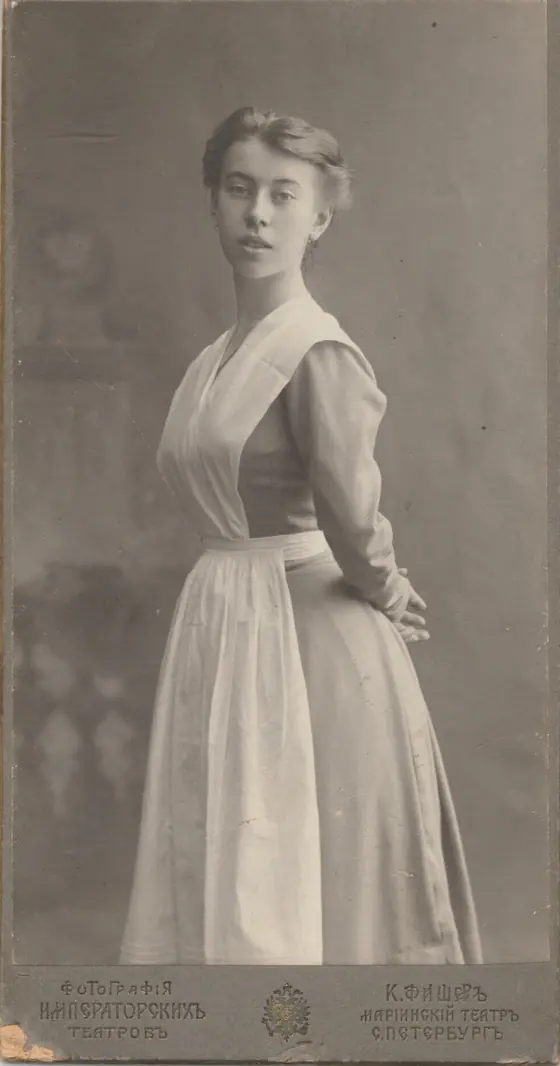
He creates the main role, the Chosen One, for his sister Bronislava. But during rehearsals she finds out that she is expecting a baby, and the role goes to a young dancer from the company, Maria Piltz.
The orchestra has it no easier. When Stravinsky plays the score on the piano for the conductor, Pierre Monteux, all Monteux wants is to run out of the room and find a quiet corner, and Diaghilev tells him with a smile:
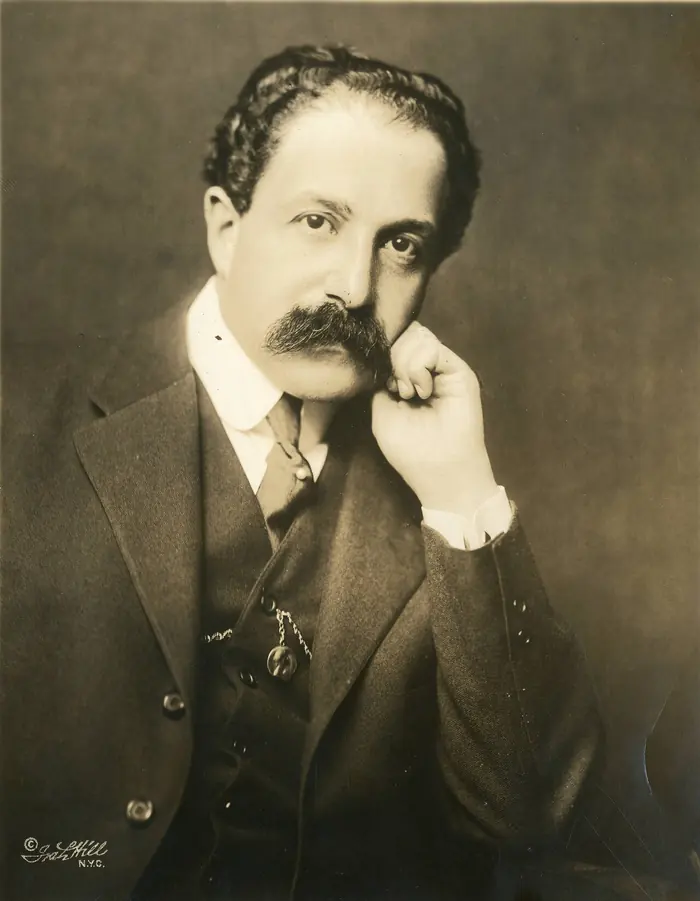
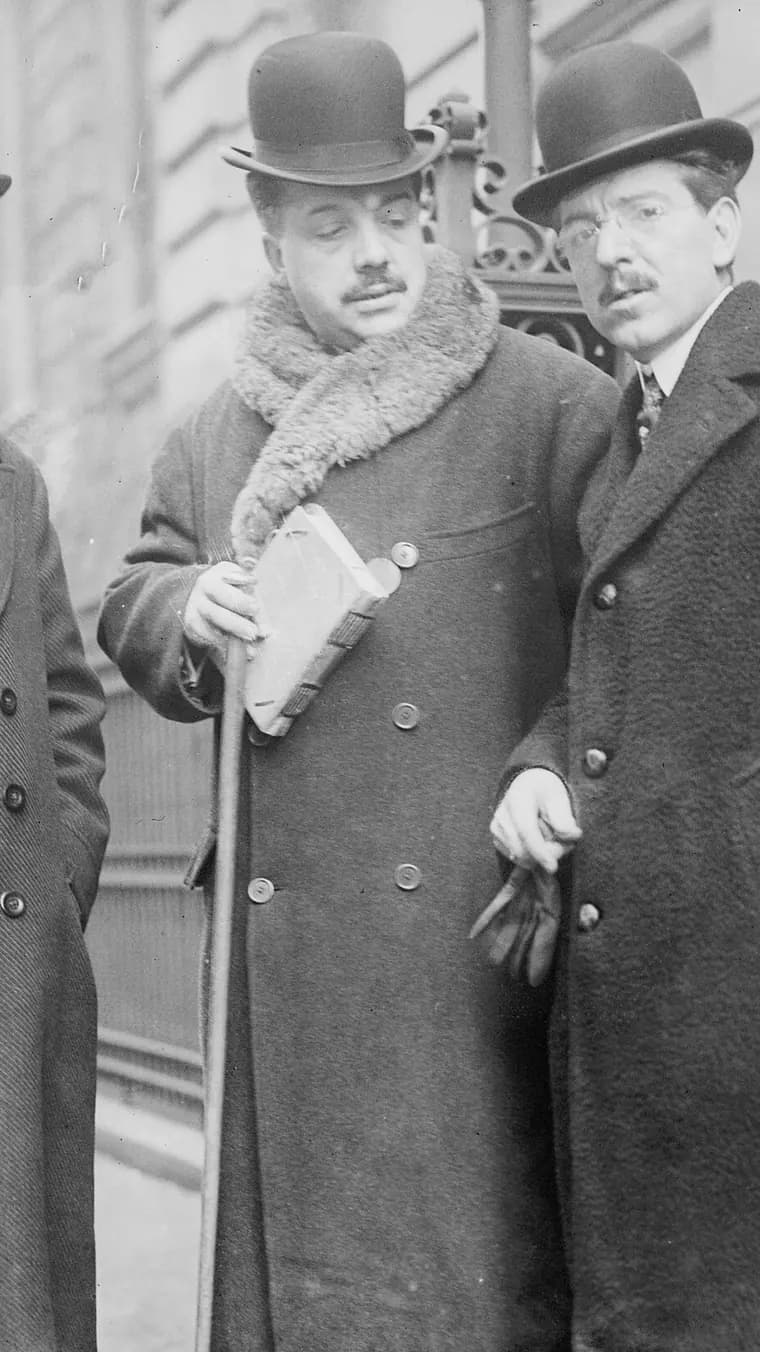
“This is a masterpiece, Monteux. It will revolutionise music and make you famous, because you are going to conduct it.”
Monteux holds seventeen orchestra rehearsals, which was a huge number for those days. The musicians keep stopping because they are sure the score is full of mistakes, and at one loud brass chord the whole orchestra bursts into nervous laughter.
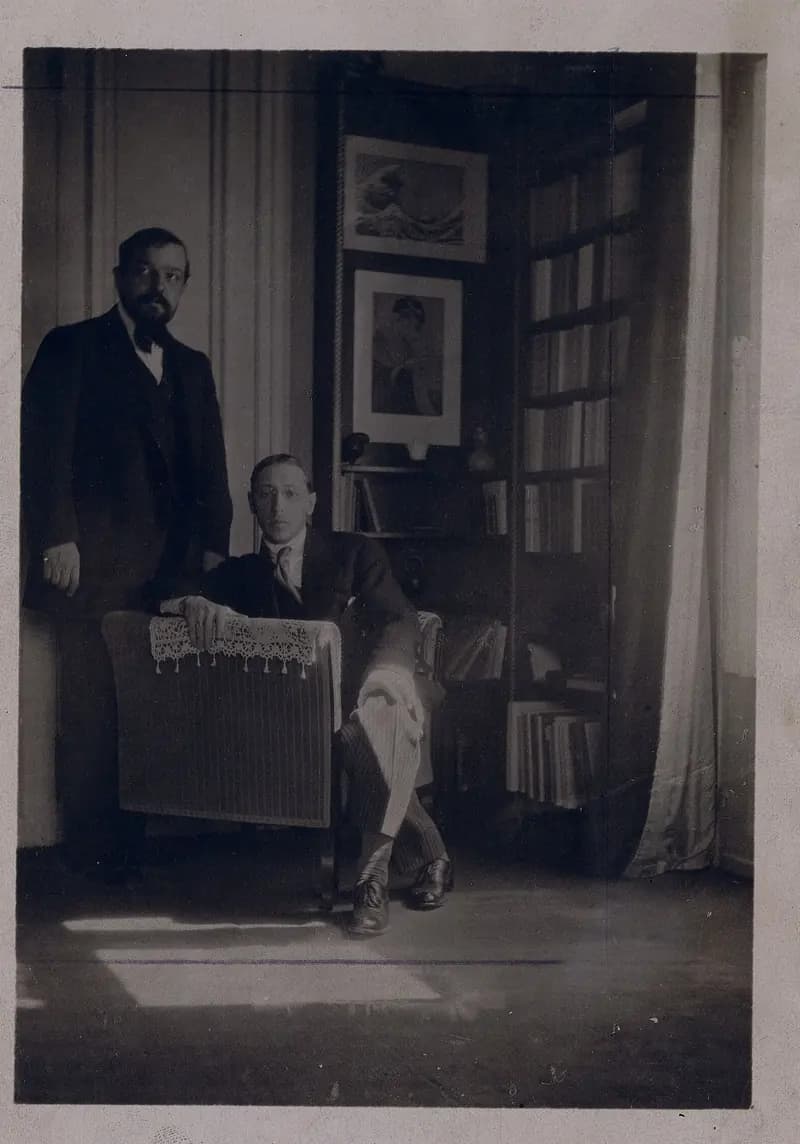
On the 28th of May comes the dress rehearsal, with the press and guests in the hall, Debussy and Ravel among them, and according to Stravinsky it goes peacefully.
If the public decides it is being mocked, things could go badly.
The premiere is the next evening.
Nijinsky studied at the ballet school on Rossi Street in St Petersburg. Today it’s the Vaganova Academy, and I studied there too.
Your legs open out from the hip all the way to the toes.
In The Rite: toes turned inAfter a jump you land through the foot and the knee, almost without a sound.
In The Rite: every jump hits the floorNijinsky knew these rules better than anyone, and in The Rite he broke both of them, with the toes turned in, the backs bent, and every jump hitting the floor on purpose.
Now think about the people in the boxes, who paid double for their tickets and suddenly see dancers stamping like in some ancient ritual. It felt to them like someone was laughing at them.
Remember the critic’s warning? He was right.
29 May 1913
The Rite of Spring · Chapter threeParis · Théâtre des Champs-Élysées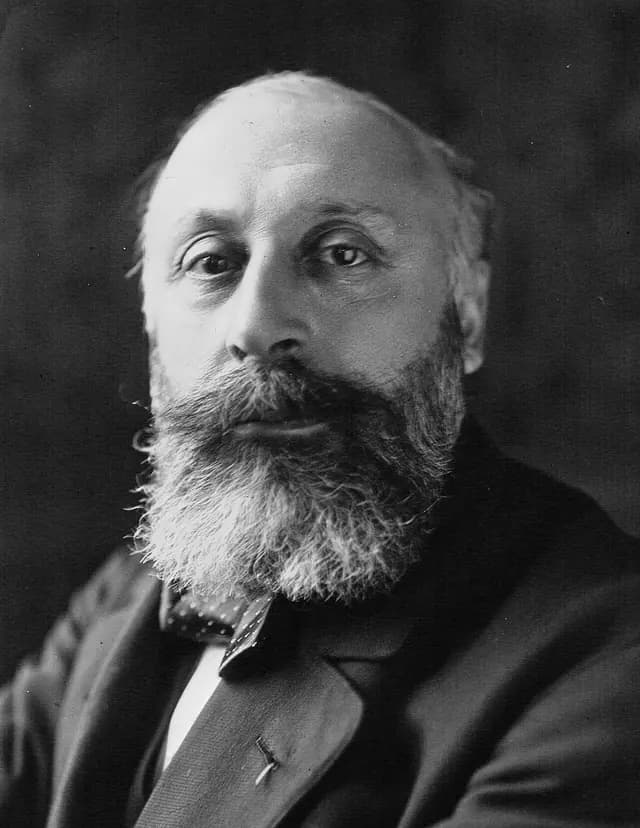
Paris, the 29th of May 1913. Gabriel Astruc’s brand new Théâtre des Champs-Élysées opened only two months ago. Ticket prices for the premiere are doubled, and still the house is full.
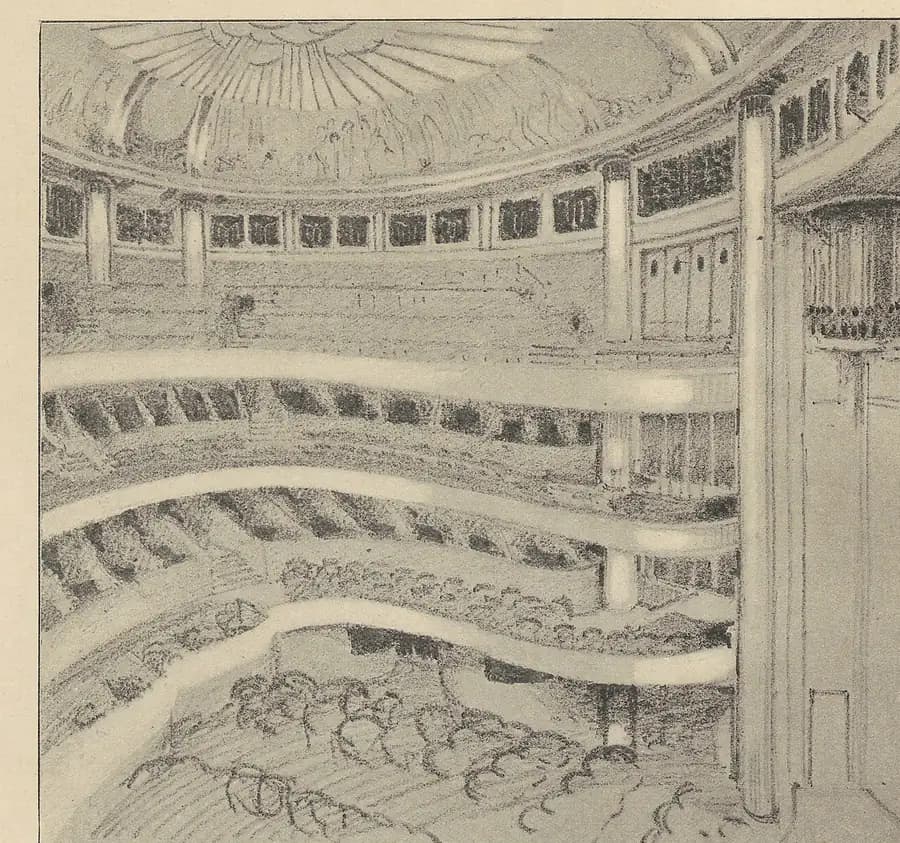
High society, who came for a beautiful ballet.
As Jean Cocteau wrote, they would cheer anything new, just out of hatred for the boxes.
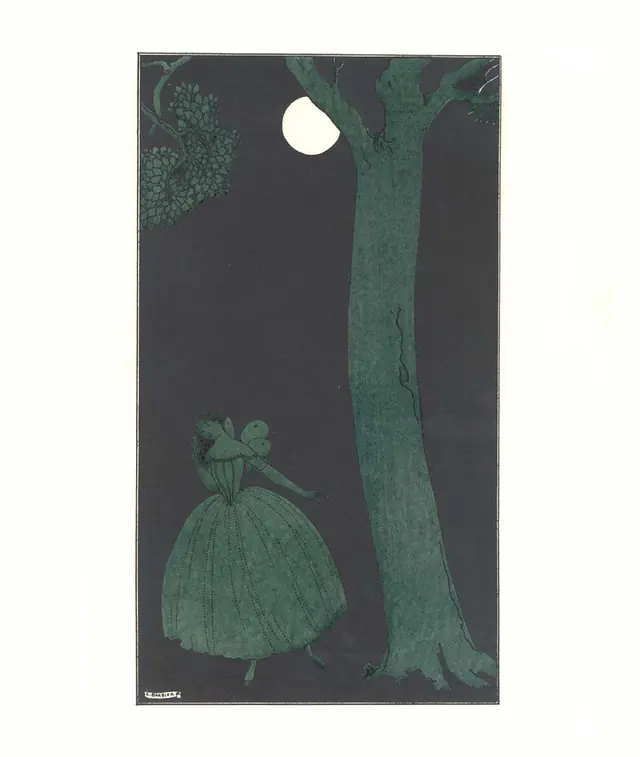
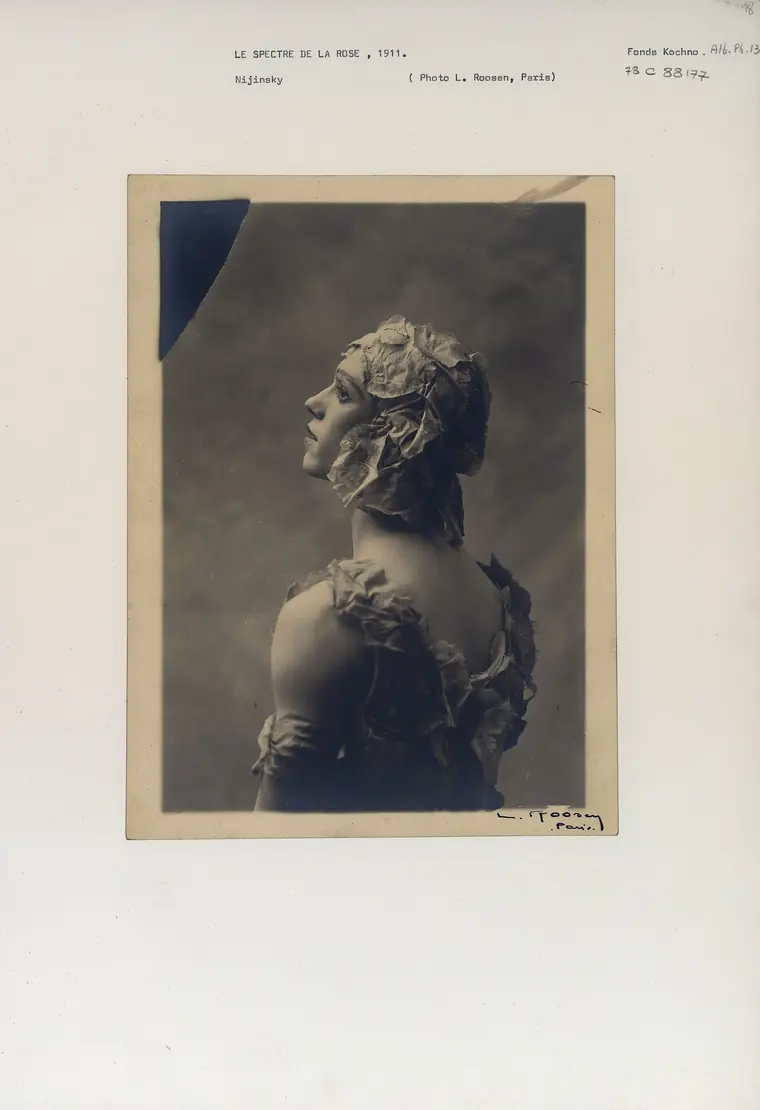
The evening opens with Les Sylphides, with Nijinsky and Tamara Karsavina in the leading roles, so that night Paris still gets to see Nijinsky fly.
Then comes The Rite, with almost a hundred musicians packed into the pit. It begins with a lonely bassoon playing so high that it’s almost impossible to recognise, and the hall starts to laugh.
Stravinsky, disgusted, leaves his seat and goes to the wings.
When the curtain rises, the dancers stand hunched, toes turned in, stamping into the floor.
- laughter
- whistling
- shouting
And the two halves of the hall start yelling at each other.
According to Stravinsky, Diaghilev kept having the lights switched on and off to calm the noise. And according to Cocteau, the old Countess de Pourtalès stood up in her box, with her tiara slipping sideways, and cried out:
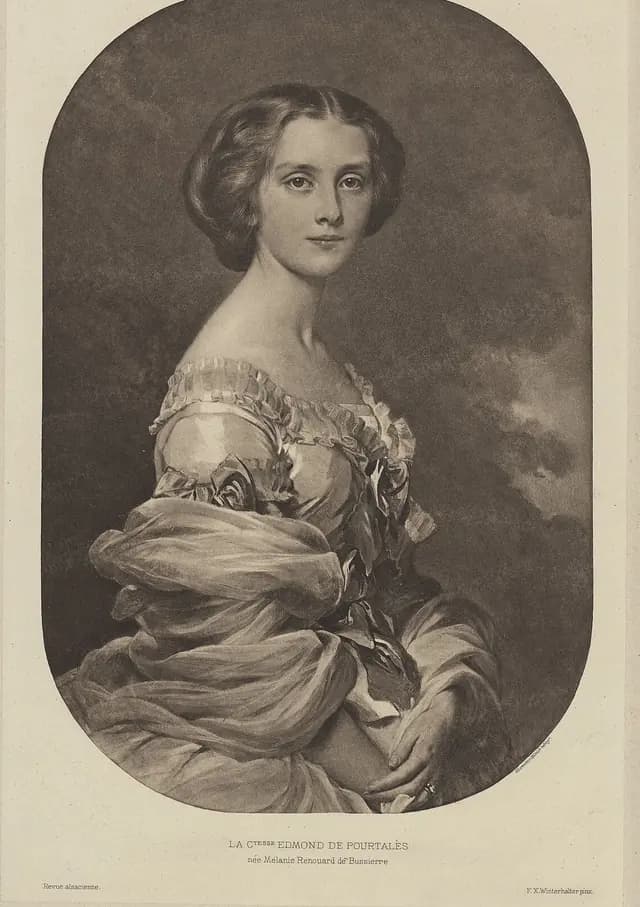
“It’s the first time in sixty years that anyone has dared to make fun of me!”
Marie Rambert later recalled that on stage it soon became impossible to hear the music.
Stravinsky remembered Nijinsky standing on a chair in the wings, shouting the counts to the dancers, while Stravinsky held him by his clothes so that he wouldn’t run out on stage.
The man Paris had just watched fly is now standing on a chair and shouting numbers.
Down in the pit, with his back to the hall, Monteux keeps conducting, and Stravinsky said he was as nerveless as a crocodile. Monteux himself later put it like this:
“Everything available was tossed in our direction, but we continued to play on.”
In the second part the hall calms down, and Maria Piltz is left alone in the middle of the circle.
In her final dance the bar keeps changing its length. She jumps and jumps until she falls dead, and by some accounts the hall watched it in near silence.
The curtain falls, there are several bows, and at dinner that night, as Stravinsky remembered it, Diaghilev said just one thing:
“Exactly what I wanted.”
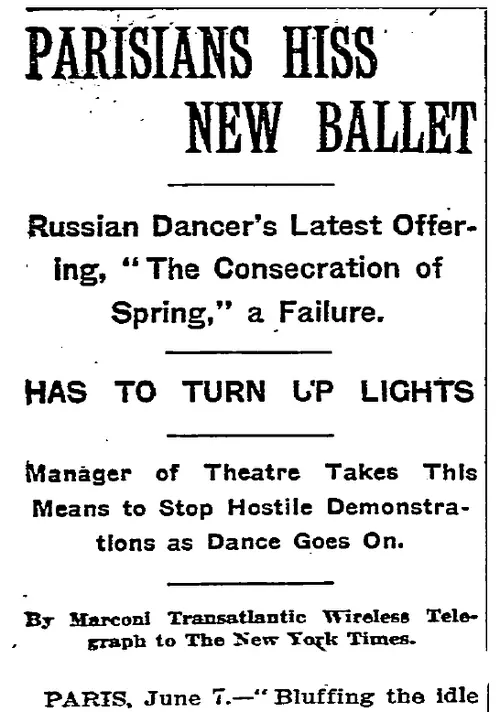
The next morning every newspaper seems to have seen a different show.
“A laborious and childish barbarity.”
“An argument between two ill-mannered camps.”
“The work of a madman.” The audience hissed, laughed and applauded.
And then the legends begin.
The critic Carl Van Vechten wrote that the man behind him got so excited that he beat the critic’s head with his fists. A letter of his, found a century later, shows he came only on the second night.
Not at the premiereAbout forty people were thrown out of the hall, but nothing confirms that the police were involved.
UnconfirmedAccording to the historian Tamara Levitz, even the word riot first appeared in American reviews only in the 1920s.
1920sThe scandal was real. But the riot grew on paper.
So what started the scandal?
I think everything hit at the same time. The music has no melody to follow and the strong beat is never where you expect it, while on stage Nijinsky turned upside down everything people thought was beautiful.
And the hall itself was split in half, with some people who came for a classic, pretty ballet and others who came to cheer anything new. When you put all of that in one room, it explodes.
People who were there, even the conductor, said the audience was protesting more against the dance than against the music. You can get used to new music. A body that breaks every rule right in front of you is much harder to accept.
Would you whistle or clap in 1913? Tell me in the comments under the film.
One Telegram
The Rite of Spring · Chapter four1913 to 1919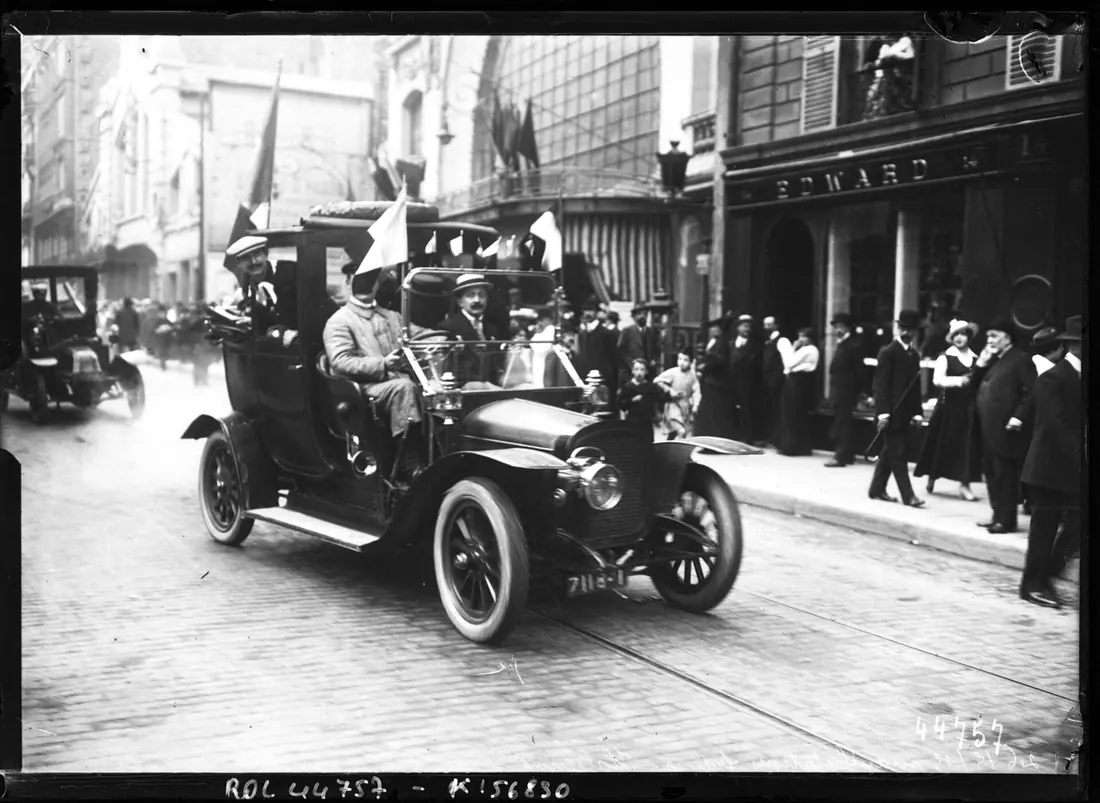
On the 5th of April 1914, at the Casino de Paris, Monteux conducts The Rite again, this time as a concert without dancers, and when it ends Stravinsky is carried out of the hall on the shoulders of the crowd.
The music has won. But the dance is gone, and so is its choreographer’s place in the company.
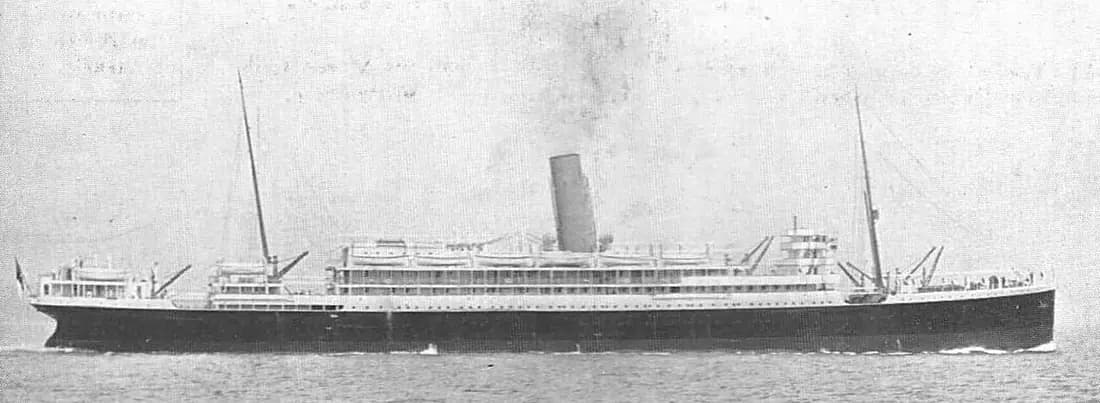
To see how that happened, let’s go back to August 1913. The company sails to South America, three weeks at sea, and Diaghilev stays behind, because he used to say that he had been told he would die on the water.
On board is a young Hungarian woman, Romola de Pulszky, who has been following the company around Europe. They barely share a language, and still, on the 10th of September 1913, they marry in Buenos Aires.
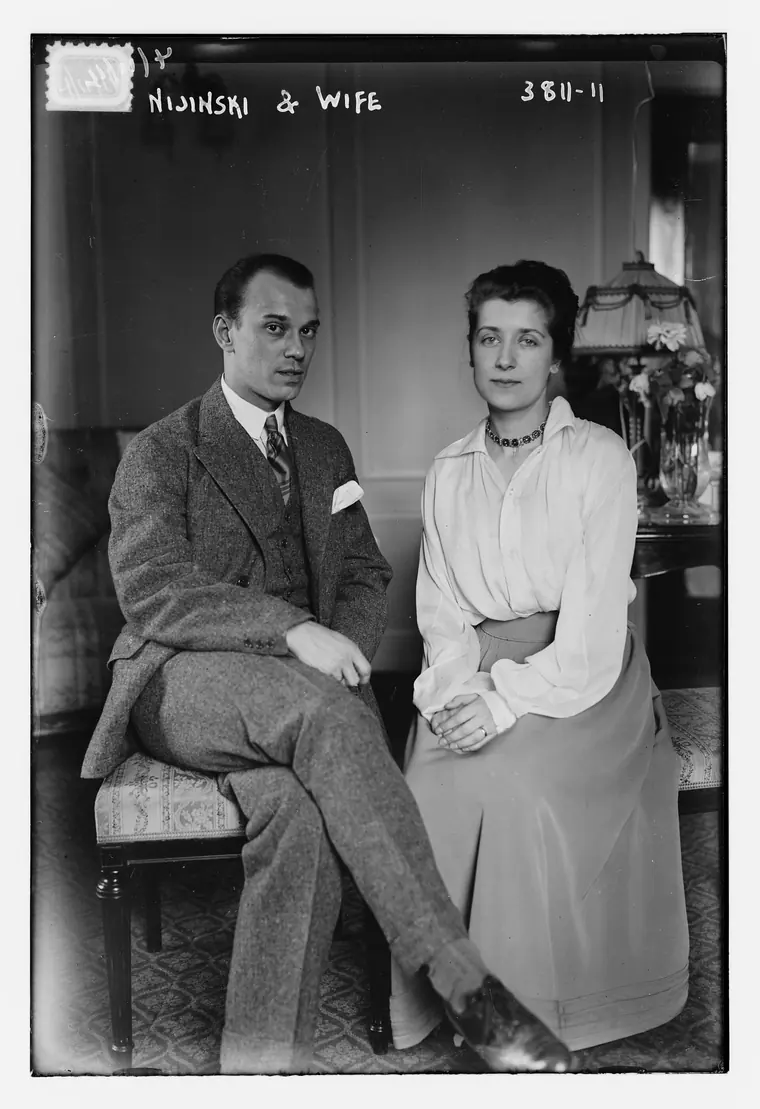
Back in Europe, instead of new work Nijinsky gets a telegram from Diaghilev saying that he no longer works for the Ballets Russes.
Today we would say he was fired by text message.
The excuse is a missed show in Rio, and there was no contract to protect him, because there never had been one.
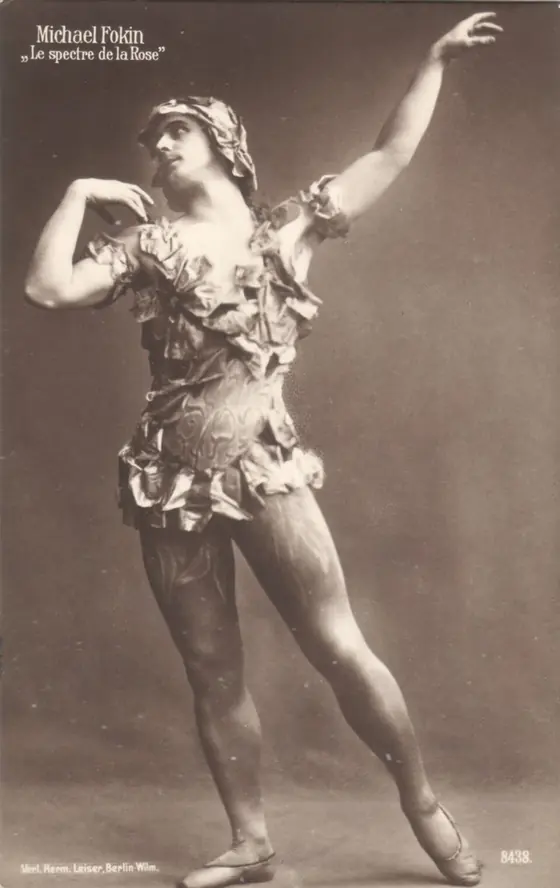
Fokine comes back to the company on one condition: no ballets by Nijinsky. And so The Rite disappears after fewer than ten shows.
Doctors still can’t say exactly what triggers schizophrenia, but after that night the blows kept coming.
- 1914His own season in London collapses.
- 1914The war begins. As a Russian citizen he is kept under house arrest in Hungary until 1916.
- 1916In New York he stages one last ballet, Till Eulenspiegel.
- 1917In Montevideo he appears on a stage for the last time. He isn’t even thirty.
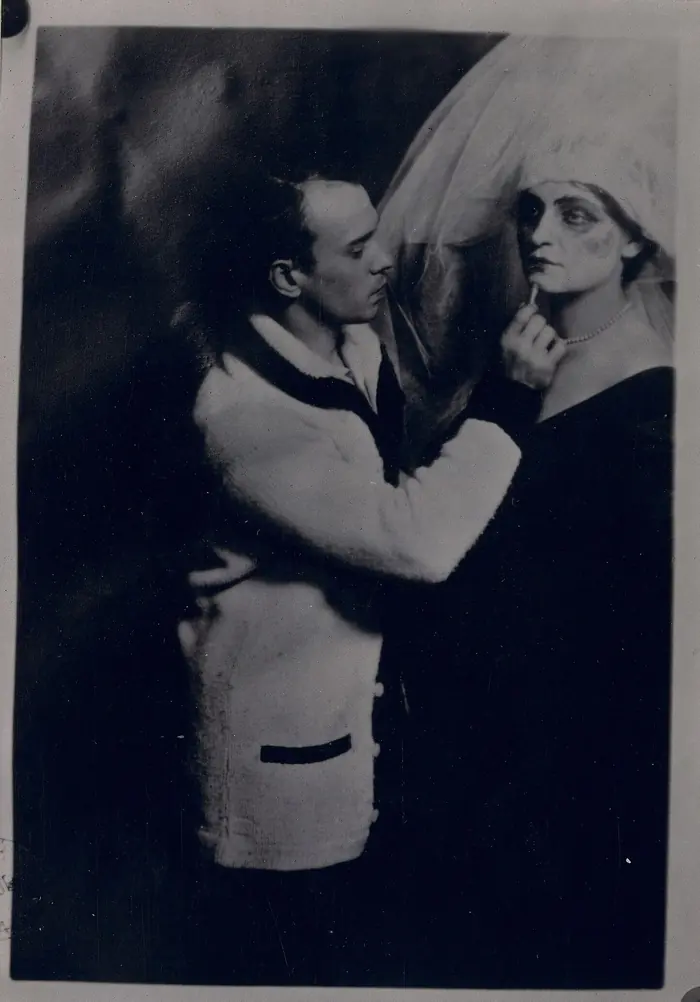
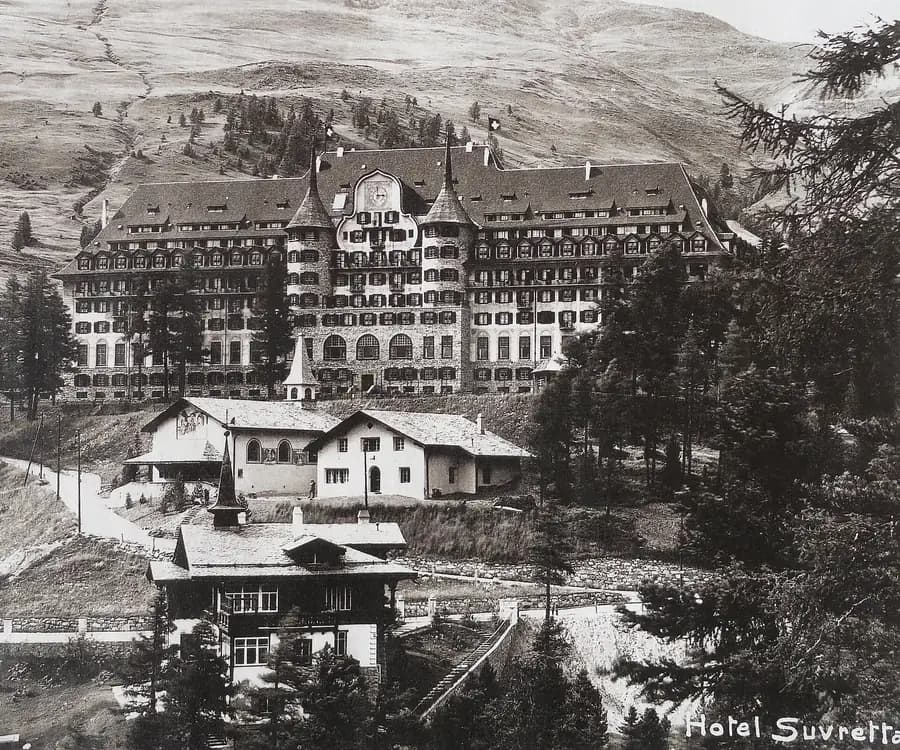
In January 1919, in a hotel in St Moritz, Nijinsky gathers the guests and tells them he will dance the war for them, the war they did not prevent, and he dances.
A few weeks later the psychiatrist Eugen Bleuler gives the diagnosis: schizophrenia. Nijinsky will spend most of the next thirty years in clinics.
Remember the chair in the wings, and how that night Stravinsky had to hold him back by his clothes?
Six years later there was no stage left to run to.
I could talk about Nijinsky for hours, about his jumps, his diary and the years in hospitals, and that’s really a whole separate film.
Want the full story of Nijinsky? Write it in the comments.
So let’s put everyone from that night on one table, because something strange happened to almost all of them.
The Map of the Rite
The Rite of Spring · Chapter five1913 to todayHere they are, the people of that night. Let’s follow the threads one by one.
- Gabriel Astrucopened the theatreFinancially ruined within six months of that first season.Ruin
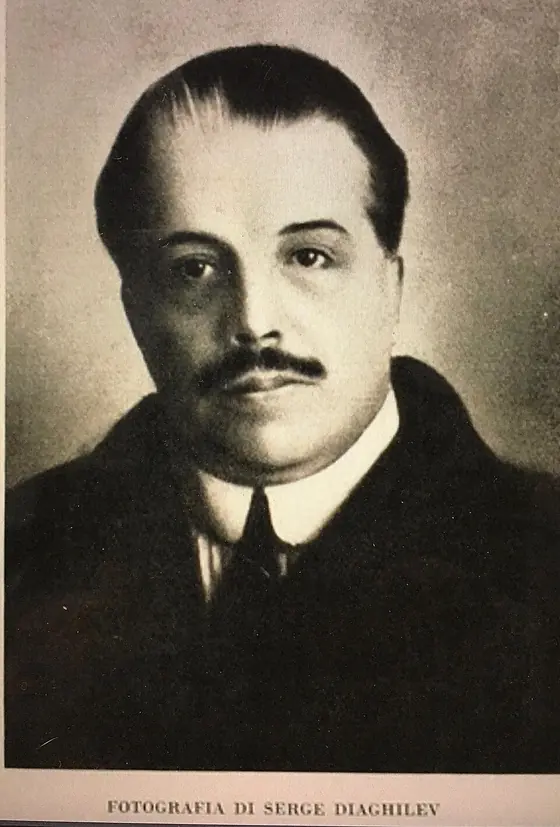 Sergei Diaghilevwas told he would die on the waterDies in Venice, a city built on water, on 19 August 1929. He is fifty-seven.A death on the water
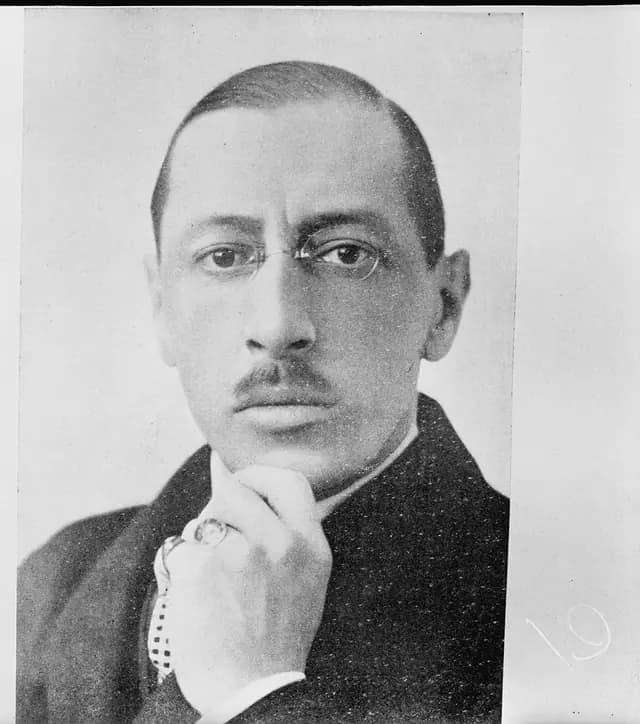 Igor Stravinskythe composer Paris laughed atBecomes one of the giants of the century. In 1971 he is buried in Venice, at his own wish, a few metres from Diaghilev.Triumph
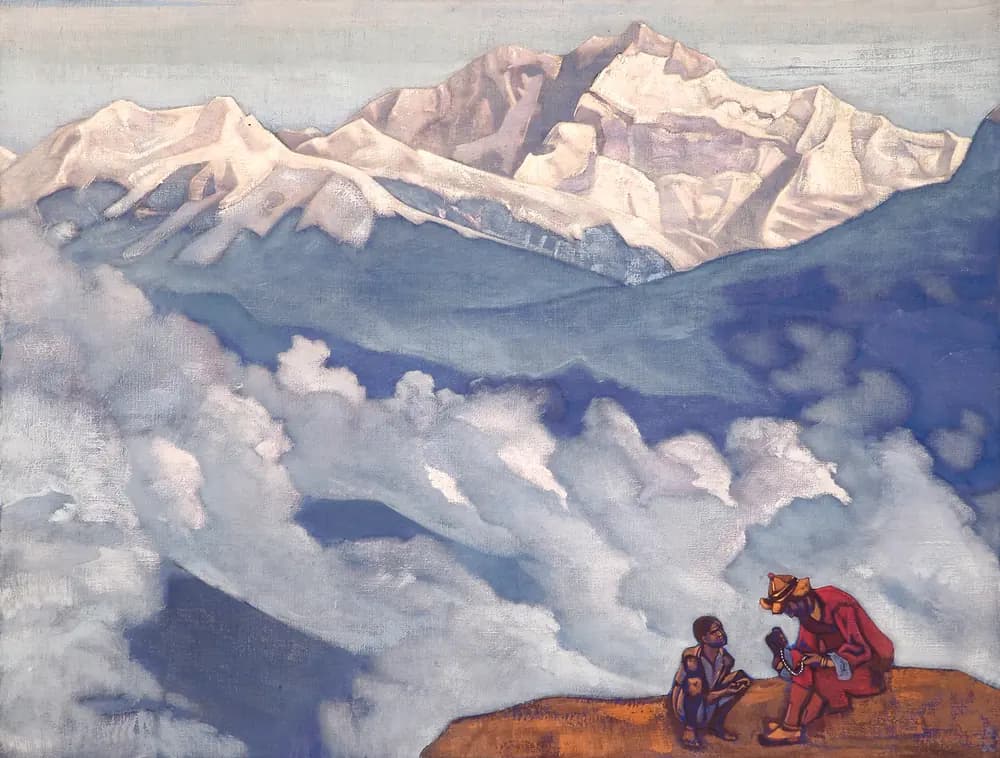 Nicholas Roerichthe expert on ancient ritualsBecomes a mystic and spends his last years in the Himalayas painting mountains. He dies in India in 1947.The Himalayas
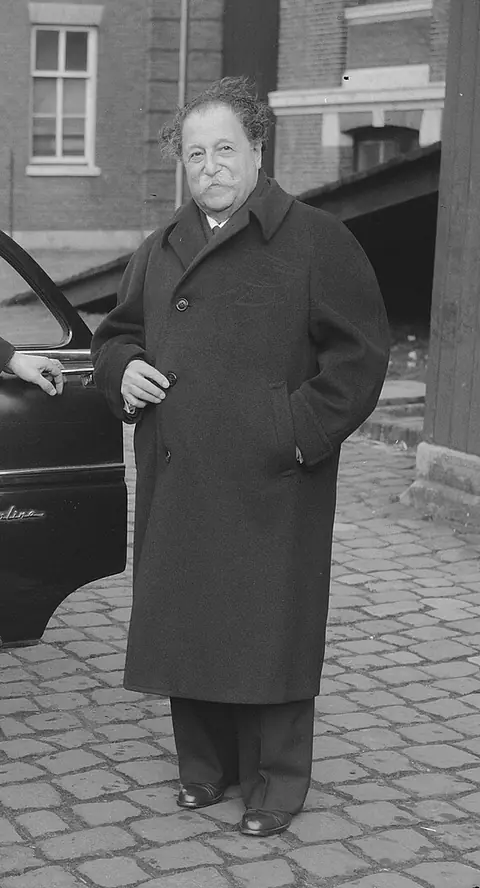 Pierre Monteuxwanted to run away from the scoreConducts it again and again for the rest of his life. In 1963, at eighty-eight, he conducts it once more in London, fifty years after that night.
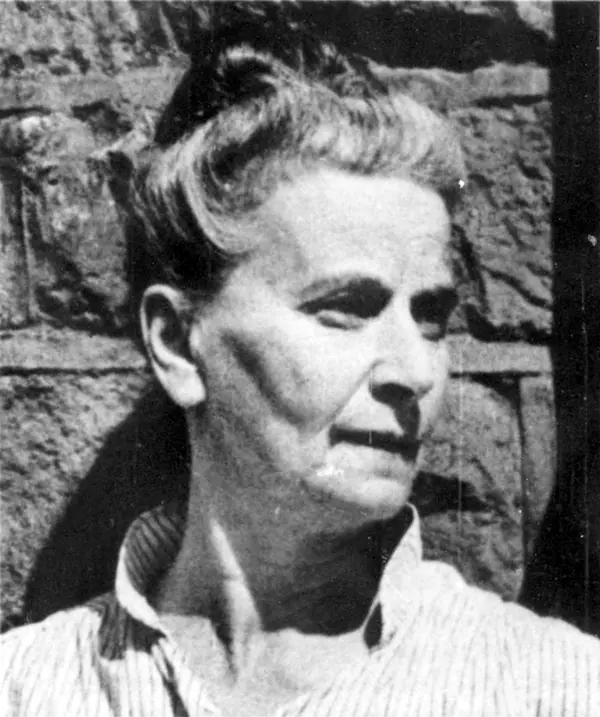 Marie Rambertthe living metronomeFounds a company in London in 1926. Today it is Britain’s oldest dance company, and it carries her name.
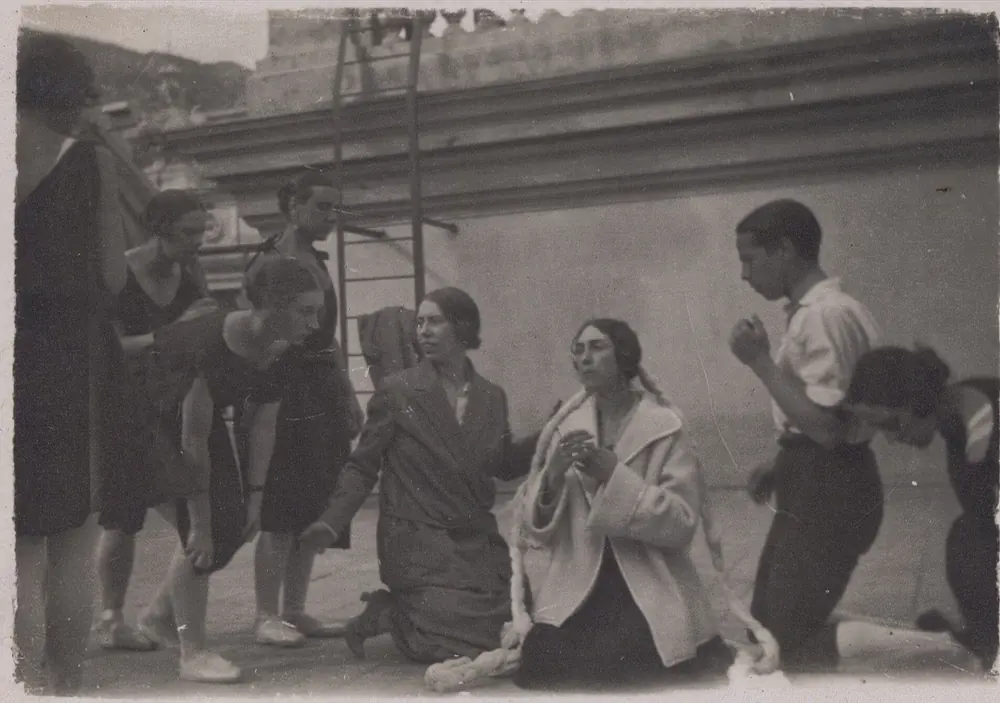 Bronislava Nijinskathe sister who missed the roleCreates Les Noces to Stravinsky’s music and becomes one of the great choreographers of the century.
- Maria Piltzthe first Chosen OneGoes back to Russia, to the Mariinsky. Today few people know her name.
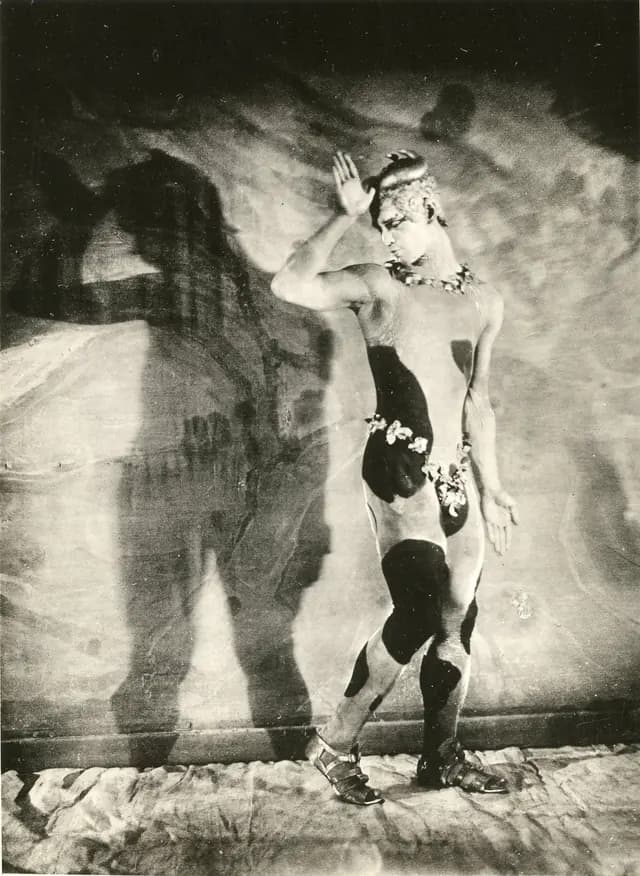 Vaslav Nijinskythe man on the chairDies in London on 8 April 1950, of kidney failure.Madness
“I did not like Le Sacre then. I have conducted it fifty times since. I do not like it now.”
- Ruin.
- A death on the water.
- The Himalayas.
- Madness.
- And a triumph.
Look at this table, and it’s hard to shake the feeling that something was set loose that night.
The ballet itself lived on without its choreographer.
- 1913Paris · Vaslav NijinskyThe first one. Fewer than ten shows.
- 1920Paris · Léonide MassineNew choreography for Diaghilev. According to her biographers, Coco Chanel quietly paid for it.
- 1930America · Martha GrahamThe future mother of modern dance dances the Chosen One.
- 1940Walt Disney · FantasiaThe Rite on screen, with dinosaurs.
- 1959 · 1975Maurice Béjart · Pina BauschAnd many more after them.
By 2013 one database counted 185 versions of The Rite. Today there are about two hundred.
And what about Nijinsky’s own steps? For more than seventy years they were thought to be lost, until Millicent Hodson and Kenneth Archer pieced them back together from sketches, reviews, photographs and the memories of people who were there, Marie Rambert among them.
On the 30th of September 1987, in Los Angeles, the Joffrey Ballet dances it again, and in 2003 Nijinsky’s Rite reaches the stage of the Mariinsky.
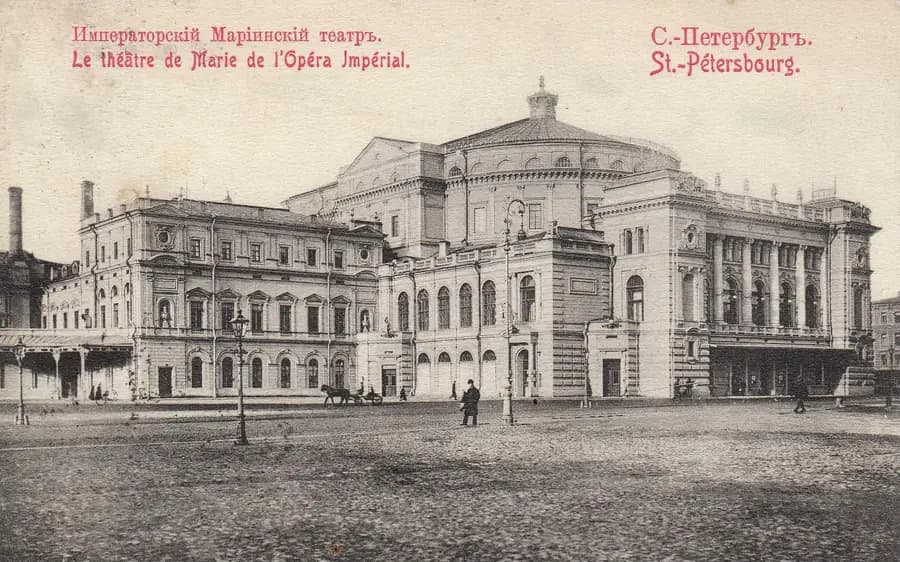
How did a failure become the most revolutionary ballet of the century? It came too early.
- 1913Paris laughed at it.
- 1914A year later the music was a big success.
- 1987The dance only came back now.
- ≈ 200versions of it today.
I think it simply came too early, because the music was accepted first and concert halls loved it, while the dance disappeared, and that made it a legend that so many choreographers wanted to stage in their own way.
For me this is where modern ballet begins. Everything the audience laughed at that night, dancers use everywhere today.
Ballet stopped being only about clean positions and clear rules. Stravinsky went completely outside the canon with a tribal dance full of darkness and emotion, and the world needed many years to understand it.
I really enjoyed this story, especially the moment with the chair, when the most famous dancer of his time was standing backstage and shouting numbers.
Have you ever seen The Rite of Spring live? Which version?
Tell me in the comments under the film.
Nijinsky knew the rules before he broke them. Your first class starts with the same two.
Turnout and a soft landing. If this story moved you, try ballet yourself, from home.
Not sure where to start? Take a free class first
Sources
- Igor Stravinsky, memoirs and recollections of the premiere
- Jean Cocteau, recollections of the premiere
- Marie Rambert, memoirs
- Pierre Monteux, recollections of the premiere and of the score
- Reviews: Le Figaro, Comœdia, L’Écho de Paris (Adolphe Boschot), The New York Times, 1913
- Giacomo Puccini, a letter after the second performance
- Carl Van Vechten, his account of the premiere, and his letter found a century later
- Historian Tamara Levitz, on the word riot
- Millicent Hodson and Kenneth Archer, the reconstruction of Nijinsky’s choreography (Joffrey Ballet, 1987)
- A database of productions of The Rite: 185 versions by 2013
Photographs and drawings
- Cover: dancers in Roerich’s costumes, The Rite of Spring, 1913. Public domain, tinted
- Stravinsky at a rehearsal of The Firebird, 1910: public domain
- Nicholas Roerich, portrait by Boris Kustodiev, 1913: public domain
- Roerich, The Great Sacrifice, 1910; The Kiss of the Earth, 1912; costume design for a girl, 1913: public domain
- Talashkino, painting by Jan Ciągliński, 1896: public domain
- Nijinsky and Diaghilev in Nice, 1911: Alexandra Botkina, public domain
- The Afternoon of a Faun, 1912: Adolf de Meyer, public domain
- Original costumes of The Rite, 1913: Dansmuseet, Stockholm, CC BY 4.0
- The Jaques-Dalcroze Institute at Hellerau, postcard, 1910s: public domain
- Bronislava Nijinska, 1908: public domain
- Pierre Monteux, 1917: Ira L. Hill, public domain
- Sergei Diaghilev, 1910s: Bain News Service, Library of Congress, public domain
- Stravinsky and Debussy: Erik Satie, public domain
- Gabriel Astruc, 1914: Agence Meurisse, public domain
- The hall of the Théâtre des Champs-Élysées, from a 1914 book: public domain
- Tamara Karsavina in Les Sylphides: George Barbier, 1914, public domain
- Nijinsky in Le Spectre de la Rose, 1911: Auguste Bert, public domain
- Countess Mélanie de Pourtalès, after Winterhalter: public domain
- The New York Times, 8 June 1913: public domain
- The Casino de Paris, 1915: Agence Rol, public domain
- The RMSP Avon: public domain
- Nijinsky and Romola, 1916: Bain News Service, public domain
- Michel Fokine, 1914: public domain
- Nijinsky with Till Eulenspiegel, 1916: White Studio, public domain
- Suvretta House, St Moritz: public domain
- Sergei Diaghilev, around 1910: public domain
- Igor Stravinsky, 1937: Harris and Ewing, Library of Congress, public domain
- Roerich, Pearl of Searching, 1924: public domain
- Pierre Monteux in The Hague, 1956: Daan Noske, Anefo, Nationaal Archief, CC0, cropped
- Marie Rambert, 1959: public domain
- Les Noces rehearsal with Bronislava Nijinska, 1923: public domain
- Vaslav Nijinsky, 1917: Karl Struss, public domain
- The Mariinsky Theatre, postcard before 1905: public domain
Every picture on this page is a real photograph, drawing or design of its time; the diagrams are drawn for this story. Most photographs come from Wikimedia Commons.