Pointe Shoes · 1721 to today
Pointe Shoes: Everything You Didn’t Know About Them
Pink satin and pure grace, and almost nobody knows what’s hidden inside. Why the first dancer on pointe was a man, what pointe shoes are really made of, and why fans in Russia ate a ballerina’s shoes: two hundred years of the most famous symbol of ballet.
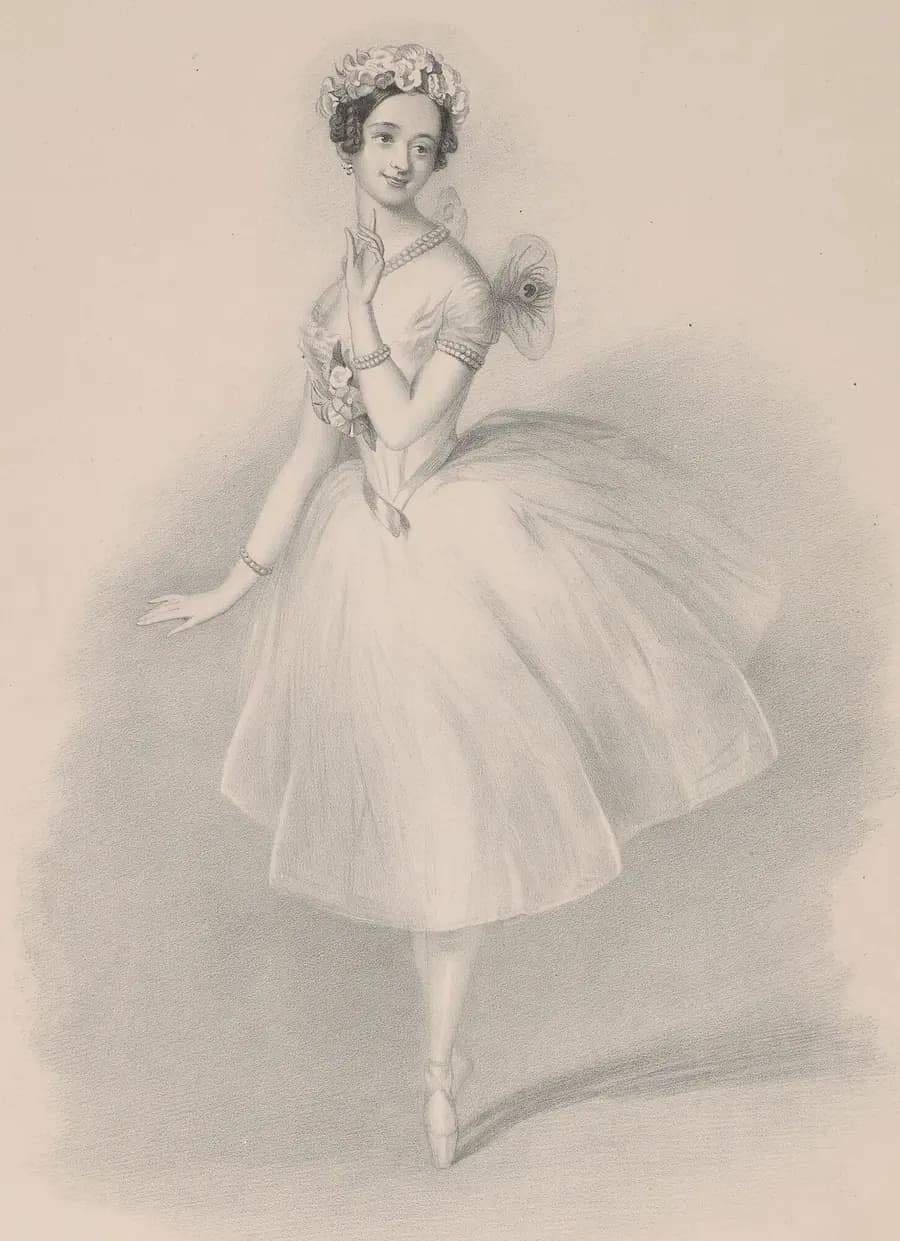
Pink satin, pure grace, and what’s hidden inside?
Pointe shoes are the most famous symbol of ballet, pink satin and pure grace, and yet almost nobody knows what’s hidden inside them, or what stories they’ve kept for two hundred years.
- Why was the first dancer on pointe a man?
- What are pointe shoes really made of?
- Why did fans in Russia eat a ballerina’s shoes?
I’ve lived next to pointe shoes my whole life, and I thought they had no secrets left for me, until I found out that this little satin shoe has a scandal of its own.
And we start in London in 1796, with a choreographer who wants his dancers to fly.
Pulled by Wires
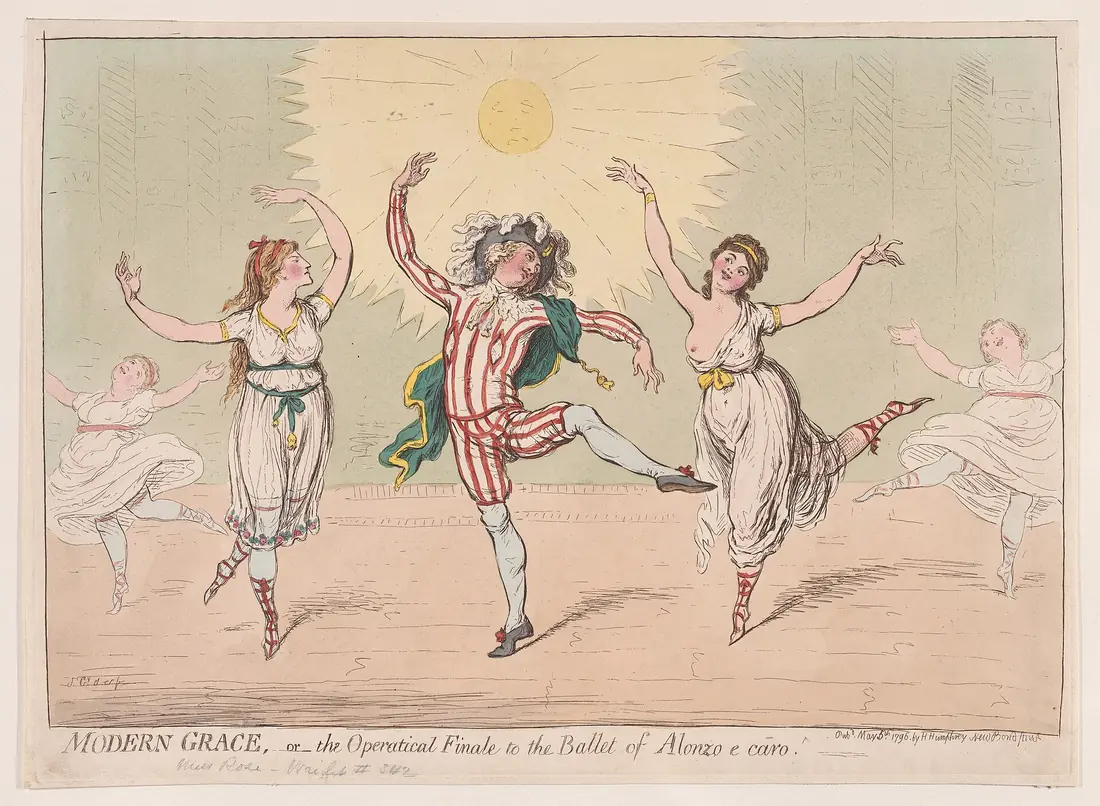
London, 1796. The choreographer Charles Didelot is staging his ballet Flore et Zéphire, and one of its heroes, Zephyr, is the wind, so he has to fly.
Didelot builds a flying machine, with wires that lift the dancers high above the stage, and the story of the pointe shoe begins right here.
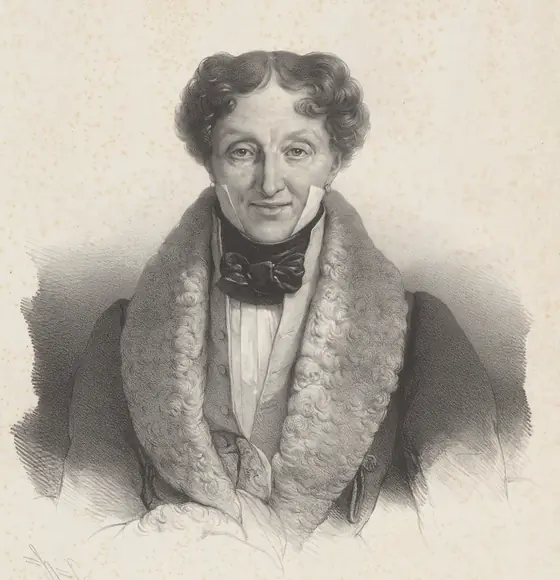
Again and again you’ll read that before the machine lifted the dancers into the air, it first pulled them up onto their toes. It’s a beautiful picture, and maybe a true one, but we couldn’t trace it to anyone who actually saw it.
Only a maybeSo for now, Didelot’s wires remain only a maybe.
And what was on their feet? Dancers used to perform in the fashionable shoes of their day, says the Bata Shoe Museum in Toronto, and the heels mostly got in the way.
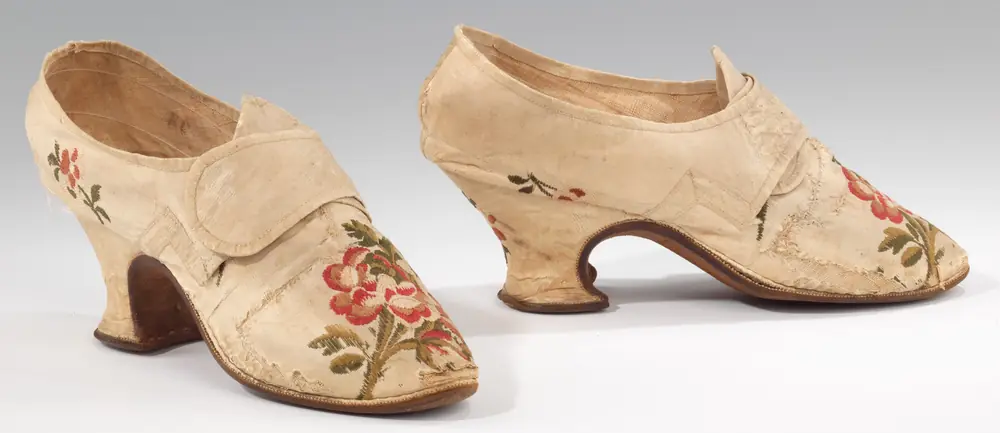
Heels go out of fashion. Thin, flat satin shoes with ties.
Early in the nineteenth century heels went out of fashion, and in thin flat satin shoes with ties dancers begin to rise onto their toes.
is about a ballerinais about a man.
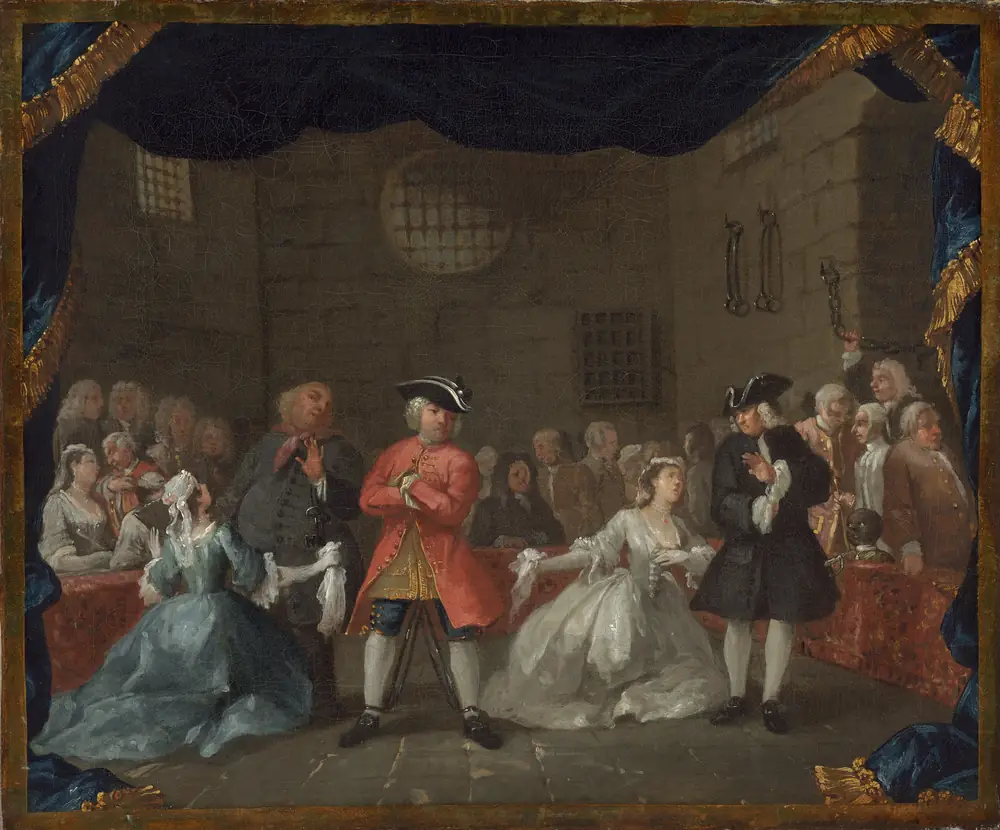
The museum names a Mr Sandham, at the Lincoln’s Inn Fields theatre in London, in the season of 1721 to 1722, almost a hundred years before the ballerinas got there, and he did it without any special shoes.
And none of them is the final first.
- 1721 LondonMr SandhamUp on his toes at Lincoln’s Inn Fields, without any special shoes.
- 1815 Paris
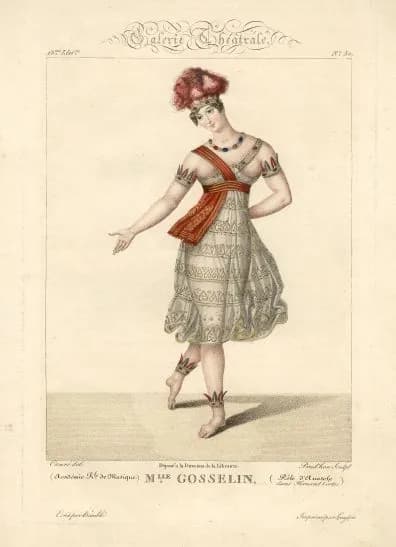 Geneviève GosselinDances Flora in Didelot’s ballet.
- 1821 A drawing
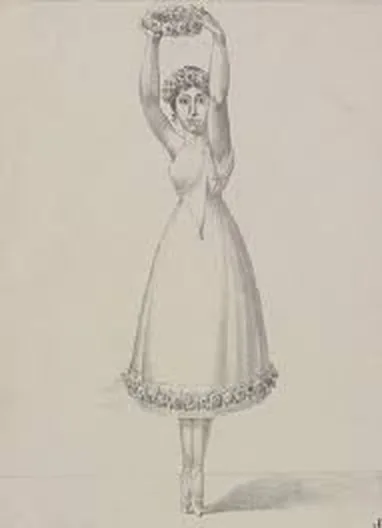 Fanny BiasAnother Flora, already up on her toes.
- 1820s Italy
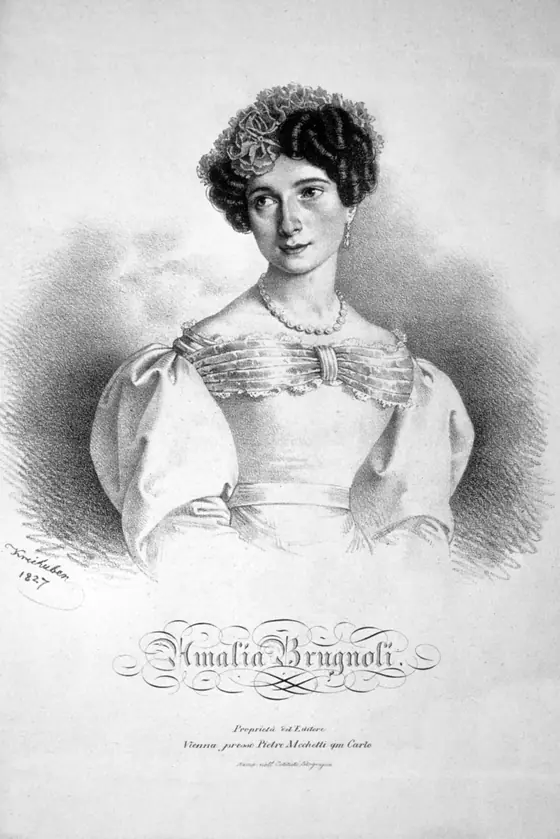 Amalia BrugnoliRises onto her toes too.
Mr Sandham has no picture. Mlle Gosselin: a print from the Galerie théâtrale, which of the Gosselin sisters is not stated; image: Huster, Wikimedia Commons, CC BY-SA 3.0. Fanny Bias: a drawing by Jean Frédéric de Waldeck, 1821, public domain. Amalia Brugnoli: lithograph by Josef Kriehuber, 1827, public domain.
“Toe dancing is first recorded as an acrobatic trick.”
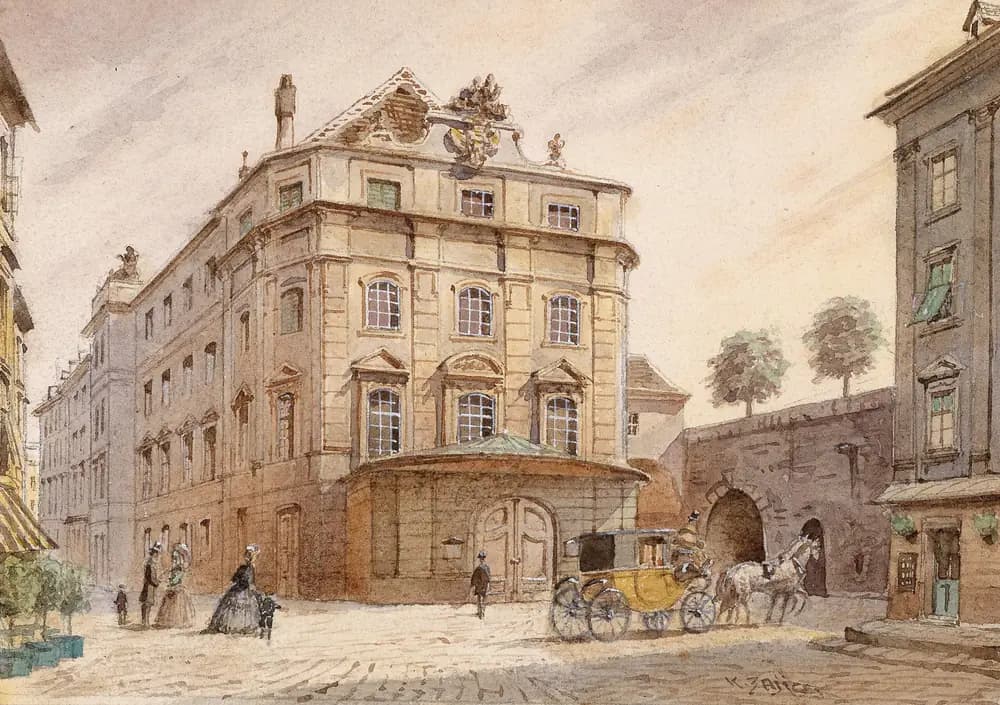
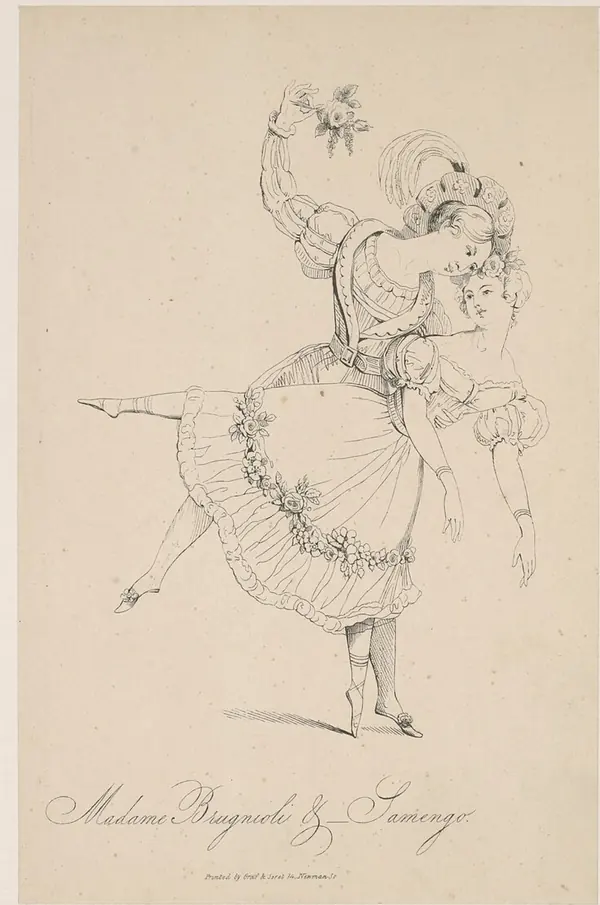
Brugnoli dances in Vienna, and, as the story is told, a young dancer watches her there and finds that she does extraordinary things, but to get up onto her toes she has to push hard with her arms, so the young dancer decides to take this style and make it perfect.
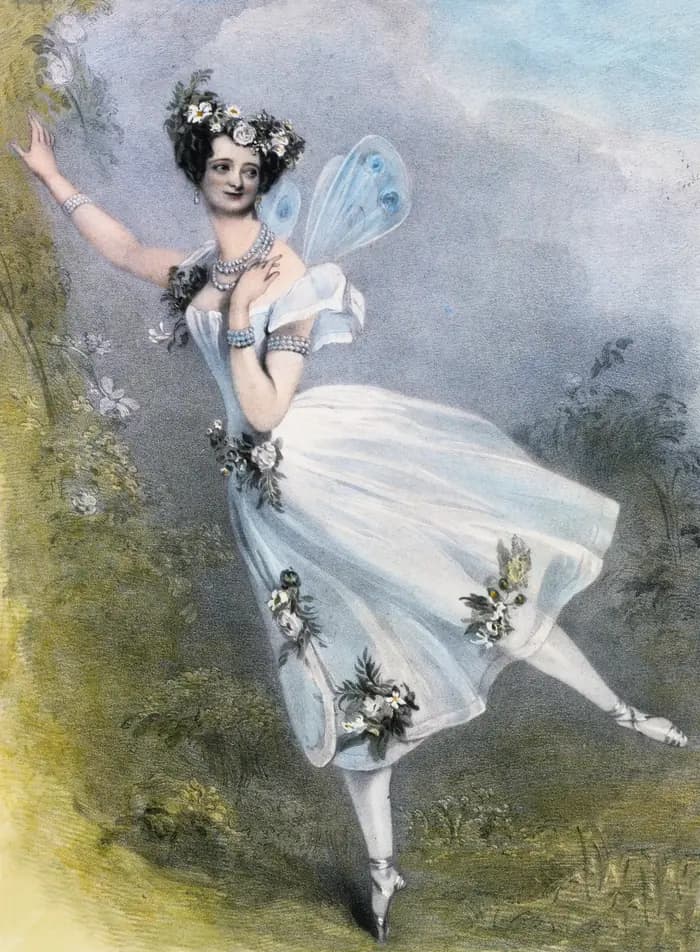
- Satin
- A ribbon
- A thin sole
Not a single name on the shoe yet. One day the young dancer who watched Brugnoli in Vienna will write a letter demanding her money back for shoes, and her name is Marie Taglioni.
That picture of Brugnoli pushing with her arms is something every ballet teacher knows.
At the Vaganova Academy, where I studied, girls start pointe in the very first year, facing the barre. And when a little girl goes up, all her effort goes into her hands, and she holds that barre so tight, as if the floor might fall away.
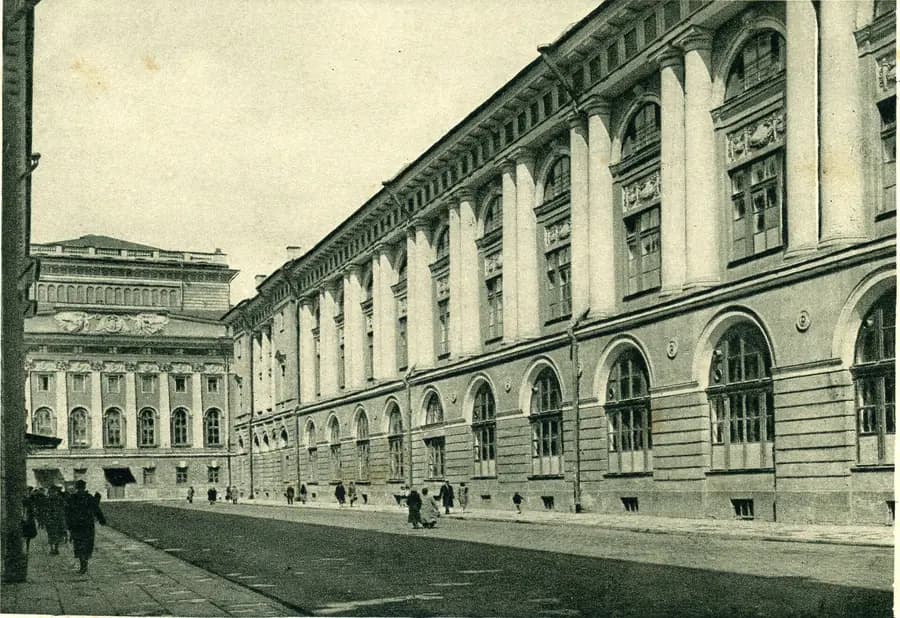
- The first yearIn the handsShe holds the barre so tight, as if the floor might fall away.
- For yearsInto the legs and the backThe teacher moves the effort out of the arms.
- On stageNothingNobody buys a ticket to watch a ballerina struggle.
Could you stand on your toes for ten seconds without holding on?
Taglioni was about to do it in front of all of Paris, but first she had a much simpler problem: who was going to pay for her shoes.
Satin and Thread
Paris, the eighth of February 1832. Marie Taglioni, a dancer of the Opéra, writes a letter that opens with one word, Monsieur, and no name.
This gentleman wants to know why she still doesn’t wear the shoes from the Opéra’s store, and she answers that she must tell him the truth.
The shoemaker there still can’t make her a pair that fits, so she orders her shoes from another maker and pays for them herself.
And the theatre’s pair she tried only once, and even then in the show where, in her words, she gets the least tired, Robert le Diable.
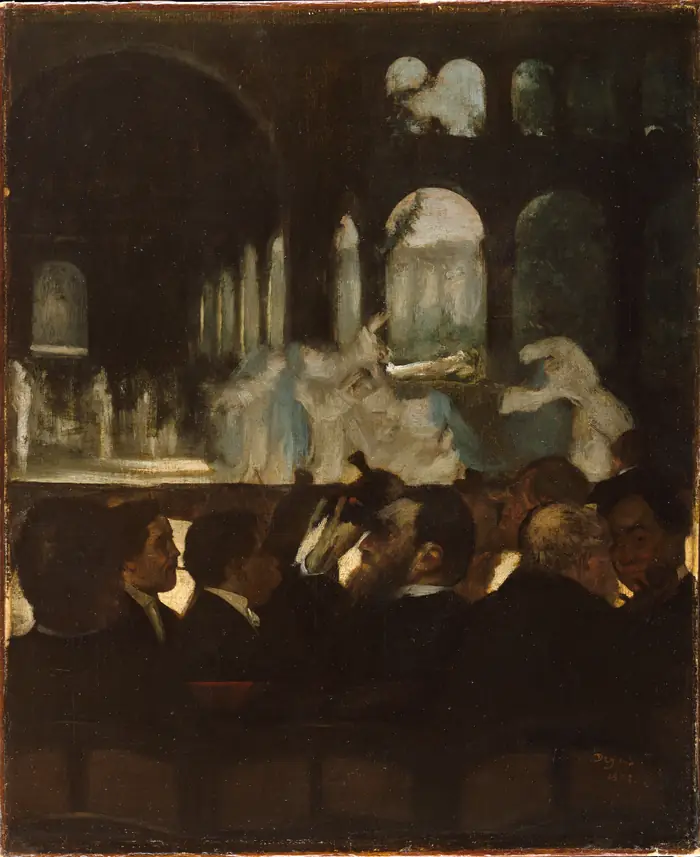
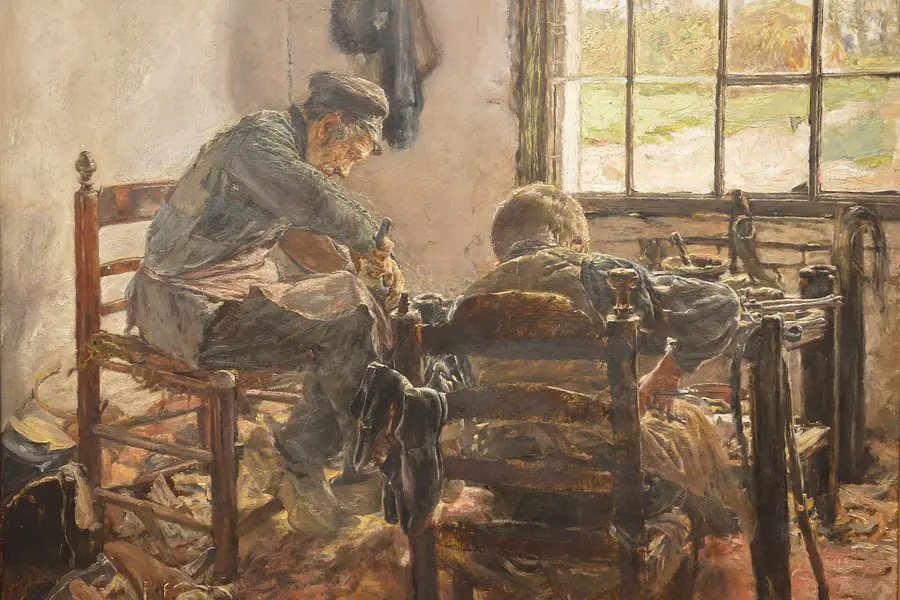
For twenty four performances she has paid for her own shoes, and now she wants that money back, whoever pays it, the shoemaker or the management, and then she adds one more demand:
“I ask you, Monsieur, to give orders that the shoes given to me in future be of good quality, and made so that I can use them.”
The letter is kept today at the National Library of France, and here’s the strange thing about it: there’s no word pointe in it and nothing about toes, only ordinary shoes and money.
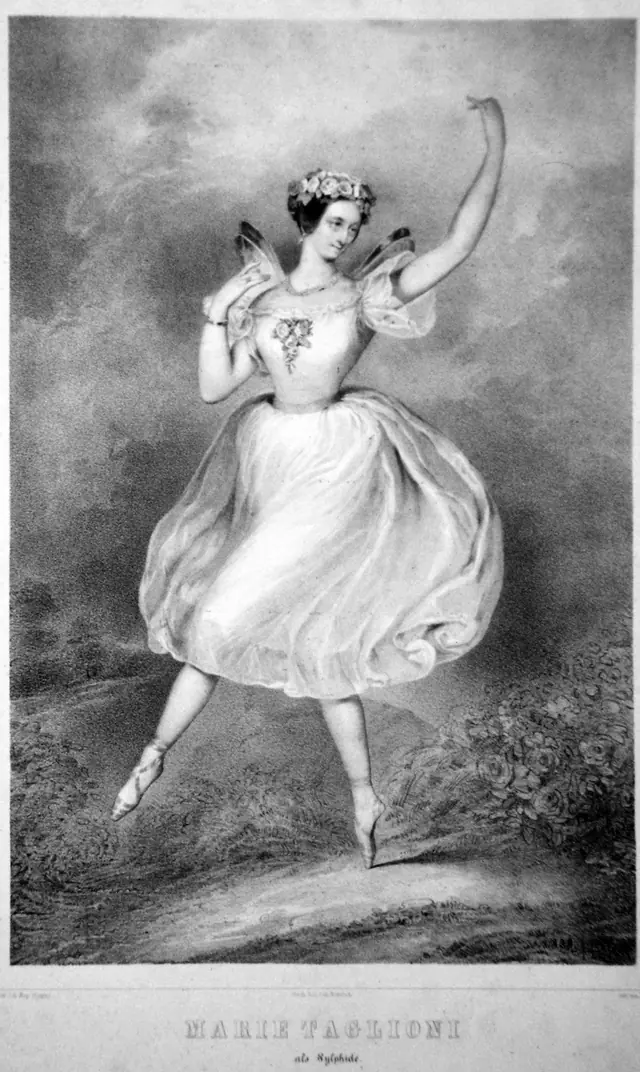
Less than five weeks later, in that same theatre, she dances the Sylph.
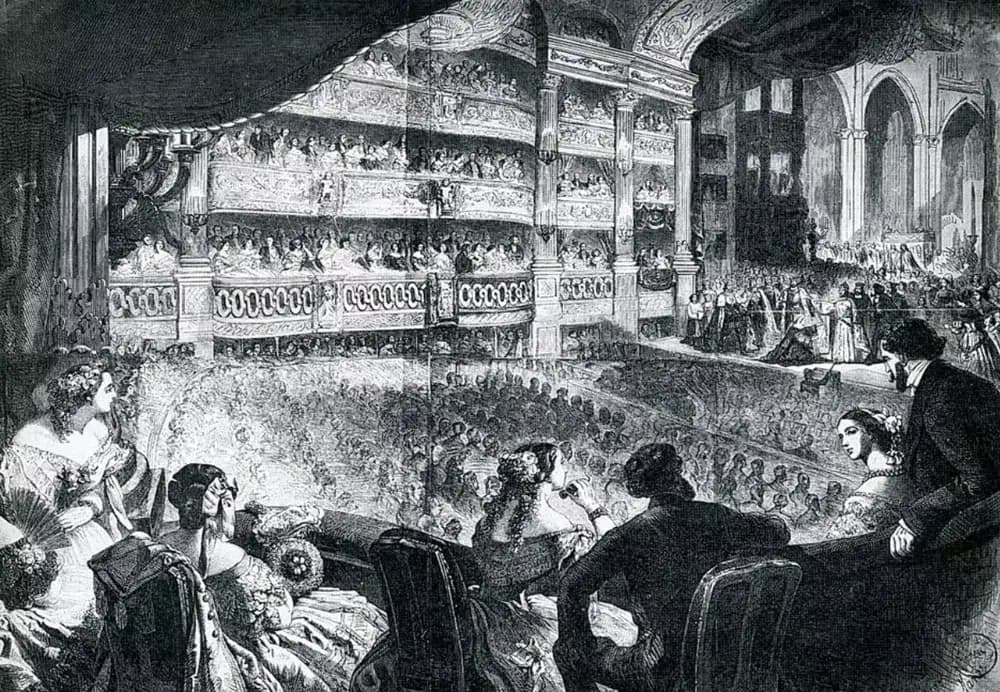
On the twelfth of March 1832, in that same theatre on the rue Le Peletier, her father Filippo stages La Sylphide, and she dances the Sylph.
So what was on her feet? The clearest answer we have is ten years younger, and it’s in London, at the Victoria and Albert Museum: a black satin shoe from around 1842 with, by modern standards, no block at all.
- Black satinAround 1842
- No block at allBy modern standards
- Thick darningUnder the toe and a centimetre and a half up the sides
- Ink on the soleIn her own hand: where she danced in them, and who was watching
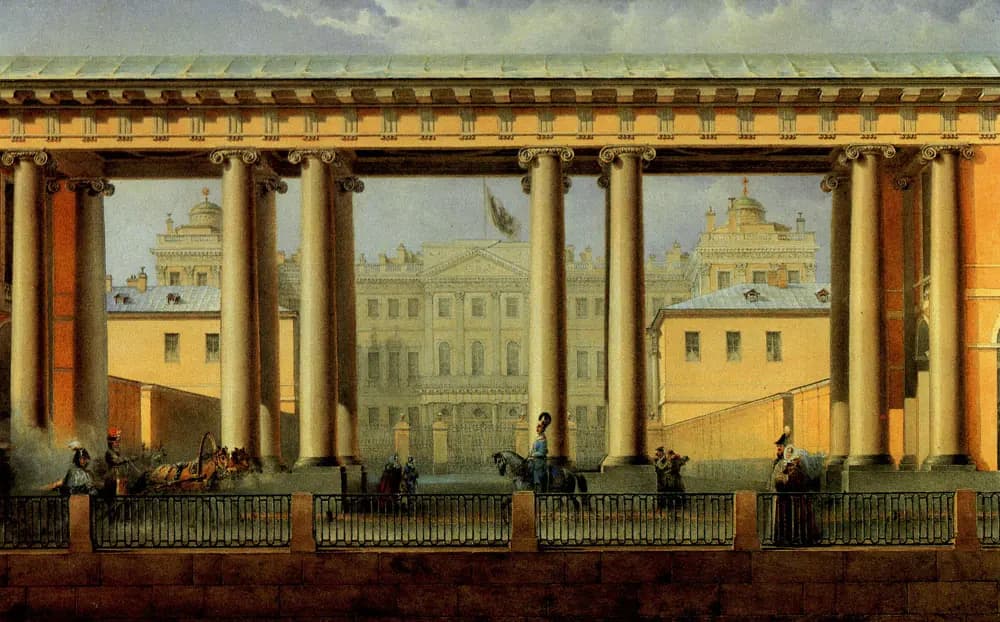
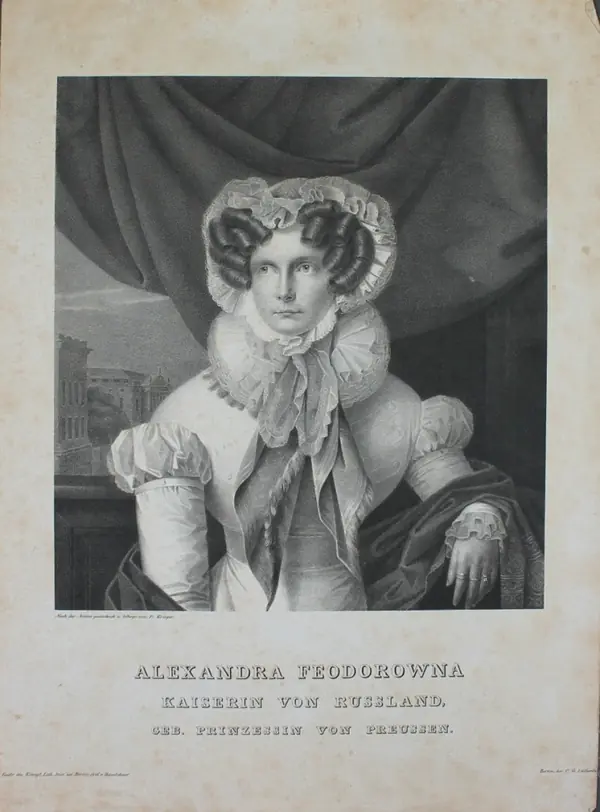
Its only support is thick darning under the toe and a centimetre and a half up the sides, and on the sole Taglioni wrote in ink that she danced in these shoes at her farewell evening in the Anichkov Palace in St Petersburg, in front of the Empress.
In France there’s another pair, with her signature inside, and in one shoe a small paper label gives the maker’s name, Janssen, his street address in Paris, and the French word for right.
The Bata museum confirms that Janssen made shoes for her, so for the first time in our story there’s a name inside the shoe.
The letter names nobody, so the label keeps its secret.
Our drawing of the labelAfter her last performance in Russia in 1842, the story goes, fans bought a pair of her shoes, cooked them, served them with a sauce and ate them, for two hundred roubles in one telling and a thousand in another, so with every retelling the dinner gets more expensive.
Why would anyone eat a pair of shoes? It was her farewell, and maybe this was their way of keeping a little piece of her for themselves.
But whatever happened to that pair, the shoe in London survived, because in 1877 Taglioni gave it away herself, to Lady Selina Bidwell.
Taglioni wasn’t the first on her toes, but historians say something else about her: La Sylphide was the first ballet where the toes meant something inside the story, instead of being a trick.
She did it on soft satin and thread. The shoe was still missing the thing that would change everything: a hard box.
Half a century later, Italian ballerinas will arrive in St Petersburg in shoes stiffened with newspaper and paste, and one of them will turn thirty two times in a row.
Think about it, the Sylph herself was counting shows and asking for her shoe money, and I love this letter, because behind every legend there’s a working dancer with very real problems.
No hard box, so every second up there was her own strength.
A new pair knocks on the floor, so before a show ballerinas break it in until it goes quiet.
When you partner a ballerina, you feel her shoes through your hands. In a strong pair she stands like a rock, but when they start to die, every pirouette wobbles, and it’s your job to save it.
Would you trust soft satin and your own feet, or a hard box that carries you?
Fifty years after Taglioni, the Italians had already made their choice.
The Italian Box
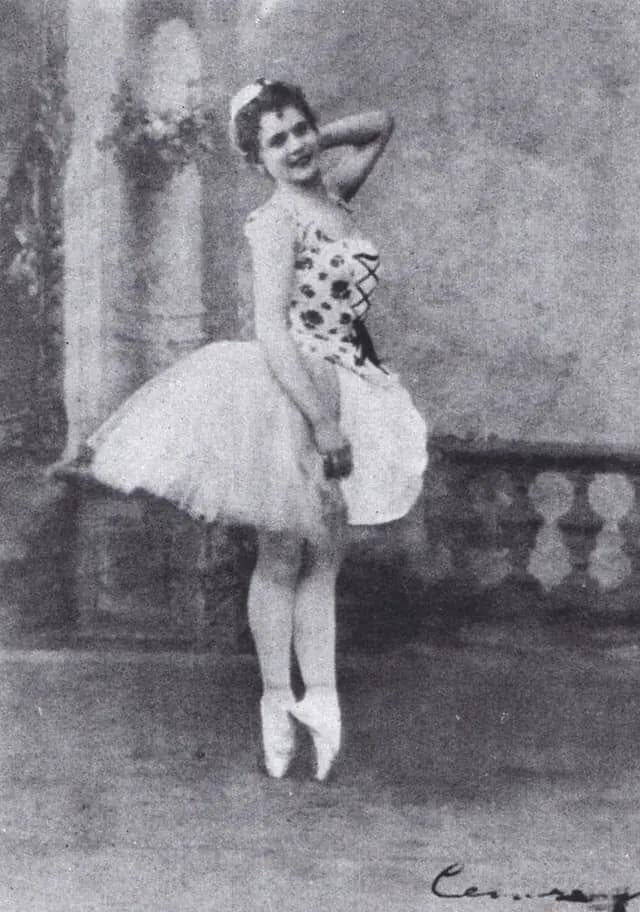
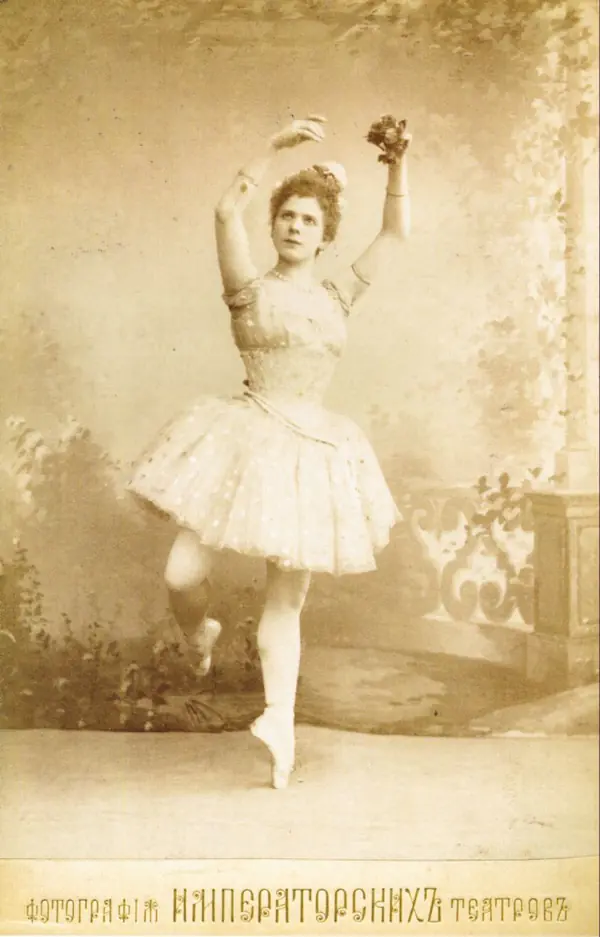
St Petersburg, the Mariinsky Theatre, the seventeenth of December 1893, or the fifth by the old Russian calendar. The ballet is Cinderella, and the Italian Pierina Legnani comes out for her variation and turns thirty two fouettés in a row, something no ballerina, it’s widely believed, had done in a ballet in Russia before.
But eight months earlier Legnani gave an interview that makes this story stranger.
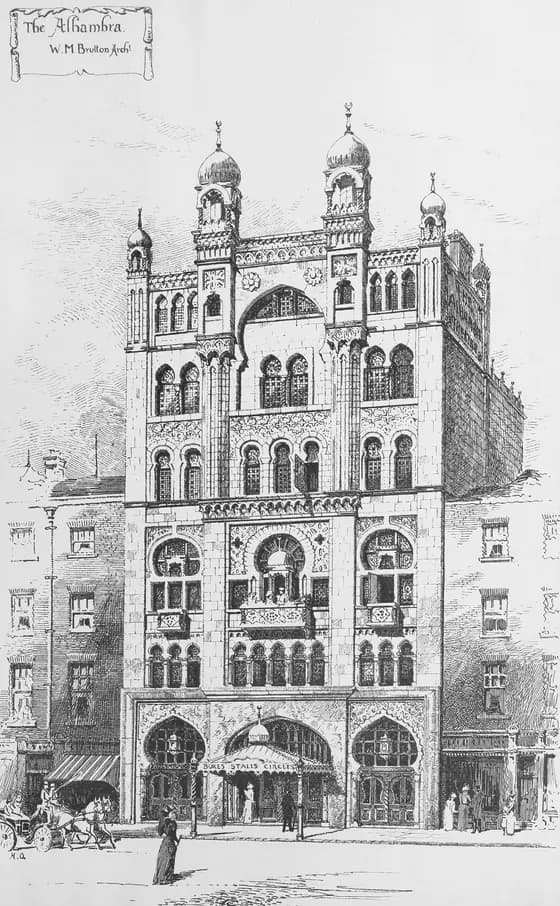
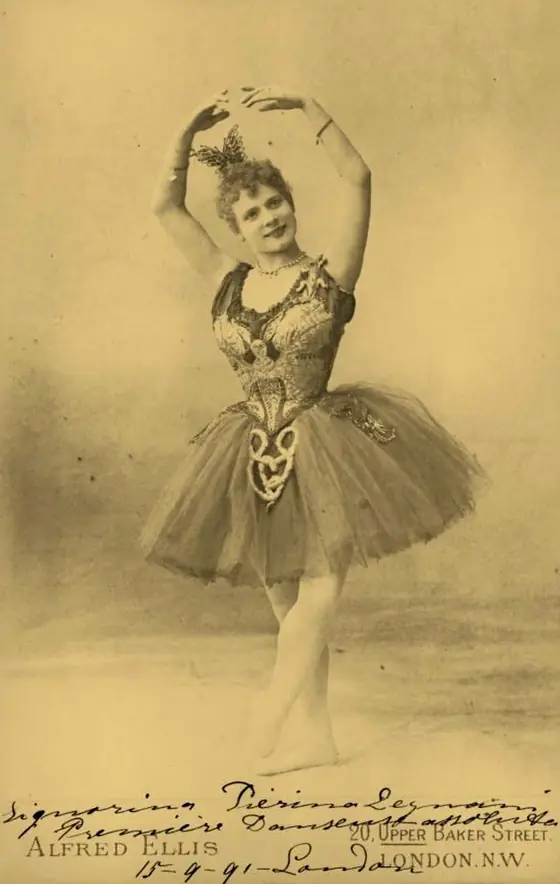
In April 1893 the London magazine The Sketch talks to her while she is dancing at the Alhambra theatre and asks about her shoes, and she shows them at once: they come from Italy, she says, with a narrow sole and a stiffening over the toes.
“With these I hardly get tired.”
On her toes, in the last scene of Aladdin, without dropping her foot.
In Cinderella, at the Mariinsky Theatre.
She calls them pirouettes, not fouettés, and that one word keeps the mystery open.
- Fabric
- Cardboard
- Newspaper and paste
- Newspaper and paste
- A leather insole
Once it all dried, it held its shape like a little box.
Our diagram, after The Australian Ballet and Pointe Magazine. The order of the layers is oursAnd what made those Italian shoes so firm? According to the Australian Ballet and Pointe Magazine, Italian makers of that time built up the toe in layers of newspaper and paste, cardboard and fabric, over a leather insole, and once it all dried, it held its shape like a little box.
That Italian shoes were simply harder than Russian ones. We couldn’t find a single solid document that proves it.
No solid documentWhat the documents do give us is a name. A London museum keeps a pair from between 1916 and 1925, stamped NICOLINI, ROMEO, MADE IN ITALY, and according to the museum, Romeo Nicolini worked in Milan and was Anna Pavlova’s favourite maker.
Did he ever make shoes for Legnani? We found no trace of it.
So now the name on the shoe comes with a whole country. Made in Italy.
But a shoe built for one foot doesn’t suit every foot, and soon St Petersburg will have a ballerina with a very unusual foot, who will add something of her own to her shoes, and people will call it cheating.
Whether those Italian shoes were harder or not, Legnani said that in them she hardly got tired. Any dancer gets that, because thirty two fouettés depend on the shoe much more than people think.
If it goes soft in the middle of the coda, you start to travel across the stage, and the whole hall sees it.
That’s why many ballerinas keep one special pair just for the fouettés, and how a Russian ballerina learned those turns from the Italians, I told you in my video about Kschessinska.
When you watch Swan Lake, do you secretly count the fouettés? Tell me in the comments.
Because the next ballerina in our story didn’t wait for a perfect shoe, she changed hers, and people had a very unkind word for that.
Pavlova’s Cheat
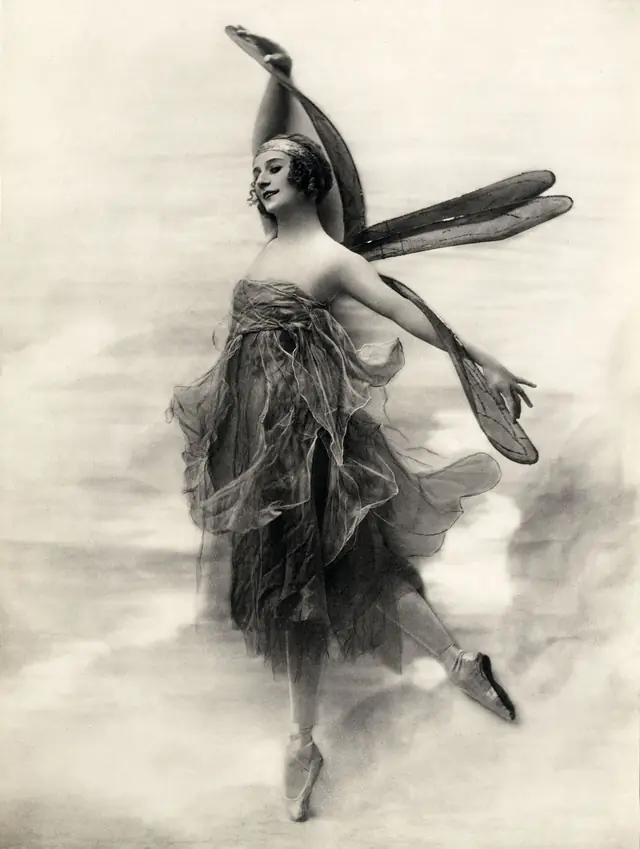
In the collection of the London Museum there’s a single pair of ballet shoes, made in New York by a maker called La Mendola, most likely in the early 1920s. Their owner was Anna Pavlova, and her life is a story for another episode, so today we’ll look only at what she did to her shoes.
- 1A piece of leather or wood added to the sole
- 2The fabric around the toe shaped into a flatter, harder box
According to the museum, Pavlova added a piece of leather or wood to the sole and shaped the fabric around the toe into a flatter, harder box, and these changes carried her weight and helped her stay up on her toes.
Other sources explain why she needed them: she had a very high instep and a narrow foot, so on pointe her weight fell on her big toe, and she preferred a wider platform under it.
But her contemporaries saw this as cheating, because a ballerina was supposed to hold herself up, without help from her shoe, and two museums, in London and in Toronto, use exactly that word.
- The real tip
- The tip in the photograph
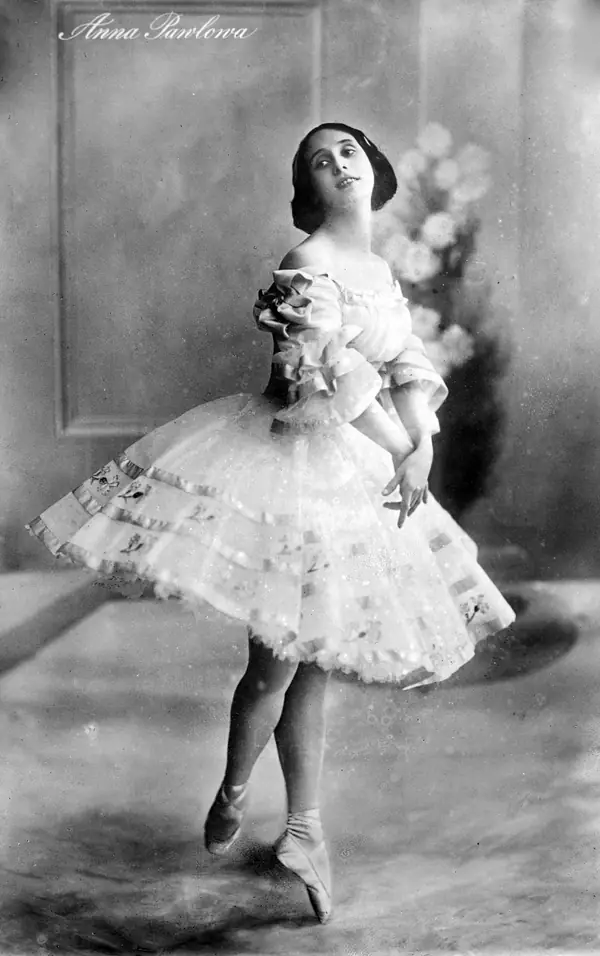
We have only one source for it, but it’s the museum that owns her shoes, and it says that Pavlova didn’t like the extra bulk, so she had her photographs on pointe retouched, to make the tip of her shoe look much narrower than it really was.
So this pair carries a New York name, and its owner, one of the most famous ballerinas in the world, didn’t want even the camera to see what she had done to it.
That Pavlova invented the modern pointe shoe. But shoes with a stiffened toe already existed, we saw them with Legnani, and what Pavlova did was change them for her own foot.
She changed it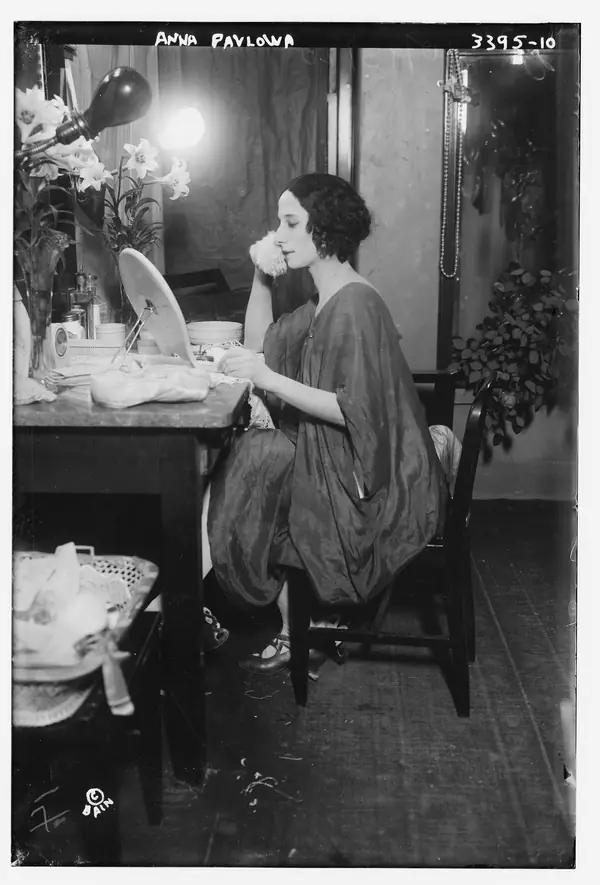
From here, the makers take over the story.
- 1929London · Covent GardenFrederick Freed, who had worked for the London firm Gamba, opens his own workshop in a basement.
- 1993New YorkEliza Minden goes further and replaces the cardboard and leather with elastic plastic.
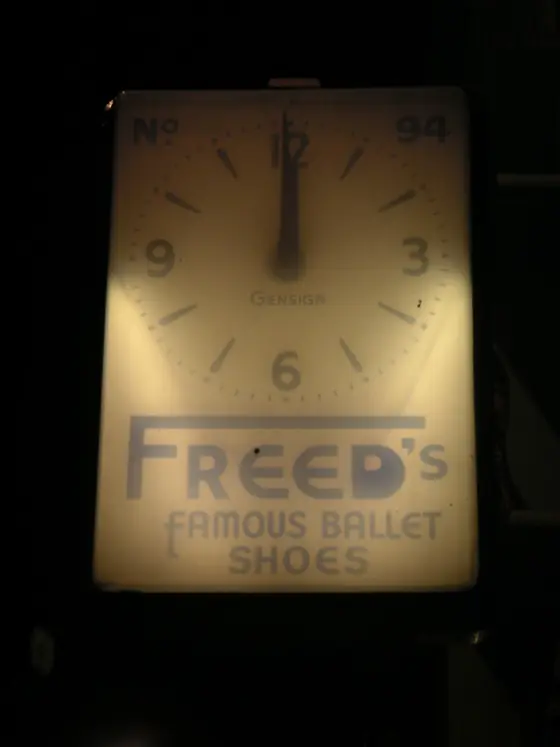
So what is really inside the shoe that carries a ballerina’s whole weight? For the answer we go back to London, to a workshop where every maker marks his shoes with his own little sign.
People called Pavlova’s trick cheating, and she even hid it in her photos, but honestly, I understand her completely.
A ballerina has to look like she weighs nothing, and nobody in the hall wants to think about a piece of leather in her shoe.
But from the inside it looks different. Every foot has its own arch and its own strength, and a pair that’s perfect for one girl can hurt another, so dancers search for years. And when a ballerina finds her maker, she may stay with him her whole career.
For me, making the shoe work for you is just part of the job, like a violinist choosing the right strings.
Tell me in the comments under the film.
And now let’s go to a workshop in London, where a pair spends a whole night in an oven and may live on stage for just one evening.
One Night Only
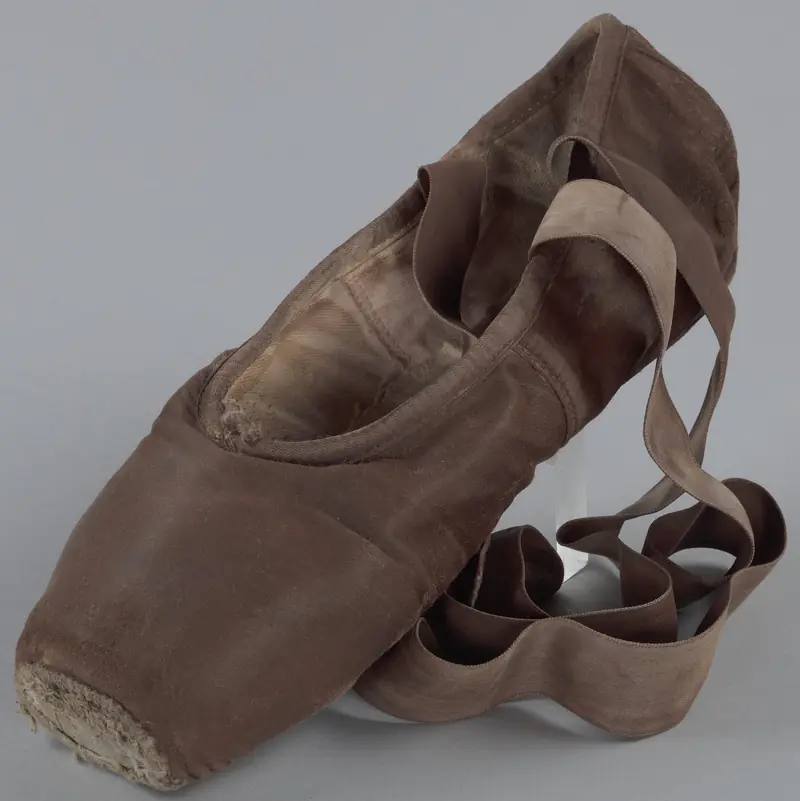
London, the workshop of Freed. Once a week, according to the blog Spitalfields Life, the makers mix flour with water for the paste and add a drop of insecticide against weevils.
So what exactly holds a ballerina’s whole weight on the tips of her toes? A maker known as Crown answers in one breath:
- Paper
- Card
- Hessian
- Flour and water paste
“Just paper, card, hessian and flour and water paste.”
There’s no wood inside, only what he just named. The shoe is put together inside out, then turned the right way and dried overnight in an oven.
- 1Put together inside out
- 2Turned the right way
- 3Dried overnight in an oven
- A crown
- A wine glass
- A fish
They work at their own benches and are paid by the pair, and Crown, after twenty four years in the job, was making forty one pairs a day when the blog visited.
So the name on the shoe has become a little sign on the sole, left by a maker you will never see.
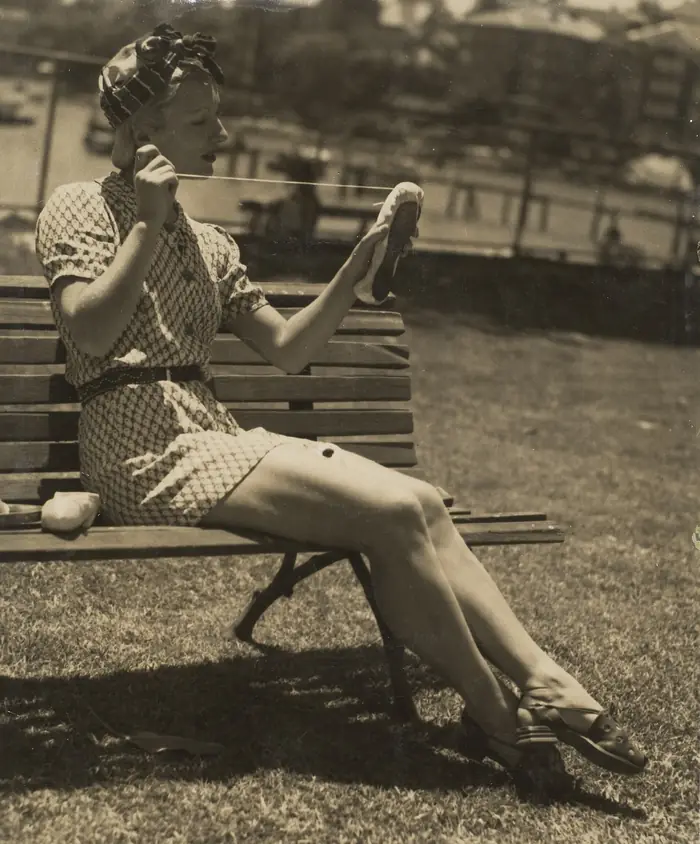
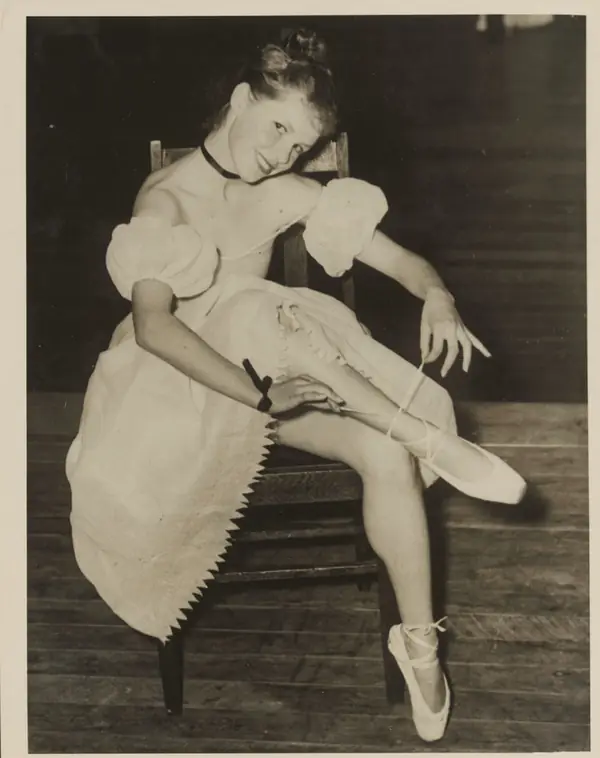
But a pair that leaves the workshop isn’t finished yet, because now the dancer’s own work begins. She sews on her ribbons and elastics herself, English National Ballet says, and some dancers darn the tip, as Pointe Magazine describes, to make the platform a little wider and harder.
Between the bench and the stage, every shoe passes through two pairs of hands.
“They order thirty pairs at a time and a lot will only use them once.”
So how many pairs does a ballerina go through? There’s no reliable number for one dancer, but companies count every pair, because they pay for them.
- The Royal Ballet, London6,000+pairs a year, at about £50 a pair: roughly £300,000 a year just on shoes. From its fundraising appeal.
- New York City Ballet8,500pairs in a season, and the average pair lives two days. Playbill, 2020.
- English National BalletUp to 3pairs a principal dancer can wear out in a single performance.
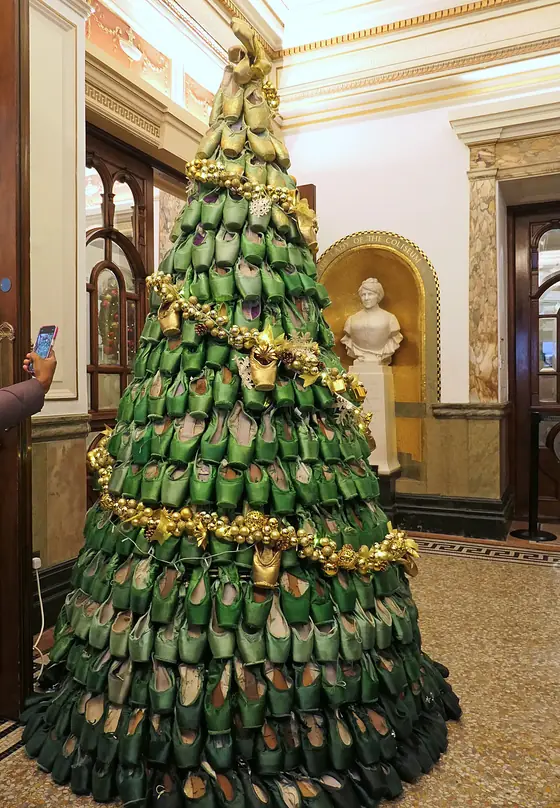
A box of paper and flour that carries a ballerina’s whole weight and often lives for a single night.
Today a maker known only by his sign builds the shoe, and the dancer sews and darns it until it’s hers, so nobody did it alone, and nobody has finished it.
The pointe shoe is invented again every evening, by two people: the one whose sign is on the sole, and the one who takes that sole out onto the stage tonight.
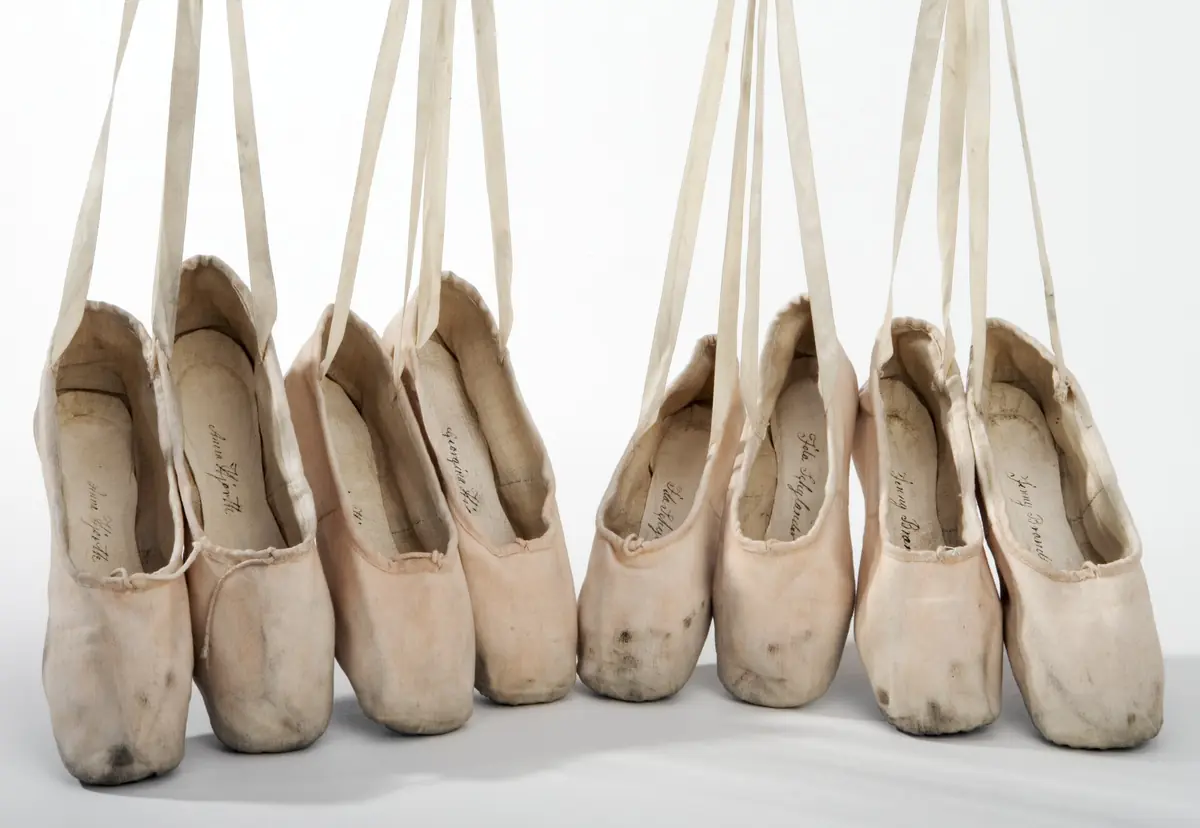
Two hundred years, one pair at a time.
- 1721A man’s trick in London
- 1832Taglioni’s letter
- 1893The hard Italian box
- 1920sPavlova’s secret
- TodayStill made by hand, one pair at a time
So the pointe shoe started as a man’s trick in London, went through Taglioni’s letter, the hard Italian box and Pavlova’s secret, and today it’s still made by hand, one pair at a time.
For me the most touching part is that old shoe in London, especially the ink on its sole, where Taglioni wrote down where she danced in it and who was watching.
- The first picturesNo name yet
- Her signature insideMarie Taglioni
- A label, ParisJanssen
- A stamp, MilanNicolini · Made in Italy
- New YorkLa Mendola
- A sign on the sole, LondonA crown, a wine glass, a fish
Was Pavlova cheating, or was she just ahead of her time?
And when you watch Swan Lake, do you secretly count the fouettés? Tell me in the comments under the film.
Every ballerina starts at the barre. Your first class starts there too.
Strength in the legs and the back, not in the hands. If this story moved you, try ballet yourself, from home.
Not sure where to start? Take a free class first
Sources
- Bata Shoe Museum, Toronto: dancers in the fashionable shoes of their day, Mr Sandham, the maker Janssen, the word cheating
- Victoria and Albert Museum, London: toe dancing as an acrobatic trick; Taglioni’s shoe of around 1842
- Marie Taglioni, letter of 8 February 1832, National Library of France
- The legend of the shoe dinner, St Petersburg, 1842, in two tellings
- The Sketch, April 1893: interview with Pierina Legnani at the Alhambra
- The Australian Ballet and Pointe Magazine: Italian shoes of the 1890s; Pointe Magazine: darning the tip
- London Museum: the Nicolini pair, 1916 to 1925; Anna Pavlova’s La Mendola pair, the word cheating and the retouched photographs
- Spitalfields Life: a visit to the Freed workshop and the maker Crown
- English National Ballet: ribbons and elastics; up to three pairs in a single performance
- The Royal Ballet, fundraising appeal; Playbill, 2020, on New York City Ballet
Photographs and drawings
- Marie Taglioni, Souvenir d’adieu, 1845: New York Public Library, public domain
- James Gillray, Modern Grace, 1796: The Met, CC0
- Charles Didelot, a portrait: New York Public Library, public domain
- Fashionable shoes, England, 1750s to 1770s: The Met, CC0, cropped
- William Hogarth, A Scene from The Beggar’s Opera, 1728 to 1729: National Gallery of Art, CC0
- Mlle Gosselin, Galerie théâtrale: image by Huster, Wikimedia Commons, CC BY-SA 3.0
- Fanny Bias as Flora, Jean Frédéric de Waldeck, 1821: public domain
- Amalia Brugnoli, Josef Kriehuber, 1827: public domain
- Amalia Brugnoli and Paolo Samengo, 1832: New York Public Library, public domain, cropped
- The Kärntnertortheater, Vienna, Carl Wenzel Zajicek: public domain
- Marie Taglioni as Flora, after Alfred Edward Chalon, 1831: public domain
- Rossi Street, St Petersburg, postcard, 1929: public domain
- Marie Taglioni as the Sylph, Faustin Herr, 1832: public domain, cropped
- Edgar Degas, The Ballet from Robert le Diable: The Met, CC0
- Max Liebermann, The Cobbler’s Workshop, 1881: public domain
- The Opéra, rue Le Peletier, Gustave Janet, 1858: public domain
- The Anichkov Palace, Vasily Sadovnikov, 1838: public domain
- Empress Alexandra Feodorovna, after Franz Krüger: public domain
- Pierina Legnani as Cinderella, 1893: public domain
- The Alhambra theatre, London, 1896: CC0
- Pierina Legnani, London, 1891, Alfred Ellis: public domain
- Pierina Legnani as Raymonda, 1898: public domain
- Anna Pavlova in a dragonfly costume, Spaarnestad: public domain
- Anna Pavlova, around 1910, two photographs: Bain News Service, public domain
- Freed’s shop sign, London, 2005: Greg, Wikimedia Commons, CC BY-SA 2.0
- A pointe shoe of Ingrid Silva: Smithsonian NMAAHC, CC0
- Tatiana Riabouchinska darning her shoes, around 1939, attributed to Sam Hood: public domain
- Moya Beaver, around 1935: National Library of Australia, no known copyright restrictions
- Pointe shoe Christmas tree, London Coliseum, 2025: Amanda Slater, CC BY-SA 2.0
- Pointe shoes with the dancers’ names, Livrustkammaren, Stockholm: Göran Schmidt, CC BY-SA 3.0
Every photograph and print on this page is a real one of its time. The flying machine, Taglioni’s letter and shoe, the labels, the Italian box, Pavlova’s changes and the makers’ signs are our drawings after the sources: the original letter and the shoes themselves are kept by the National Library of France and by the museums in London and Toronto. Most photographs come from Wikimedia Commons.