Can You Learn the Splits as an Adult? (Yes, and Here's How)
Oleg Ignatev · July 3, 2026 · 5 min read
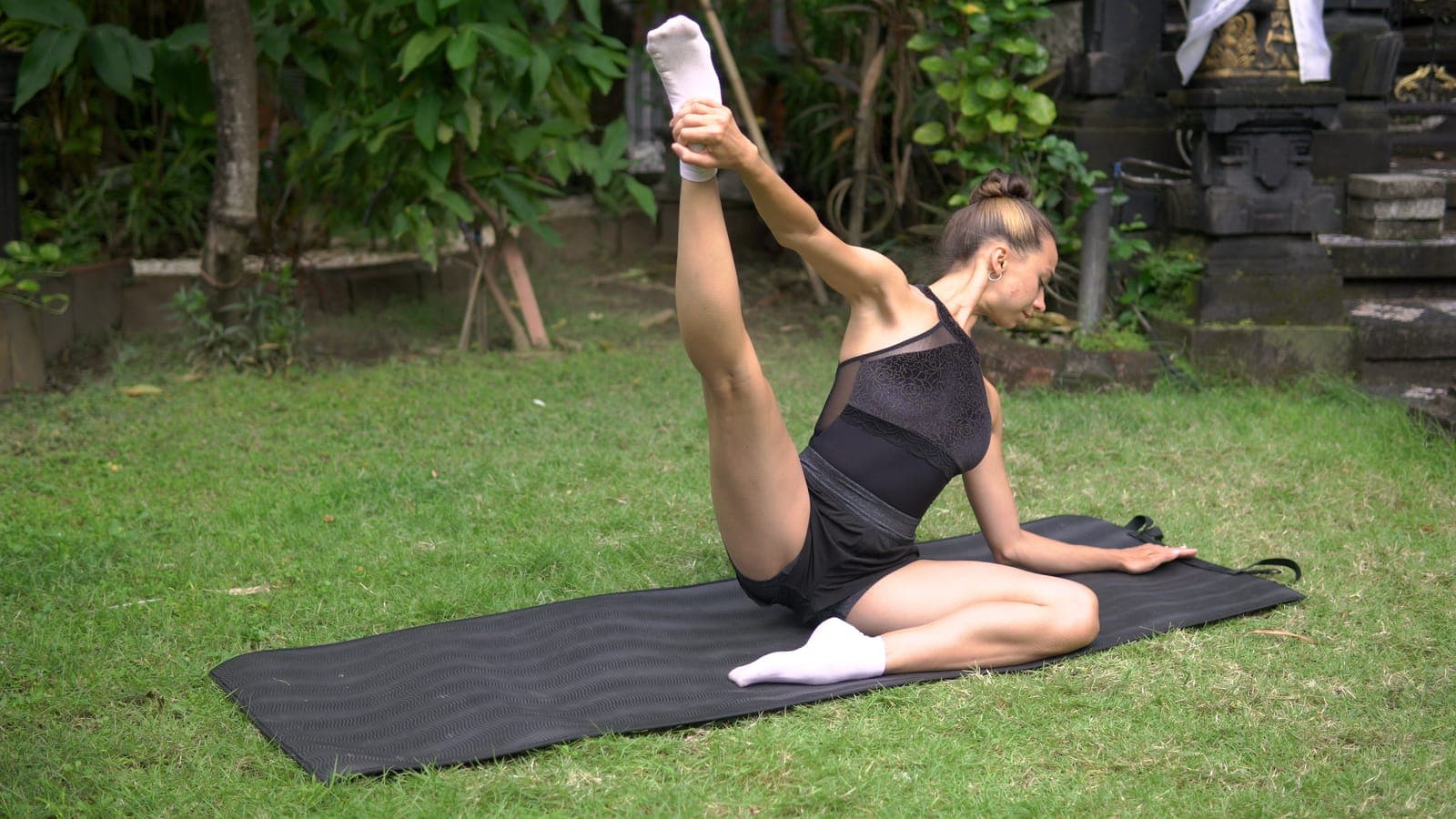
Somewhere along the way most of us decided flexibility has a deadline: if you didn't stretch as a kid, that door is closed. I teach adult women every week, and I can tell you the door is wide open. Age changes the pace, not the result.
In short: yes, adults learn the splits at any age. Early flexibility gains come mostly from the nervous system learning to allow more range, not from young tissue, so a consistent, gentle routine works in your 30s, 40s and 50s. Expect months of steady practice, not weeks.
Where the 'too late' myth comes from
We compare ourselves to children, and children do bend easily. So adults quietly conclude that flexibility belongs to childhood, like baby teeth. But watch what actually limits you in a stretch: it is rarely the length of the muscle. It is your body tensing up to protect you. And that protective reflex can be retrained at any age.
Good to know
Health authorities recommend regular mobility and strength work for adults of every age, including past 65, precisely because the body keeps adapting to training throughout life. Flexibility is trainable behaviour, not a fixed trait of youth.
Source: WHO, Physical activityWhat honestly changes with age
- Recovery is a little slower, so gentle daily practice beats rare heroic sessions even more than it does at 20
- Warming up stops being optional: five minutes of easy movement first makes the whole stretch kinder
- Progress is steadier but quieter, so measure monthly, not daily
- None of it closes the door. It only asks for patience and consistency
Myth: Flexibility is only for people who trained as kids.
Truth: Adults respond to stretching at every age. The pace differs from person to person, the destination doesn't. A calm routine done most days moves a 45-year-old body the same way it moves a 25-year-old one, just a little more gradually.

My students prove it every year
I have taught women in their 30s, 40s and 50s who sat in their first full split for the first time in their lives. Not former gymnasts. Office workers, mothers, women who came to ballet-style stretching because the gym never felt like theirs. The ones who got there were never the bendiest on day one. They were the ones who kept showing up.
How to start, at any age
- 1Warm up first, always. Five minutes of easy walking, gentle knee lifts and arm circles. A warm body allows range a cold one refuses.
- 2Ten gentle minutes, most days. Short and frequent beats long and rare. Aim for five calm sessions a week.
- 3Stretch both ends of the split. Hamstrings of the front leg, hip flexors of the back leg. Adults who stall are usually only stretching the front.
- 4Judge by months, not mornings. Take a photo once a month in the same stretch. The change you can't feel day to day becomes obvious side by side.
Stay at the edge where you can still breathe slowly and speak. Sharp pain teaches your body to guard harder, which is the opposite of what you want.
Age changes the pace, not the result.
Questions, answered
Can I start stretching for the splits at 50?
Yes. Warm up a little longer, progress a little more patiently, and the same routine works. Many of my students reached their first split past 45.
How long will it take me as an adult?
With gentle practice most days, most adults feel a real difference in a few weeks and reach a full front split within a few months to a year, depending on the starting point.
What if I have old injuries?
Clear it with your doctor first, then work well within comfort. Gentle, controlled stretching is usually kind to old injuries, but your doctor knows your case.
I feel stiffest in the morning. Is that normal?
Completely. Everyone is tighter after sleep, and more so with age. Stretch later in the day when the body is warm, and don't judge yourself by the first hour of the morning.
Full Body Stretch
A complete, follow-along stretch program to gain flexibility safely and work toward your splits. No prior ballet experience needed.
Keep reading
How to Do the Splits at Home (Even If You're Not Flexible)
A safe, step-by-step way to work toward your first front split at home, from a Vaganova-trained dancer. No experience needed, just a few honest minutes a day.
6 min read
A 10-Minute Morning Stretch to Feel Loose All Day
A gentle 10-minute morning routine that eases overnight stiffness and changes how the whole day feels, from a Vaganova-trained dancer.
5 min read
The Best Way to Ease Lower Back Pain at Home (Gentle, 10 Minutes)
Why gentle movement beats rest for an aching lower back, and a calm way to start at home, from a Vaganova-trained, Mariinsky Theatre dancer.
6 min read