A 10-Minute Morning Stretch to Feel Loose All Day
Oleg Ignatev · July 3, 2026 · 5 min read
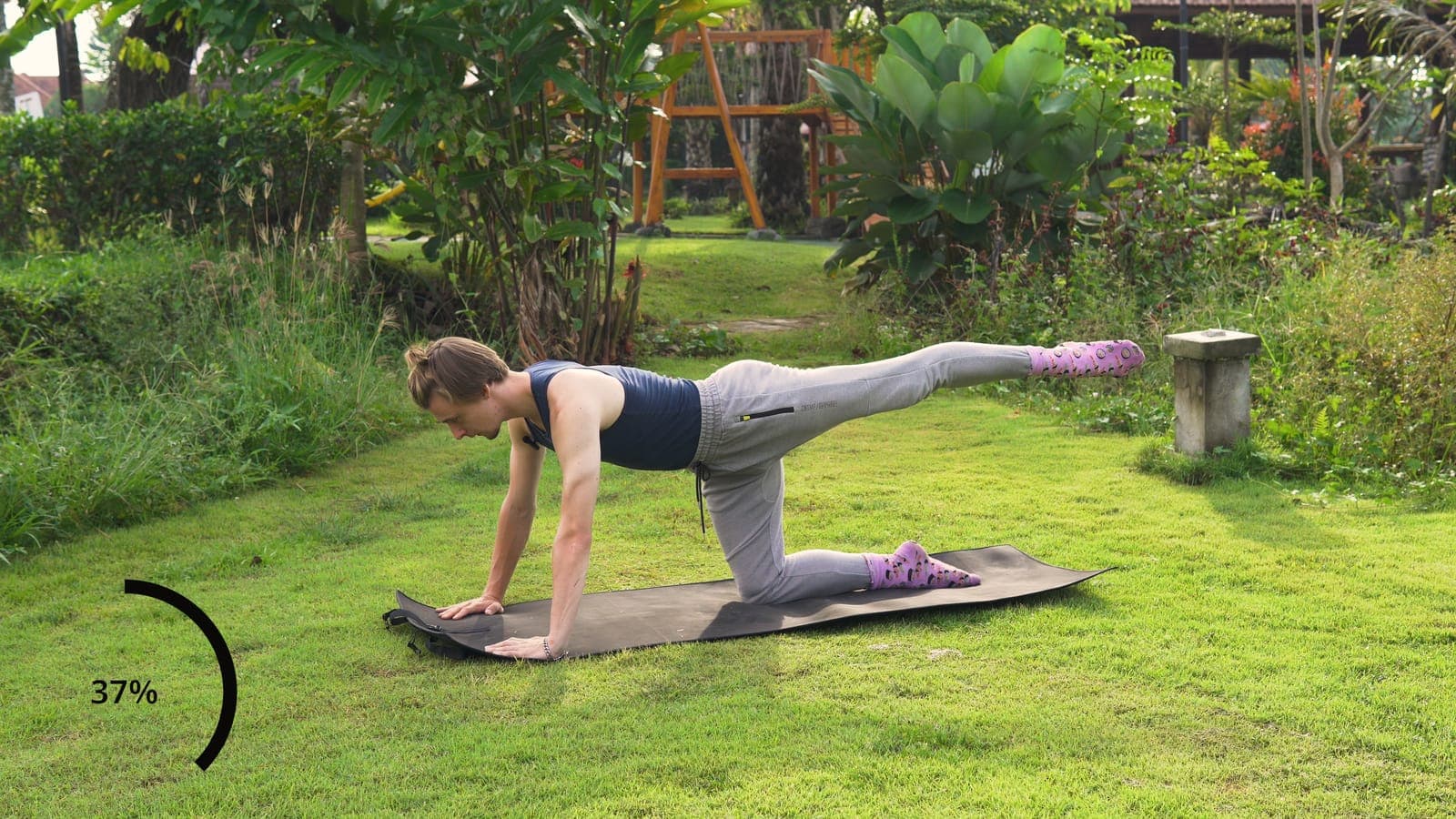
The first minutes after waking set the tone for the whole day. You can spend them scrolling with a stiff neck, or you can give your body ten quiet minutes and walk into the day feeling longer, lighter and awake. This is the routine I would give anyone just starting out.
In short: ten minutes of gentle, unhurried movement after waking: breathe, wake the spine, open the hips and hamstrings, and finish standing tall. Keep every stretch soft, the body is naturally stiffer in the morning. Done most days, it changes how the whole day feels.
Why mornings feel so stiff
Good to know
Overnight, the discs of your spine slowly absorb fluid, which is why you are actually a little taller in the morning. It also makes the spine feel tighter in the first hour of the day. That morning stiffness is normal physiology, not a sign of age or a bad back.
This is why the morning stretch has its own rules. You are not chasing depth, you are gently waking the body up. Everything softer, slower and smaller than in an evening session. The reward is not a new record, it is how you feel at your desk two hours later.
The 10-minute routine
- 1Wake up the breath, 1 minute. Sit or stand tall, and take slow breaths that widen the ribs. Long exhales tell the body the day is safe to begin.
- 2Wave the spine, 2 minutes. On all fours, round and arch slowly, then circle the hips a few times each way. The spine loves gentle motion first thing.
- 3Open the sides, 2 minutes. Standing, reach one arm overhead and lean gently to the side, breathing into the ribs. A few slow reaches each way.
- 4Soften the hips and hamstrings, 3 minutes. An easy low lunge each side, then a soft forward fold with bent knees, letting the head hang. Nothing deep, just warm.
- 5Finish tall, 2 minutes. Roll up to standing, circle the shoulders, lift the crown of the head and take three slow breaths. This is the posture you take into the day.
In the morning, work at half of what you could do in the evening. The goal is warmth and ease, not progress photos. Your deeper stretching lives later in the day, when the body is fully awake.
How to make it a habit that survives real life
Put it right after something you already never skip: the kettle, brushing your teeth, feeding the cat. Lay a mat where you will see it. And on chaotic mornings, do three minutes instead of ten. A short version done daily beats a perfect version done twice a month.
- More ease in the neck, back and hips before the day begins
- A calmer start: slow breathing lowers the morning rush
- Better posture through the day, set in the first ten minutes
- A quiet, private ritual that belongs only to you
How you spend the first ten minutes is how the body remembers the day.
Questions, answered
Should I stretch before or after breakfast?
Whichever you will actually do. Most people find it easiest straight out of bed, before the phone and the coffee. Just keep it gentle if you haven't eaten.
Is it bad to stretch right after waking up?
Gentle stretching is fine and lovely in the morning. What to avoid is forcing deep stretches in the first hour, while the spine is at its stiffest. Soft and slow is the rule.
Can this replace my main stretching session?
Think of it as a supplement, not a replacement. The morning routine wakes you up; real flexibility progress comes from fuller sessions later in the day, like the ones in the course.
What if I only have five minutes?
Do the breath, the spine waves and the standing finish. Five honest minutes still change the morning. Consistency matters far more than length.
Full Body Stretch
A complete, follow-along stretch program to gain flexibility safely and work toward your splits. No prior ballet experience needed.
Keep reading
How to Do the Splits at Home (Even If You're Not Flexible)
A safe, step-by-step way to work toward your first front split at home, from a Vaganova-trained dancer. No experience needed, just a few honest minutes a day.
6 min read
Can You Learn the Splits as an Adult? (Yes, and Here's How)
Age changes the pace, not the result. Why adults reach their first splits in their 30s, 40s and 50s, and how to start safely, from a Vaganova-trained dancer.
5 min read
The Best Way to Ease Lower Back Pain at Home (Gentle, 10 Minutes)
Why gentle movement beats rest for an aching lower back, and a calm way to start at home, from a Vaganova-trained, Mariinsky Theatre dancer.
6 min read