How to Do the Splits at Home (Even If You're Not Flexible)
Oleg Ignatev · June 30, 2026 · 6 min read
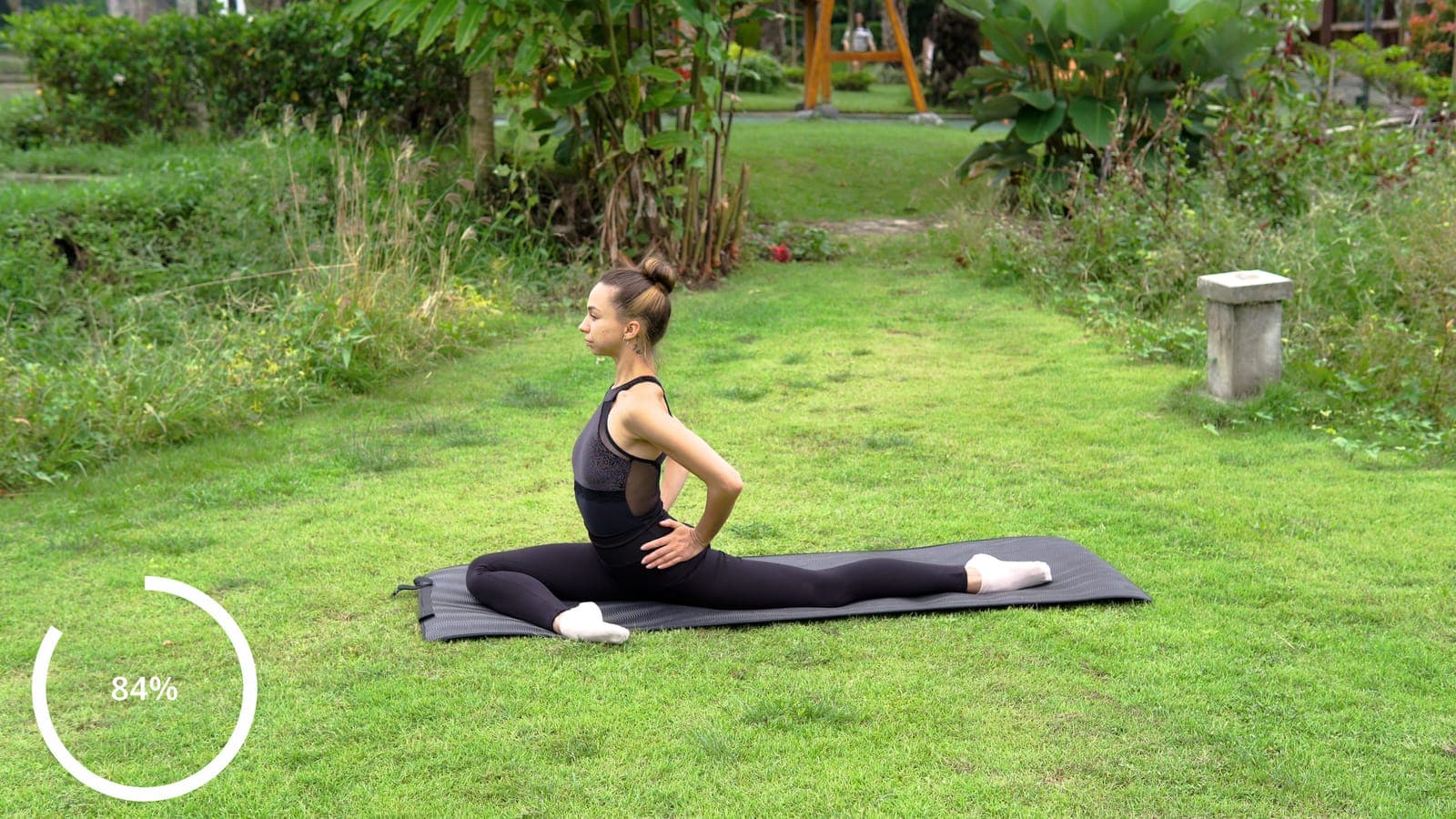
Most people think the splits are something you're born with. They're not. With the right order of stretches and a few honest minutes a day, your body opens up faster than you'd expect, and your first split stops being a someday and becomes a date on the calendar.
In short: warm up, then stretch the hamstrings and hip flexors in the right order, a little most days, and always ease off before pain. Most adults who stay consistent feel real change within a few weeks and reach a full front split in a few months.
First, you're probably not as stiff as you think
Good to know
Most of the new range you gain in the first weeks of stretching does not come from muscles physically getting longer. It comes from your nervous system raising its "stretch tolerance", learning to allow more movement before it tenses up. That is why calm, regular, breath-led stretching works far better than forcing.
Source: review in Sports Medicine (NIH / PMC)This changes how you train. Your body holds range back to protect you, and it loosens that grip once it trusts the movement. So the splits are less about forcing muscles longer and more about patiently teaching your body that this range is safe.
Three myths that keep people out of their splits
Myth: You have to be young or naturally flexible.
Truth: Adults reach their first split all the time. Since early progress is mostly your nervous system learning to allow more range, consistency matters far more than the body you started with.
Myth: The more it hurts, the faster you progress.
Truth: Pain makes the muscle guard and tighten to protect you, which sets you back days. A calm stretch you can breathe into does more than a painful one.
Myth: The splits take years.
Truth: With near-daily stretching, most people get there in a few months. If you already touch your toes, often just weeks.
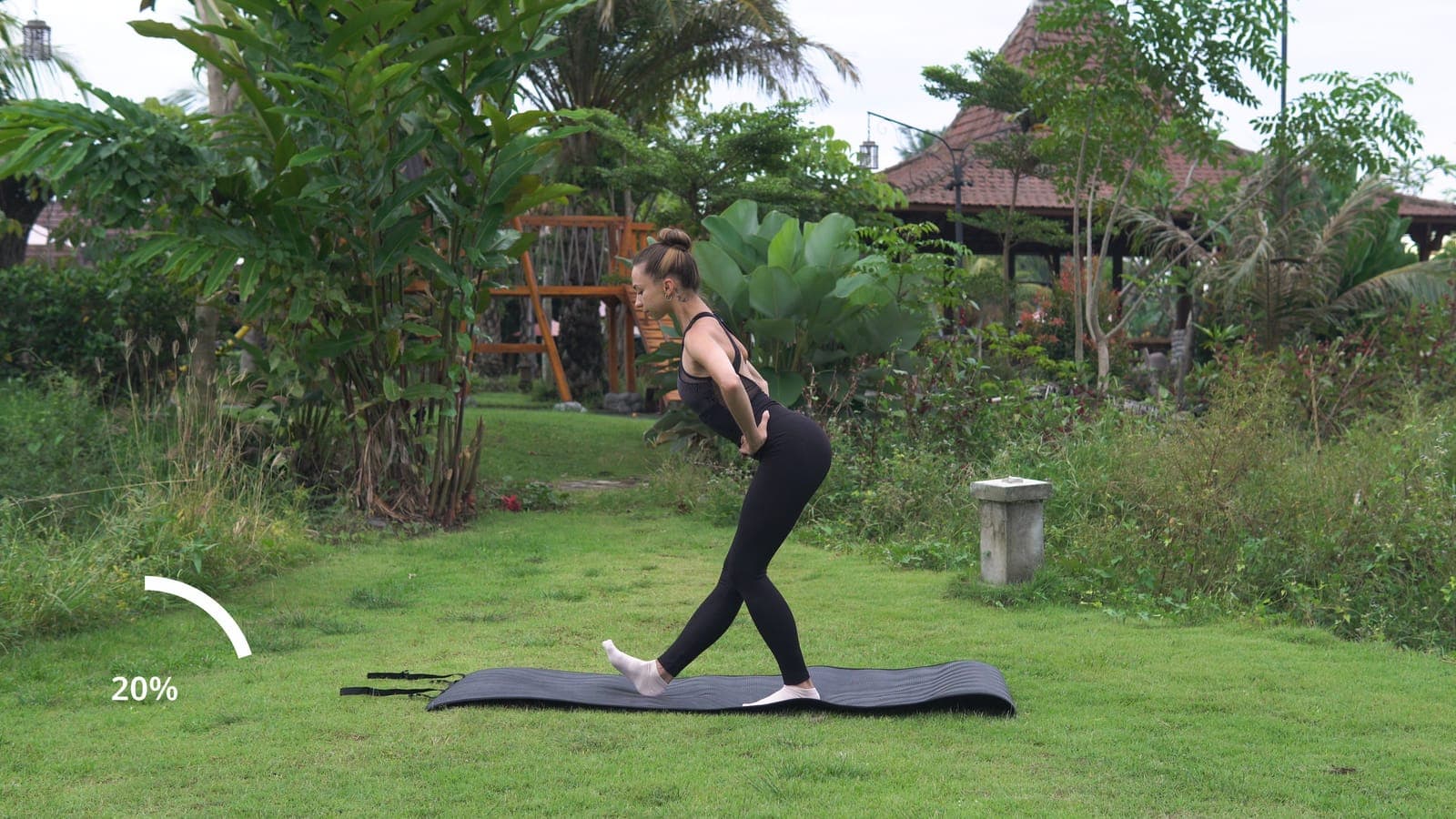
What actually works: the four things that matter
- 1Frequency over intensity. Short and often beats long and rare. Five calm sessions a week move you faster than one hard one.
- 2Warm and relaxed. Stretch warm, and slow your breathing. Long, easy exhales settle the nervous system, which is exactly when it lets you move further.
- 3Train both ends. A front split needs length in the hamstrings of the front leg and the hip flexors of the back leg. Most people only stretch the front, and stall.
- 4Long, calm holds. Hold 30 to 60 seconds, sink a little on each exhale, and never bounce.
Ease off before anything sharp. Aim for a stretch you could hold and breathe through, not one you are bracing against. That calm edge is where the progress lives.
How dancers actually get there
In the studio we never muscled our way into a split. We stretched warm, often, and without drama, and the split arrived on its own. The dancers with the deepest lines were rarely the most forceful, they were the most consistent.
Flexibility is not taken by force. It is given, slowly, to people who keep showing up.
Questions, answered
Can I learn the splits if I'm over 40?
Yes. Age changes the pace, not the result. Plenty of my students reached their first split in their 40s and 50s by stretching gently and often. Your body keeps responding at any age.
How long should I hold each stretch?
Thirty to sixty seconds, for two or three rounds. Long, calm holds tell the muscle it is safe to lengthen. Short, rushed stretches do very little.
Should the splits hurt?
No. You want a clear, even stretch, never sharp or pinching pain. If it hurts, ease back. Stretching into pain slows you down because you have to recover before you can train again.
How often should I stretch to see progress?
Most days of the week, ten to fifteen minutes. A little, often, beats one long session on the weekend.
Full Body Stretch
A complete, follow-along stretch program to gain flexibility safely and work toward your splits. No prior ballet experience needed.
Keep reading
Can You Learn the Splits as an Adult? (Yes, and Here's How)
Age changes the pace, not the result. Why adults reach their first splits in their 30s, 40s and 50s, and how to start safely, from a Vaganova-trained dancer.
5 min read
A 10-Minute Morning Stretch to Feel Loose All Day
A gentle 10-minute morning routine that eases overnight stiffness and changes how the whole day feels, from a Vaganova-trained dancer.
5 min read
The Best Way to Ease Lower Back Pain at Home (Gentle, 10 Minutes)
Why gentle movement beats rest for an aching lower back, and a calm way to start at home, from a Vaganova-trained, Mariinsky Theatre dancer.
6 min read